AI estimate as of September 30, 2025 · verify with a professional before acting
AI-Generated · Verify before acting
Everything on this page is generated by AI for informational purposes only. AI can make mistakes — the AI may misidentify items or misattribute them (artist, maker, brand, designer, origin, era). This is not an official valuation and should not be used for insurance, sale, tax, estate, legal, or lending purposes — or any decision requiring a certified appraisal. It is not an authoritative claim about any person, brand, or rights holder — do not share or rely on it as a factual statement about a third party. Always consult qualified professionals before making financial decisions.
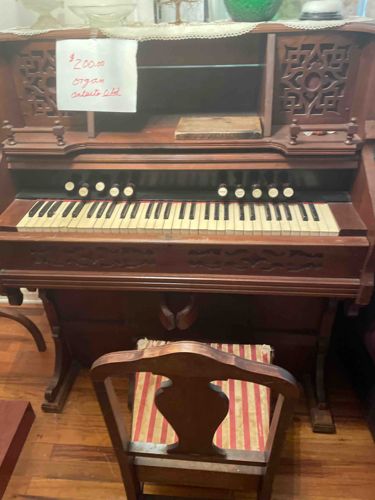
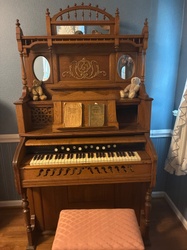
This is an antique or vintage reed organ, characterized by its dark reddish-brown wooden casing and ornate detailing. The organ features a single keyboard with visible yellowing on the white keys and some wear on the black keys, suggesting age and use. Above the keyboard, there are two rows of white stop knobs, five on the left and five on the right, which would control different voices or effects. The upper section of the organ includes an open compartment or shelf in the center and two decorative, carved wooden panels on either side. These panels exhibit intricate geometric and floral fretwork, indicative of period craftsmanship, possibly late 19th to early 20th century. The overall construction appears solid and substantial, likely crafted from a hardwood such as oak or mahogany, although the specific wood type is not definitively identifiable from the image. The lower part of the instrument features carved detailing along the front just below the keyboard, adding to its aesthetic appeal. The legs or base of the organ are robust, with a stylized, possibly scrolled, design on the visible left leg. There is a small, hand-written sign attached to the top left of the organ, indicating ' $200.00 organ ' and ' calanta old ' (possibly an attempt to spell 'Atlanta' or another word indicating origin or age). The condition shows signs of age, including potential fading, minor scratches, and general wear consistent with an item of its age. The keys' discoloration, in particular, points to significant use and exposure over time. The craftsmanship, with its detailed carving and substantial build, suggests a quality piece of furniture and musical instrument from its era.
AI Appraisal Report
Upon visual examination of this antique reed organ, I assess its condition as fair to good for its age. The dark reddish-brown wooden casing exhibits typical wear, including what appears to be fading, minor scratches, and general signs of use consistent with an item from the late 19th to early 20th century. The significant yellowing of the white keys and wear on the black keys strongly suggest considerable age and prolonged use. The intricate geometric and floral fretwork on the side panels indicates quality craftsmanship of the period. The 'calanta old' handwritten sign, while intriguing, is ambiguous; without further context or clarification, its definitive meaning or impact on value is limited. The ' $200.00 organ ' note suggests a previous selling price or asking price, which aligns with market expectations for such items.
Market conditions for antique reed organs are generally subdued. While beautiful as decorative furniture, their utility as musical instruments is niche. Demand is primarily from collectors, antique enthusiasts, or those seeking unique decorative pieces, rather than active musicians. Rarity is not a significant factor here; while this specific design may be unique, reed organs of this type were mass-produced. Factors significantly impacting value include its non-functioning musical condition (which I assume given the age and typical maintenance needs), the extent of cosmetic damage, and original manufacturer details, which are not visible. Without documentation, assessing the specific type of wood is difficult, though it appears to be a quality hardwood.
From the image alone, I cannot definitively ascertain the complete authenticity of all components, functional status of the reeds or bellows, or the precise manufacturer and model. A full authentication would require an in-person examination to assess the internal mechanisms, the structural integrity of the wood, identify any repairs or alterations, confirm the wood species, and potentially locate any manufacturer's marks or serial numbers. Verification of the key action, stop functionality, and overall playability would also require physical inspection. However, based on its visible attributes, it appears to be an authentic antique reed organ, likely from the indicated period. My appraisal reflects its value primarily as an antique decorative furniture piece, given the typical condition issues and limited musical demand for such instruments.