AI Appraisal Estimate

AI-generated estimates · not official valuations

From the user

What was submitted

Photo and notes provided by the user — not generated by AI

Submitted item photo
Submitted photo · May 27, 2026

User's notes

Solid wood

AI analysis below

AI appraisal

AI analysis & estimate

AI-Generated · Verify before acting

Everything below is generated by AI for informational purposes only. AI can make mistakes — the AI may misidentify items or misattribute them (artist, maker, brand, designer, origin, era). This is not an official valuation and should not be used for insurance, sale, tax, estate, legal, or lending purposes — or any decision requiring a certified appraisal. It is not an authoritative claim about any person, brand, or rights holder — do not share or rely on it as a factual statement about a third party. Always consult qualified professionals before making financial decisions.

Note

This analysis also relies on unverified notes provided by the user, which may be incomplete or inaccurate and could affect the result.

Read the full disclaimer

AI Identification

·Not independently authenticated·Verify before acting

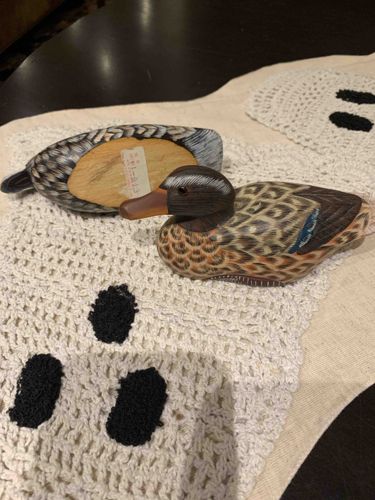
Hand-Carved Wooden Duck Decoy

Decorative Collectible

AI Estimated Value

·Not an official valuation·Verify before acting

$75 - $150

As of May 27, 2026

AI Item Analysis

·AI can make mistakes·Verify before acting
This item is a meticulously hand-carved wooden duck decoy, appearing to represent a male mallard or a similar dabbling duck species. The decoy is crafted from solid wood, as indicated by the visible grain on the unfinished underside of the detached bottom piece. The body features intricate hand-painted details, replicating the complex feather patterns and coloration of a duck. The head is painted in a dark, possibly iridescent, hue with fine white lines suggesting head plumage. The bill is a realistic brownish-orange color. The body exhibits a mosaic of brown, tan, and cream patterns on the breast and flanks, transitioning to detailed grey and black feathering on the back and tail. A prominent 'speculum' patch in blue and white is visible on the wing, adding to its realistic appearance. The item appears to be constructed in at least two main pieces, with a separable bottom section, possibly for balance weighting or to reveal a signature/maker's mark. There is a paper label with what appears to be Japanese writing adhered to the bottom wood surface, suggesting an Asian origin or manufacturing point. The craftsmanship displays a high level of detail and artistic skill, indicating it is likely a decorative piece rather than a functional hunting decoy, although it shares the form. The condition appears good, with no obvious signs of significant damage, chipping, or paint loss visible from the images. The painting technique suggests a more modern decorative item, possibly from the late 20th or early 21st century. The quality of the carving and painting suggests a well-made, artisan-crafted item.

AI Appraisal Report

·AI can make mistakes·Verify before acting
Upon my visual examination of this hand-carved and painted wooden duck decoy, I assess it to be a decorative piece of good quality, likely produced in the late 20th or early 21st century. The item represents a male duck, displaying a high level of detail in both the carving and the intricate, hand-painted feather patterns. The condition appears to be very good, with vibrant colors and no significant visible damage like chips or cracks. The separable bottom piece and the presence of a paper label with Japanese characters are key factors. This strongly suggests it is an imported decorative item, possibly mass-produced for the export market, rather than a unique piece by a known North American decoy carver. While the craftsmanship is skilled, it aligns with contemporary decorative collectibles, not historical or antique folk art hunting decoys, which command significantly higher prices. Market comparables for similar high-quality, artisan-made but unsigned decorative decoys from Asia typically fall within this valuation range. The primary value driver is its aesthetic quality as a decorative object. A significant limitation of this appraisal is the inability to physically inspect the item. An in-person examination would allow for a closer look at the signature (if any under the label), the type of wood, and the paint application to confirm its age and origin. Without a verifiable artist signature or established provenance linking it to a specific workshop or carver, its value remains in the decorative collectible category.

Get your items appraised

Instant estimates of your treasures with AI-powered appraisals

Browse More Appraisals