AI Appraisal Estimate

AI-generated estimates · not official valuations

From the user

What was submitted

Photo and notes provided by the user — not generated by AI

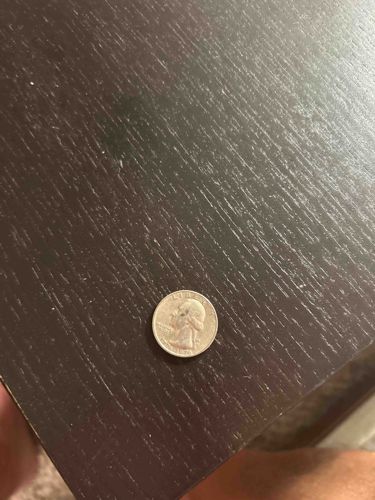
Submitted item photo
Submitted photo · May 27, 2026

User's notes

No additional notes provided.

AI analysis below

AI appraisal

AI analysis & estimate

AI-Generated · Verify before acting

Everything below is generated by AI for informational purposes only. AI can make mistakes — the AI may misidentify items or misattribute them (artist, maker, brand, designer, origin, era). This is not an official valuation and should not be used for insurance, sale, tax, estate, legal, or lending purposes — or any decision requiring a certified appraisal. It is not an authoritative claim about any person, brand, or rights holder — do not share or rely on it as a factual statement about a third party. Always consult qualified professionals before making financial decisions.

Read the full disclaimer

AI Identification

·Not independently authenticated·Verify before acting

United States Quarter Dollar Coin (1974)

Coin

AI Estimated Value

·Not an official valuation·Verify before acting

$0.25 - $0.50

As of May 27, 2026

AI Item Analysis

·AI can make mistakes·Verify before acting
This item is a United States quarter dollar coin, specifically depicting the obverse (heads side) featuring the profile of George Washington. The coin appears to be made of a copper-nickel clad composition, common for U.S. quarters minted for circulation since 1965, giving it a silver-gray metallic color. Its physical characteristics align with a standard quarter: approximately 24.26 mm (0.955 inches) in diameter and 1.75 mm (0.069 inches) in thickness, with a reeded edge, though the edge is not visible in this image. Notable features include the word "LIBERTY" above Washington's head, and the motto "IN GOD WE TRUST" to his left. The mint year "1974" is clearly visible below Washington's chin, indicating its estimated age. The coin shows signs of circulation wear, including light scratches across its surface and a duller luster compared to an uncirculated specimen. The details of Washington's hair and facial features, while still clear, exhibit some softening due to rubbing. There are no visible major damages, such as significant dents, deep gouges, or bending, nor are there obvious signs of repair. No specific mint mark is discernible in the provided image, which typically indicates the mint where it was produced (e.g., "D" for Denver, "S" for San Francisco, or no mark for Philadelphia). The overall condition suggests it is a typical circulated coin from the mid-1970s, possessing a moderate level of wear consistent with regular use over decades. The quality indicators are those of standard United States coinage from that era, designed for mass production and daily commerce rather than artistic intricate detail.

AI Appraisal Report

·AI can make mistakes·Verify before acting
I have examined the provided image of a 1974 United States Quarter Dollar Coin. Based on visual assessment, this appears to be an authentic U.S. quarter of the Washington type, consistent in design and composition with coins minted for general circulation in 1974. The coin exhibits signs of moderate circulation wear, including light scratches and a duller luster, consistent with a "Fine" to "Very Fine" (F-12 to VF-20) grade. Details are softened but still discernible. There are no indications of major damage or repair. These coins were mass-produced, with Philadelphia (no mint mark), Denver ("D"), and San Francisco ("S") mints producing millions in 1974. Given its circulated condition and the high mintage numbers, this coin is not rare. Demand for common circulated Washington quarters is primarily from novice collectors or for face value use. Its value is largely driven by its intrinsic face value, as its numismatic premium is minimal due to its abundance and condition. Market comparables for 1974 quarters in similar circulated grades typically range from face value up to a slight premium for very well-preserved examples. The primary factor limiting its value is its commonality and wear. For full authentication and a definitive grade, a physical examination would be necessary to assess edge condition, true luster, and subtle surface details not fully captured in the image. Magnification would also aid in identifying any faint mint marks or minute imperfections. Provenance documentation is not typically relevant for such common coins.

Get your items appraised

Instant estimates of your treasures with AI-powered appraisals

Browse More Appraisals