Late 18th or 19th Century Miniature Portrait of a Noblewoman
Fine Art - Portrait Miniatures

Late 18th or 19th Century Miniature Portrait of a Noblewoman

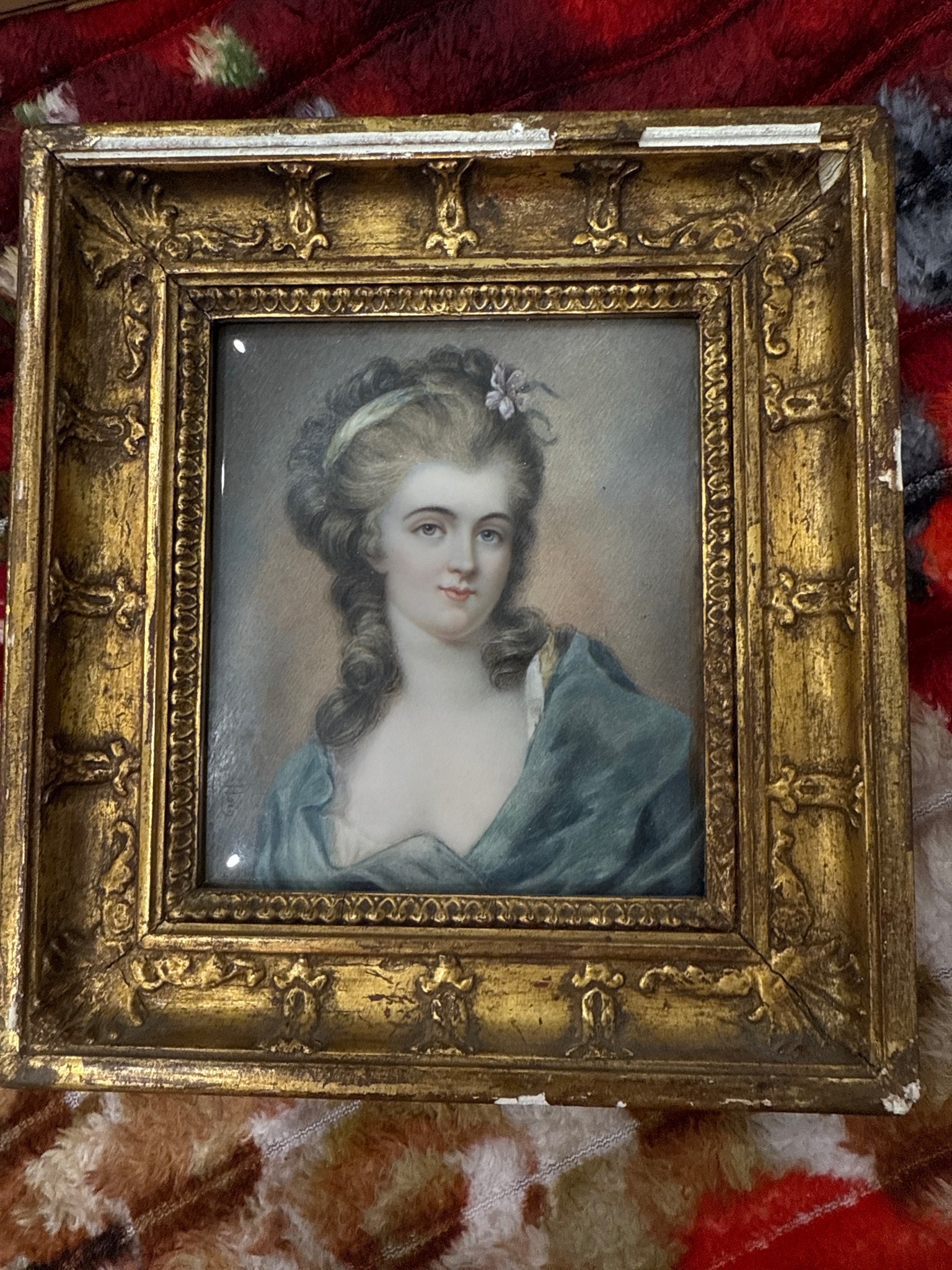
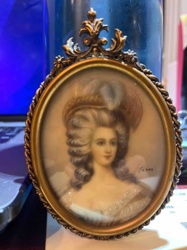
This item is a framed miniature portrait painting of a woman, likely of European origin, executed in the Rococo or Neoclassical style. The subject is depicted with powdered, voluminous hair adorned with a light green ribbon and a small floral accent, wearing a teal-colored stole or wrap draped over a low-cut gown. The painting is housed in a carved, gilt-wood frame featuring intricate scrollwork and acanthus leaf motifs. The frame exhibits notable age-related wear, including significant losses to the gesso and gilding at the corners and along the top edge, exposing the white plaster beneath. Cracking is visible in the frame's molding, particularly near the bottom left corner. The portrait itself appears to be protected by convex glass, and while there is a faint signature or marking visible on the left side of the background, it is difficult to decipher without magnification. The craftsmanship of the painting shows fine stippling and blending characteristic of miniature work on ivory or vellum. Based on the sitter's fashion and the frame's ornamentation, the piece dates to the late 18th century or a 19th-century revival period.
Estimated Value

$1,200 - $1,800

Basic Information

Category

Fine Art - Portrait Miniatures

Appraised On

April 12, 2026

Estimated Value

$1,200 - $1,800

Item Description

This item is a framed miniature portrait painting of a woman, likely of European origin, executed in the Rococo or Neoclassical style. The subject is depicted with powdered, voluminous hair adorned with a light green ribbon and a small floral accent, wearing a teal-colored stole or wrap draped over a low-cut gown. The painting is housed in a carved, gilt-wood frame featuring intricate scrollwork and acanthus leaf motifs. The frame exhibits notable age-related wear, including significant losses to the gesso and gilding at the corners and along the top edge, exposing the white plaster beneath. Cracking is visible in the frame's molding, particularly near the bottom left corner. The portrait itself appears to be protected by convex glass, and while there is a faint signature or marking visible on the left side of the background, it is difficult to decipher without magnification. The craftsmanship of the painting shows fine stippling and blending characteristic of miniature work on ivory or vellum. Based on the sitter's fashion and the frame's ornamentation, the piece dates to the late 18th century or a 19th-century revival period.
Get Your Items Appraised

Instant estimates of your treasures with AI-powered instant appraisals

Browse More Appraisals