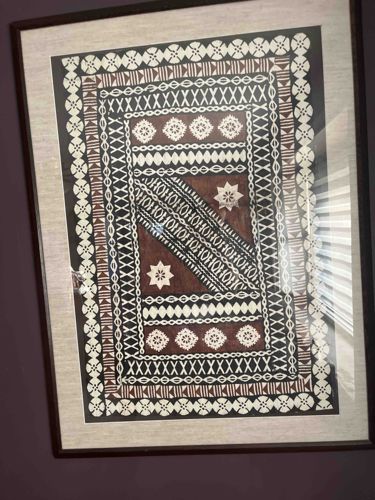
Fijian Masi (Tapa Cloth) Framed Wall Art
This item is a traditional Fijian Masi, also known as tapa cloth, which has been professionally matted and housed in a dark wood frame under glass. The artwork is created from the inner bark of the paper mulberry tree, which is beaten into a felt-like fabric and decorated with natural dyes. The color palette is classic for this medium, featuring deep charcoal blacks and earthy reddish-brown tones against the natural cream-colored background of the bark fiber. The composition is highly geometric, consisting of several concentric decorative borders surrounding a central divided panel. Notable motifs include the 'manulua' (eight-pointed star), repetitive 'X' patterns representing netting or weaving, and various serrated and circular stenciled boundaries. The craftsmanship exhibits typical handmade characteristics, with slight variations in the intensity of the pigment and hand-stenciled alignment. The fabric displays a visible fibrous texture, indicating the organic origins of the material. Condition-wise, the cloth appears well-preserved within its frame, with no significant fraying or discoloration visible beyond the expected irregularities of natural bark cloth. There is some minor reflection on the glass from external lighting, but the underlying piece shows strong contrast. This style of decorative masi is contemporary, likely mid-to-late 20th century, intended for the domestic and tourist art markets while maintaining traditional symbolic language.
AI-Generated Appraisal Disclaimer
Estimated Value
$450 - $650
Basic Information
Category
Oceanic Indigenous Art / Textiles
Appraised On
April 1, 2026
Estimated Value
$450 - $650
Item Description
This item is a traditional Fijian Masi, also known as tapa cloth, which has been professionally matted and housed in a dark wood frame under glass. The artwork is created from the inner bark of the paper mulberry tree, which is beaten into a felt-like fabric and decorated with natural dyes. The color palette is classic for this medium, featuring deep charcoal blacks and earthy reddish-brown tones against the natural cream-colored background of the bark fiber. The composition is highly geometric, consisting of several concentric decorative borders surrounding a central divided panel. Notable motifs include the 'manulua' (eight-pointed star), repetitive 'X' patterns representing netting or weaving, and various serrated and circular stenciled boundaries. The craftsmanship exhibits typical handmade characteristics, with slight variations in the intensity of the pigment and hand-stenciled alignment. The fabric displays a visible fibrous texture, indicating the organic origins of the material. Condition-wise, the cloth appears well-preserved within its frame, with no significant fraying or discoloration visible beyond the expected irregularities of natural bark cloth. There is some minor reflection on the glass from external lighting, but the underlying piece shows strong contrast. This style of decorative masi is contemporary, likely mid-to-late 20th century, intended for the domestic and tourist art markets while maintaining traditional symbolic language.
Related Tags
Get Your Items Appraised
Instant estimates of your treasures with AI-powered instant appraisals