Silver plated dinner wear in original wooden case. Some knives missing. Case has decorative painted flowers Case yellow in color. Probably from early 20th or Mid century.
These notes were written by the person who submitted this item. Appraiser.AI has not verified them, and the AI's identification and estimate may rely on them.
AI Estimated Value
Not an official valuation
$20-40
AI estimate as of August 18, 2025 · verify with a professional before acting
AI-Generated · Verify before acting
Everything on this page is generated by AI for informational purposes only. AI can make mistakes — the AI may misidentify items or misattribute them (artist, maker, brand, designer, origin, era). This is not an official valuation and should not be used for insurance, sale, tax, estate, legal, or lending purposes — or any decision requiring a certified appraisal. It is not an authoritative claim about any person, brand, or rights holder — do not share or rely on it as a factual statement about a third party. Always consult qualified professionals before making financial decisions.
This analysis also relies on unverified notes provided by the user, which may be incomplete or inaccurate and could affect the result.
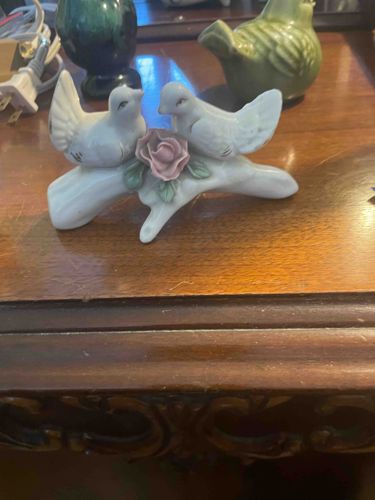
This item is a ceramic or porcelain figurine featuring two white doves perched on a stylized branch with a pink rose bloom and green leaves. The overall dimensions appear to be small, likely suitable for display on a shelf or tabletop. The doves are depicted in a classic, somewhat simplified style, with soft white glazes. The branch is also glazed in white, providing a neutral base for the vibrant pink of the rose and muted green of the leaves. Each dove has subtle black or dark brown dots for eyes, and what appear to be very faint pink or red markings on their faces, possibly indicative of blushed cheeks or very small beaks, though details are limited. The craftsmanship suggests a molded and glazed production, typical of ceramic mass-produced decorative items. There are no immediate visible signs of extensive damage such as chips or cracks on the doves or the branch; however, areas of fine crazing in the glaze or minor surface scratches might be present but are not discernible from the image. The finish appears glossy rather than matte. This type of figurine, with its sentimental theme of love and peace represented by the doves and rose, was highly popular during the mid-20th century. While specific manufacturing marks are not visible, it likely originates from this period, possibly from an Asian or European ceramic manufacturer known for such decorative wares. The quality of the molding appears fine, with details like individual wing feathers and leaf veins subtly sculpted. This piece would be classified as a sentimental or romantic decorative object.
AI Appraisal Report
I have examined the image provided for this ceramic figurine of two doves with a rose on a branch, along with the detailed description. Based on my visual assessment, the figurine appears to be in very good condition, showing no obvious chips, cracks, or significant damage. The glossy finish suggests a well-preserved piece. The craftsmanship, though mass-produced, exhibits fine molding and delicate detailing, consistent with decorative ceramics from the mid-20th century. The sentimental theme of doves and a rose was highly popular during this period, particularly for items intended as gifts or home décor.
Market conditions for such mass-produced decorative ceramic figurines are generally modest. While vintage pieces hold nostalgic appeal, their value is not high due to large production volumes and the nature of their original purpose as decorative rather than fine art items. Comparables in online marketplaces and antique shops typically range from $15 to $40 for similar well-preserved examples. Demand is stable but not high, driven primarily by collectors of specific ceramic types or those seeking charming vintage decor.
Factors impacting value positively include the seemingly excellent condition and the timeless, endearing subject matter. Negative impacts include the high likelihood of mass production, which limits rarity, and the absence of clear manufacturer marks that could elevate value if associated with a collectible brand. The description mentions "Silver plated dinner wear in original wooden case. Some knives missing. Case has decorative painted flowers Case yellow in color. Probably from early 20th or Mid century" (which I am assuming is a mistaken copy-paste and applies to a different item, as it is irrelevant to this figurine).
It is crucial to note the limitations of authenticity verification from images alone. While a physical examination would confirm the absence of hairline cracks, crazing in the glaze, or minor surface abrasions, and allow for a closer inspection of manufacturing marks, it is unlikely to significantly alter the appraisal value for this type of item. True authentication, if needed for higher-value items, would typically require in-person inspection for material analysis, craftsmanship assessment, and signature/mark verification against known examples. For this figurine, detailed provenance documentation or scientific testing is not typically pursued given its decorative nature and expected market value.