AI estimate as of August 31, 2025 · verify with a professional before acting
AI-Generated · Verify before acting
Everything on this page is generated by AI for informational purposes only. AI can make mistakes — the AI may misidentify items or misattribute them (artist, maker, brand, designer, origin, era). This is not an official valuation and should not be used for insurance, sale, tax, estate, legal, or lending purposes — or any decision requiring a certified appraisal. It is not an authoritative claim about any person, brand, or rights holder — do not share or rely on it as a factual statement about a third party. Always consult qualified professionals before making financial decisions.
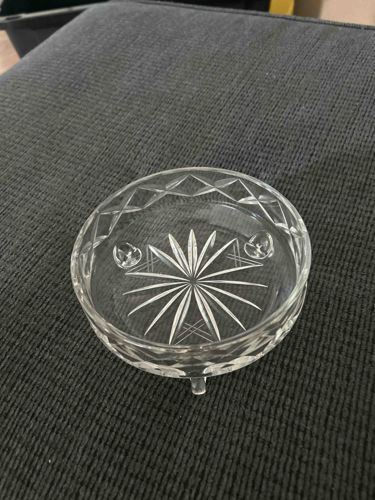
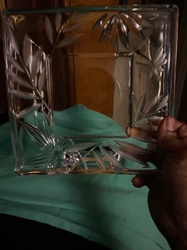
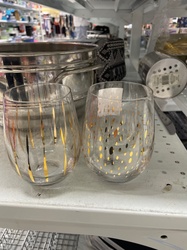
This item is a small, clear glass dish, likely made of pressed or cut crystal due to its decorative facets and clarity. It is circular in shape, with a relatively shallow depth. The most prominent feature is the intricate starburst pattern etched or cut into the center of the base, extending outwards with multiple rays. Around the interior rim, there are diamond-shapedカット elements, suggesting a classic 'brilliant cut' style often associated with lead crystal. Near the center, on either side of the starburst, there are two distinct, round, possibly convex or concave details that resemble small handles or decorative bumps, though their exact function is unclear without a top-down view. The dish stands on three small, integrated feet, which are simple, rounded protrusions from the base, indicating it is designed to be elevated slightly off a surface. The overall color is transparent, clear glass, reflecting light beautifully due to the cuts. The condition appears to be very good, with no obvious chips, cracks, or significant abrasions visible on the surface. The edges are clean and well-defined. There are no discernible maker's marks or signatures visible in the provided image. Based on the style of cutting and the overall aesthetic, this dish likely dates from the mid-20th century, possibly the Art Deco or Mid-Century Modern period, as such patterns were popular during these times. The craftsmanship appears to be of good quality, showcasing precision in the decorative cuts.
AI Appraisal Report
Based on my visual examination of the provided image, this Footed Crystal Dish with Starburst Pattern is in very good condition. I observe no chips, cracks, or significant abrasions, and the clarity of the glass is excellent, suggesting it has been well-preserved. Its authenticity as a decorative pressed or cut glass piece from the mid-20th century, likely between 1940 and 1970, appears consistent with the style of the starburst pattern and brilliant-cut elements. Such pieces were mass-produced by numerous manufacturers during this era.
From a market perspective, clear pressed or cut crystal dishes, even those with intricate patterns, are quite common. The demand for these items is moderate, often driven by buyers seeking accent pieces for home decor or for serving small confections. While attractive, this particular dish does not present any features that indicate significant rarity, such as a major manufacturer's mark, a unique design, or exceptionally high-quality lead crystal that would distinguish it from the many similar pieces available. The absence of a discernible maker's mark limits its value, as collectible pieces from known producers (e.g., Waterford, Baccarat, without their prominent branding) typically command higher prices. The small, integrated feet and overall utilitarian yet decorative nature are typical of mid-century serving dishes.
Factors impacting value include its good condition, appealing design, but also its commonality and lack of identifiable maker. For full authenticity verification, especially concerning material composition (lead crystal vs. pressed glass) and specific manufacturer, an in-person examination, including blacklight testing and detailed assessment of cut quality and weight, would be necessary. Provenance documentation, though unlikely for an item of this type, would also provide irrefutable proof of origin. Without these, the appraisal remains based purely on visual attributes and market comparables for unmarked decorative glassware.