AI estimate as of October 4, 2025 · verify with a professional before acting
AI-Generated · Verify before acting
Everything on this page is generated by AI for informational purposes only. AI can make mistakes — the AI may misidentify items or misattribute them (artist, maker, brand, designer, origin, era). This is not an official valuation and should not be used for insurance, sale, tax, estate, legal, or lending purposes — or any decision requiring a certified appraisal. It is not an authoritative claim about any person, brand, or rights holder — do not share or rely on it as a factual statement about a third party. Always consult qualified professionals before making financial decisions.
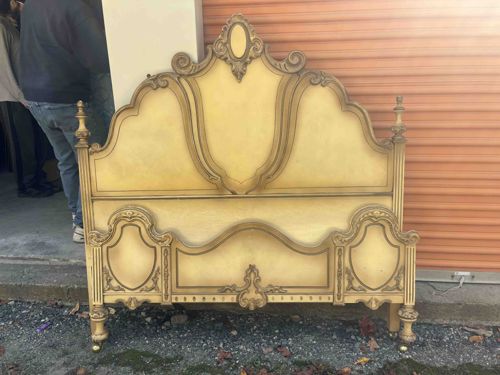
This is a vintage bed frame, likely a full or queen size, comprising a highly decorative headboard and footboard. The piece is constructed primarily of wood, featuring an ornate Rococo Revival style with a distressed or antiqued 'gilt' finish, incorporating shades of cream, gold, and possibly subtle brown undertones to enhance the aged appearance. Both the headboard and footboard display a classic cartouche shape, characterized by flowing curves and 'C' and 'S' scrolls. The headboard is significantly taller and features a prominent central oval medallion surrounded by scrollwork at its crest, with additional carved elements along its perimeter. Finials, or decorative upright ornaments, cap the posts on both the headboard and footboard, adding to its grand presentation. The main panels of both pieces appear to be a lighter, aged cream color, possibly with painted detailing or a faux finish to mimic fabric or aged plaster, contrasting with the darker gold and brown of the applied decorative molding and carvings. The craftsmanship suggests a manufactured piece from the mid-20th century, possibly 1950s-1970s, aiming for a luxurious, Old World aesthetic. Visible condition issues include some wear to the painted finish, minor scuffs, and possibly some dust or debris from storage, consistent with its age and former use. The overall structure appears stable, though close inspection would be needed for any repairs or significant damage. The decorative elements are quite elaborate, indicating a desire for a statement furniture piece within a bedroom setting.
AI Appraisal Report
Based on my visual examination of the provided image, this Vintage Rococo Revival-Style Full/Queen Size Headboard and Footboard presents as a decorative mid-20th century piece, likely manufactured between the 1950s and 1970s. The 'gilt' and cream 'antiqued' finish, along with the elaborate 'C' and 'S' scrollwork and central medallion, are characteristic of the Rococo Revival style, mass-produced during that era to emulate earlier European luxury. The condition appears consistent with its age, showing wear to the painted finish, scuffs, and possibly some dust or debris. These are typical signs of use and age for furniture of this period and do not significantly detract from its decorative appeal, though extensive damage or structural issues, if present, would necessitate a re-evaluation.
From a market perspective, Rococo Revival furniture from this era often appeals to buyers seeking decorative, statement pieces at an accessible price point. While genuine antique Rococo furniture commands high values, these later reproductions are valued primarily for their aesthetic rather than their intrinsic antique value. The general market for such decorator pieces is somewhat stable. Comparables would include similar 'Hollywood Regency' or 'French Provincial' style bed frames from the mid-century, which typically retail in the $300-$800 range, depending on condition, specific design, and market demand in a given region. The perceived queen size is a positive factor, as queen beds are generally more desirable than full-size.
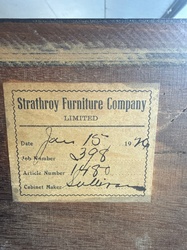
Key factors impacting value include condition, the quality of the finish and carvings, and the overall decorative appeal. The lack of provenance or manufacturer's marks limits definitive authentication of its exact origin or age without in-person inspection. Limitations in authenticity verification from images alone are significant; without physical access, I cannot confirm materials (e.g., solid wood vs. veneer or composites), assess structural integrity, or verify the extent of finish wear or repairs. An in-person examination would be needed to test stability, inspect for hidden damage, and determine the precise construction methods, which could influence the value. Provenance documentation (e.g., original sales receipts) or scientific testing (e.g., wood dating if questions arose about age) would be required for full authentication beyond what can be discerned visually.