These notes were written by the person who submitted this item. Appraiser.AI has not verified them, and the AI's identification and estimate may rely on them.
AI Estimated Value
Not an official valuation
$75 - $125
AI estimate as of September 5, 2025 · verify with a professional before acting
AI-Generated · Verify before acting
Everything on this page is generated by AI for informational purposes only. AI can make mistakes — the AI may misidentify items or misattribute them (artist, maker, brand, designer, origin, era). This is not an official valuation and should not be used for insurance, sale, tax, estate, legal, or lending purposes — or any decision requiring a certified appraisal. It is not an authoritative claim about any person, brand, or rights holder — do not share or rely on it as a factual statement about a third party. Always consult qualified professionals before making financial decisions.
This analysis also relies on unverified notes provided by the user, which may be incomplete or inaccurate and could affect the result.
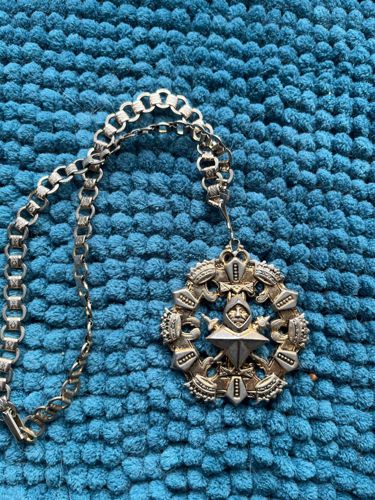
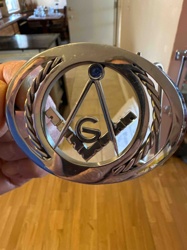
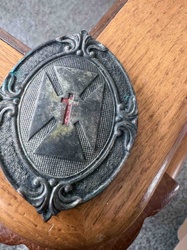
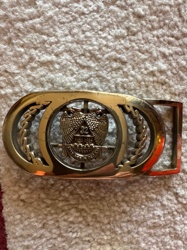
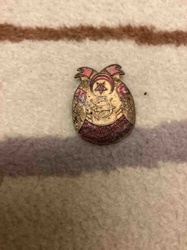
This item is a Masonic Knights Templar Collarette Jewel, consistent with regalia worn by members of the Commandery or Preceptory, a part of Freemasonry. The piece consists of a metal chain and a dangling jewel. The chain appears to be made of a silver-toned metal, possibly plated brass or white metal alloy given the visible wear and darkening in some areas. It features a robust, elongated circular link design. The most prominent feature is the circular jewel itself, which exhibits a complex heraldic design. The central element is likely a cross pattee superimposed with a helmeted head, possibly a Crusader knight's bust, which is a common motif in Knights Templar symbolism. Surrounding this central motif is a circular wreath-like arrangement composed of what appear to be individual shields or escutcheons, possibly bearing different heraldic symbols or representing commanderies. The overall color scheme is predominantly silver with darkened areas, suggesting an antique finish or natural tarnishing that highlights the intricate details. Some areas exhibit a slightly brassy or gold-toned undertone, which could indicate a bi-metallic construction or wear revealing a base metal. The craftsmanship appears to be of moderate to good quality, with cast elements and some visible detailing. There is clear evidence of age and use, including scuffs, minor scratches, and a consistent patina across the metal surfaces, particularly within the recessed areas of the design. No specific maker's marks or dates are immediately discernible from the image, but items of this type often date from the late 19th to mid-20th century. The item represents a ceremonial piece of fraternal regalia.
AI Appraisal Report
Based on my visual examination of the provided image, this Masonic Knights Templar Collarette Jewel appears authentic for its type, consistent with regalia worn by members of the Commandery. The design elements, including the cross pattee, helmeted head, and surrounding shield motif, are typical of Knights Templar symbolism. The metal chain exhibits characteristic wear and darkening, suggesting a base metal like plated brass or white metal alloy, which is common for such fraternal pieces rather than precious metals. The overall condition shows consistent patina, scuffs, and minor scratches indicative of age and past use, which is desirable as it confirms authenticity over pristine reproductions.
Market conditions for fraternal regalia like this are generally stable but not experiencing a significant boom. Comparables found on online auction sites and specialized militaria/fraternal collectibles dealers typically range from $50-$150 for similar Knights Templar jewels. Demand is primarily from collectors of Masonic memorabilia, historical fraternal organizations, or those with personal connections to the order. While not exceedingly rare, pieces with intricate detail and good age-appropriate patina hold more appeal. The lack of specific maker's marks or highly rare design elements limits its top-tier value.
Factors significantly impacting value include the non-precious metal composition and the commonality of the design. However, its clear age and good overall preservation for a utilitarian regalia piece add to its collectibility.
Limitations in authenticity verification from images alone exist. While the visual cues are strong, a full authentication would require physical inspection to confirm the exact metal composition (e.g., distinguishing between silver plate and white metal), assess the quality of craftsmanship up close, and crucially, to search for any hidden maker's marks or inscriptions not visible from the photograph. In-person examination could also reveal any repairs or modifications. Provenance documentation, if available (e.g., original owner's name or purchase records), would significantly enhance its historical value, but none was provided for this appraisal.