AI Appraisal Estimate

AI-generated estimates · not official valuations

From the user

What was submitted

Photo and notes provided by the user — not generated by AI

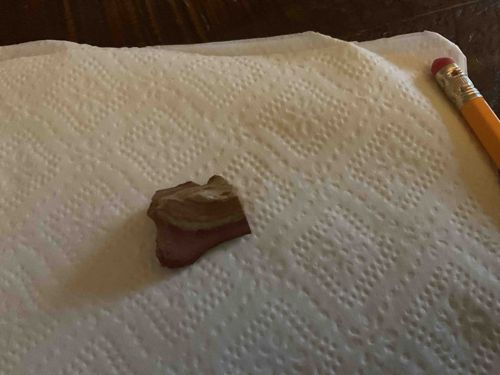
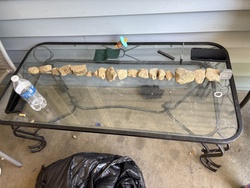
Submitted item photo
Submitted photo · May 28, 2026

User's notes

A possible agate

AI analysis below

AI appraisal

AI analysis & estimate

AI-Generated · Verify before acting

Everything below is generated by AI for informational purposes only. AI can make mistakes — the AI may misidentify items or misattribute them (artist, maker, brand, designer, origin, era). This is not an official valuation and should not be used for insurance, sale, tax, estate, legal, or lending purposes — or any decision requiring a certified appraisal. It is not an authoritative claim about any person, brand, or rights holder — do not share or rely on it as a factual statement about a third party. Always consult qualified professionals before making financial decisions.

Note

This analysis also relies on unverified notes provided by the user, which may be incomplete or inaccurate and could affect the result.

Read the full disclaimer

AI Identification

·Not independently authenticated·Verify before acting

Raw Banded Agate Specimen

Rocks & Minerals

AI Estimated Value

·Not an official valuation·Verify before acting

$3.00 - $8.00

As of May 28, 2026

AI Item Analysis

·AI can make mistakes·Verify before acting
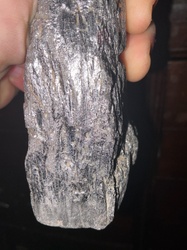
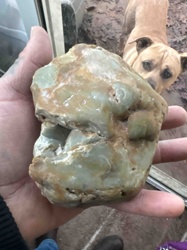
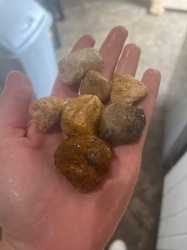
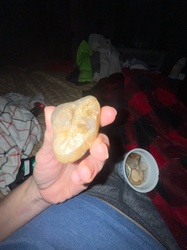
This item is a small, unpolished mineral specimen, identified as a raw banded agate fragment. Measured against the standard pencil eraser visible in the frame, the piece appears to be approximately 1 to 1.5 inches in length. It exhibits a distinct bicolored composition consisting of a deep reddish-brown (likely ferruginous) base and a lighter, tan-to-beige upper layer. The layering suggests a microcrystalline structure typical of chalcedony. The surface texture is naturally rough and matte, indicating it is an unworked field find rather than a lapidary-processed stone. The edges show irregular, conchoidal fracturing along the right side, which is characteristic of silica-based minerals. There is a noticeable waxy to dull luster on the exposed surfaces. No signs of human-made modifications, drill holes, or manufacturer marks are present, confirming its status as a natural geological sample. The condition is raw and stable, with naturally occurring surface debris and weathering consistent with lithic materials found in sedimentary environments. While functionally a raw stone, the clear color separation provides aesthetic interest for collectors of mineralogy specimens.
AI Appraisal Report

·AI can make mistakes·Verify before acting
I have examined the digital images and descriptive data for this raw banded agate specimen. Measuring approximately 1 to 1.5 inches, the piece exhibits the characteristic conchoidal fracturing and microcrystalline structure associated with the chalcedony family. The ferruginous iron-staining creates a pleasing bicolored aesthetic, and the waxy luster suggests a genuine mineral origin without synthetic enhancement. The specimen is in its natural, rough state, which, while authentic, places it in the category of 'field-grade' material. Market demand for raw, unpolished agate fragments of this size is generally high among beginning collectors and lapidary enthusiasts; however, the supply is vast. Currently, similar specimens sell in bulk by the pound or as individual 'bin items' in rock shops for nominal amounts. The lack of rare 'fortification' banding or unique inclusions (such as sagenite or plume) prevents this specific piece from reaching premium collector pricing. Its primary value lies in its educational use or as tumbling rough. Critically, a definitive identification cannot be made through images alone. While it appears to be agate, it could be a variety of common jasper or chert. A full authentication would require in-person testing, specifically a Mohs hardness test (expecting a 6.5–7) and a specific gravity test to distinguish it from similar-looking silicate minerals. No provenance was provided regarding the specific geographic locale (e.g., Lake Superior or Botswana), which could significantly influence value if the site were a known high-grade deposit. For a formal valuation, the stone's translucency would need to be tested with a backlit source to confirm the depth of the banding.

Get your items appraised

Instant estimates of your treasures with AI-powered appraisals

Browse More Appraisals