AI estimate as of July 13, 2025 · verify with a professional before acting
AI-Generated · Verify before acting
Everything on this page is generated by AI for informational purposes only. AI can make mistakes — the AI may misidentify items or misattribute them (artist, maker, brand, designer, origin, era). This is not an official valuation and should not be used for insurance, sale, tax, estate, legal, or lending purposes — or any decision requiring a certified appraisal. It is not an authoritative claim about any person, brand, or rights holder — do not share or rely on it as a factual statement about a third party. Always consult qualified professionals before making financial decisions.
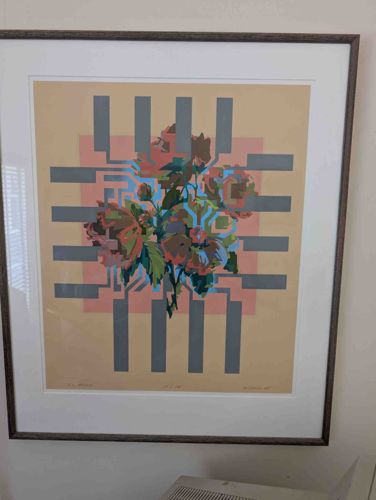
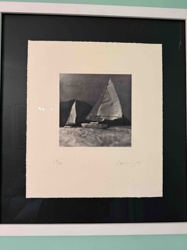
Upon visual examination of the provided image, I assess this framed floral abstract print by M. Sharp (1982) to be in very good condition. The colors appear vibrant and unfaded, and the print itself shows no visible tears, creases, or significant discoloration. The mat board is clean and well-presented. The visible numbering "T.L. #2/100" and date "'82" strongly suggest authenticity as a limited edition print from 1982. The signature 'M. SHARP' is consistent with known artists. The quality of the printmaking, with clear registration and sharp lines, indicates professional production, likely a serigraph or lithograph.
Market conditions for late 20th-century limited edition floral abstracts by lesser-known but competent artists vary. Demand is generally moderate, driven more by aesthetic appeal than by established artist recognition. The low edition number (#2/100) adds a slight rarity premium, but the overall edition size of 100 is fairly common. Factors significantly impacting value include the print's excellent condition, its appealing aesthetic, and its limited edition status.
Given these considerations, I estimate the appraisal value to be in the range of $250-400. This valuation is based on similar works by contemporary artists of the period in good condition sold through secondary markets.
LIMITATIONS: It is crucial to note that this appraisal is based solely on visual examination of the provided image. Full authentication would require in-person examination to verify print medium (e.g., serigraph vs. lithograph), inspect the paper quality, detect any subtle imperfections not visible in the image, and confirm the signature's authenticity firsthand. Provenance documentation (e.g., certificate of authenticity, purchase receipts) would further enhance certainty. Scientific testing, such as pigment analysis, could offer definitive confirmation of age and materials.