AI estimate as of October 12, 2025 · verify with a professional before acting
AI-Generated · Verify before acting
Everything on this page is generated by AI for informational purposes only. AI can make mistakes — the AI may misidentify items or misattribute them (artist, maker, brand, designer, origin, era). This is not an official valuation and should not be used for insurance, sale, tax, estate, legal, or lending purposes — or any decision requiring a certified appraisal. It is not an authoritative claim about any person, brand, or rights holder — do not share or rely on it as a factual statement about a third party. Always consult qualified professionals before making financial decisions.
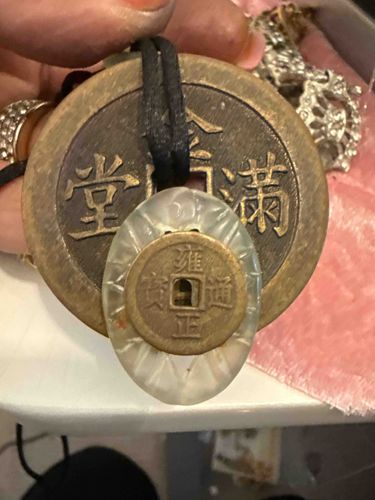
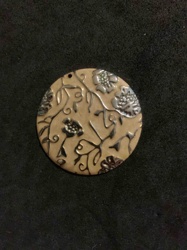
This item is a decorative pendant featuring a large, antique-style Chinese 'feng shui' coin, embellished with a smaller, genuine or replica ancient Chinese coin set within a translucent, light-colored resin or plexiglass oval. The main coin is circular, crafted from a dark, brass or bronze-toned metal with a prominent, aged patina, suggesting significant handling or intentional distressing to achieve an antique appearance. It features raised ideograms or characters, likely Chinese, on its surface, indicating 'Full Hall of Prosperity' or similar auspicious phrases commonly found on such items. There is no visible central square hole on the large coin, differentiating it from traditional cash coins. A black cord, possibly leather or waxed cotton, passes through an aperture at the top of the large coin, serving as a suspension loop. Affixed towards the bottom center of the large coin is an oval-shaped, milky white or light-grey translucent resin piece, which cradles a smaller, traditional Chinese cash coin. This smaller coin is also made of a brass or bronze-colored metal, exhibiting a central square hole and discernible Chinese characters, possibly 'Kangxi Tongbao' (康熙通寶), a common inscription from the Kangxi Emperor's reign (1662-1722) during the Qing Dynasty, implying it may be a genuine antique or a very well-made replica. The resin piece appears to have some minor wear or scuffs on its surface. The overall condition of the brass coins suggests an aged aesthetic, with a rich, dark brown and greenish patina, and some possible surface scratches consistent with use. The craftsmanship appears to be a blend of traditional coin design and modern decorative assembly. The item exudes a cultural or symbolic significance, likely intended for good fortune or protection, popular in East Asian traditions.
AI Appraisal Report
Upon visual examination of this Chinese Feng Shui Coin Pendant, I have assessed its value primarily as a decorative, symbolic item rather than a piece of fine antique jewelry. The main coin appears to be a modern, cast reproduction of a 'feng shui' charm, designed to look aged with an intentionally applied dark patina. It lacks the central square hole of traditional coinage, indicating it was made as a decorative element. The smaller coin, set in resin, resembles a 'Kangxi Tongbao' cash coin from the Qing Dynasty. However, without physical inspection, it is impossible to determine its authenticity. It could be a genuine, low-grade circulated coin or, more likely, a replica. The resin embellishment and modern cord assembly are contemporary.
The market for such items is robust but geared towards decorative and spiritual contexts, not antique collecting. Comparable new pendants are widely available online and in specialty shops, typically retailing for under $40. The primary value driver is its aesthetic and symbolic appeal for those interested in feng shui, not numismatic or material value. The metals are likely base alloys like brass, not precious metals.
My appraisal value is significantly limited by the inability to physically inspect the item. For a definitive valuation, I would need to test the metal composition of both coins and perform a close numismatic examination of the smaller coin to authenticate its period and origin. Without such verification, the item must be appraised as a contemporary costume or decorative piece.