AI estimate as of December 13, 2025 · verify with a professional before acting
AI-Generated · Verify before acting
Everything on this page is generated by AI for informational purposes only. AI can make mistakes — the AI may misidentify items or misattribute them (artist, maker, brand, designer, origin, era). This is not an official valuation and should not be used for insurance, sale, tax, estate, legal, or lending purposes — or any decision requiring a certified appraisal. It is not an authoritative claim about any person, brand, or rights holder — do not share or rely on it as a factual statement about a third party. Always consult qualified professionals before making financial decisions.
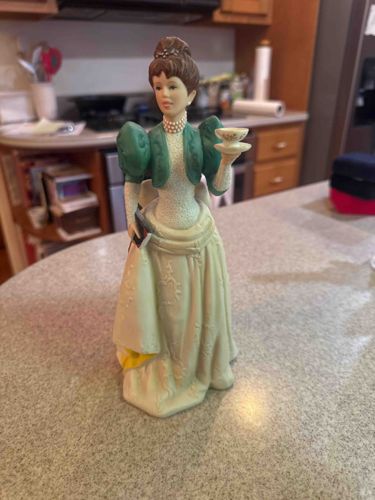
This is a ceramic or porcelain figurine depicting a Victorian-era lady, likely from the late 19th or early 20th century, or a modern reproduction in that style. She stands gracefully, holding a delicate teacup and saucer in her left hand. Her attire is characteristic of the period, featuring a long, flowing cream-colored gown with subtle embossed or painted floral patterns on the skirt, particularly visible on the front panel. The gown appears to have a prominent bustle or fullness at the back, indicated by the folds and sweep of the skirt. Over her gown, she wears a forest green bolero-style jacket with puffed sleeves, which adds a striking color contrast. Her neck is adorned with a painted pearl necklace. Her hair is styled in an elaborate updo, dark brown in color, with some subtle decorative elements that might represent flowers or a hair ornament. Her facial features are delicately painted, including defined eyebrows, eyes, and rosy lips, giving her a serene expression. The figurine exhibits a smooth, glossy finish typical of glazed ceramic or porcelain. While no specific maker's marks are visible in the provided image, the craftsmanship appears to be of good quality, with attention paid to the details of her clothing, hair, and accessories. There are no immediately apparent cracks, chips, or significant wear visible from the provided angles, suggesting it is in good to excellent condition. The base is an integral part of the sculpt, seamlessly flowing from the dress. The overall impression is one of elegance and period charm, possibly intended as a decorative collectible.
AI Appraisal Report
Based on my visual examination of the provided image, this Victorian Lady Figurine with Teacup appears to be in good to excellent condition, showing no immediately apparent cracks, chips, or significant aesthetic wear. The glossy finish suggests a glazed ceramic or porcelain construction. The intricate detailing of the gown, bolero, hair, and facial features indicates a reasonable level of craftsmanship. While I assess the condition to be strong, definitively authenticating its age as a true late 19th or early 20th-century piece versus a high-quality modern reproduction is not possible from images alone. Many contemporary manufacturers produce pieces in this classic style. Without manufacturer's marks or provenance, dating is largely speculative.
Market conditions for decorative ceramic or porcelain figurines of this type, especially those without definitive maker identification, are generally moderate. Comparables typically range from $40 for more common modern pieces to $150-200 for older, well-maintained unmarked examples with significant aesthetic appeal. Demand for unauthenticated pieces is stable but not exceptionally strong, and rarity is difficult to ascertain without specific provenance or identifiable hallmarks.
Factors impacting value include the excellent apparent condition and appealing aesthetic. However, the lack of a visible maker's mark and the inability to confirm its age are significant limiting factors. Full authentication would require a hands-on examination to assess material properties, manufacturing techniques (e.g., mold lines, hand-painting versus decals), and any hidden marks. A blacklight test could help detect repairs or restorations. Provenance, such as original purchase receipts or family records, would also significantly aid in dating and valuation. Without these, I must err on the side of caution regarding its age and origin.