AI Appraisal Estimate

AI-generated estimates · not official valuations

From the user

What was submitted

Photo and notes provided by the user — not generated by AI

Submitted item photo
Submitted photo · May 23, 2026

User's notes

No additional notes provided.

AI analysis below

AI appraisal

AI analysis & estimate

AI-Generated · Verify before acting

Everything below is generated by AI for informational purposes only. AI can make mistakes — the AI may misidentify items or misattribute them (artist, maker, brand, designer, origin, era). This is not an official valuation and should not be used for insurance, sale, tax, estate, legal, or lending purposes — or any decision requiring a certified appraisal. It is not an authoritative claim about any person, brand, or rights holder — do not share or rely on it as a factual statement about a third party. Always consult qualified professionals before making financial decisions.

Read the full disclaimer

AI Identification

·Not independently authenticated·Verify before acting

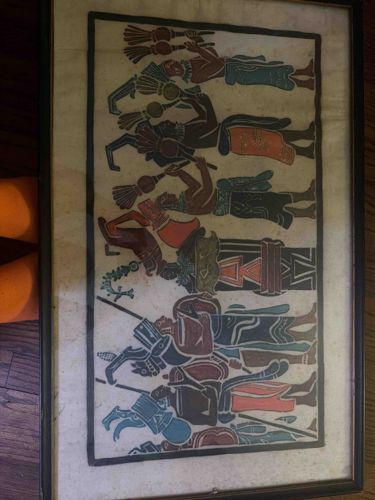
Modern Egyptian Papyrus Painting of a Ceremonial Procession

Fine Art / Non-Western Art

AI Estimated Value

·Not an official valuation·Verify before acting

$150-$250

As of May 23, 2026

AI Item Analysis

·AI can make mistakes·Verify before acting
This item is a contemporary Egyptian painting executed on authentic papyrus substrate, presented in a dark-toned rectangular frame. The artwork depicts a tiered ceremonial or judicial procession inspired by ancient Egyptian tomb reliefs and wall murals. It features eight stylized figures arranged in two horizontal registers. The upper register shows three figures in traditional kilts and ornate collars, holding what appear to be ceremonial scepters or fans. The lower register displays four figures similarly attired, with one central figure seemingly overseeing a ritual at an altar or offering table decorated with geometric patterns. The color palette is rich and earthy, utilizing ochre, terracotta red, cerulean blue, and black pigment to define the figures and their intricate headdresses and garments. The characteristic cross-hatch fiber texture of the papyrus is clearly visible, providing a translucent ivory-to-tan background. The overall condition shows some minor undulation of the paper under the glass and slight evidence of foxing or age-toning typical of natural organic fibers. The craftsmanship is indicative of high-quality souvenir or decorative art from the mid-to-late 20th century, likely produced in an Egyptian workshop specializing in traditional revivalist techniques. The framing is simple and serves to preserve the delicate edges of the hand-beaten papyrus roll.
AI Appraisal Report

·AI can make mistakes·Verify before acting
I have conducted a visual examination of this modern Egyptian papyrus painting depicting a ceremonial procession. The work is executed on authentic, hand-beaten Cyperus papyrus, characterized by its distinct horizontal and vertical fiber intersection. The pigments appear to be gouache or traditional inks, typical of revivalist workshop production from the late 20th century. The condition is fair to good; while the organic substrate shows natural undulation and slight foxing, these are common characteristics of the medium and do not significantly detract from its decorative appeal. The framing is functional but basic, likely dating to the same period as the art. In terms of marketability, these pieces are widely produced for the tourism and decor markets. While exhibiting high-quality craftsmanship for souvenir art, it lacks the provenance or signature of a recognized master such as Dr. Ragab, which limits its value to the secondary decorative market rather than the fine art investment tier. Comparables for framed modern papyri of this size and complexity consistently sell within the $100–$300 range at regional auctions and estate sales. A primary limitation of this appraisal is the inability to examine the verso of the painting or conduct chemical tests on the pigments to confirm the age and mineral composition. A physical inspection would be required to verify if the 'foxing' is superficial or if there is active mold growth behind the glass. Documentation from the original Egyptian gallery or workshop of origin would also be necessary to elevate its status from a 'decorative object' to a 'provenanced work of art.' Without such documentation, the value remains centered on its aesthetic and illustrative charm.

Get your items appraised

Instant estimates of your treasures with AI-powered appraisals

Browse More Appraisals