AI estimate as of November 9, 2025 · verify with a professional before acting
AI-Generated · Verify before acting
Everything on this page is generated by AI for informational purposes only. AI can make mistakes — the AI may misidentify items or misattribute them (artist, maker, brand, designer, origin, era). This is not an official valuation and should not be used for insurance, sale, tax, estate, legal, or lending purposes — or any decision requiring a certified appraisal. It is not an authoritative claim about any person, brand, or rights holder — do not share or rely on it as a factual statement about a third party. Always consult qualified professionals before making financial decisions.
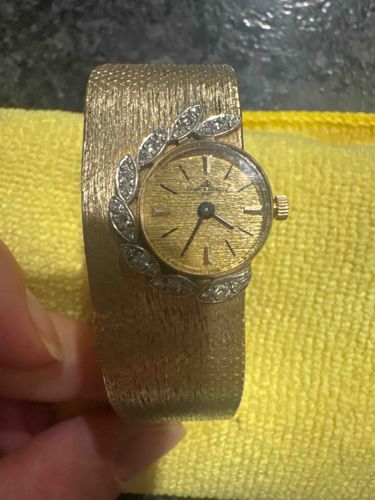
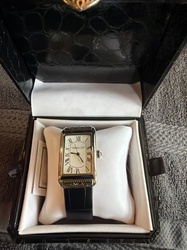
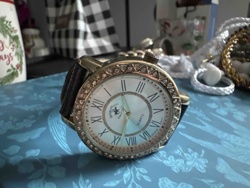
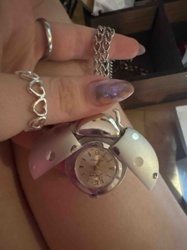
This is a vintage ladies' cuff watch, likely dating from the mid-20th century, possibly the 1950s or 1960s, given its style. The watch features a wide, textured gold-tone cuff bracelet with a distinct bark-like or brushed finish, offering a refined yet substantial appearance. The watch face is relatively small and round, integrated seamlessly into the cuff design. The dial itself is gold-toned with a sunburst or brushed texture, featuring simple applied baton hour markers in gold and slim black hands for hours, minutes, and possibly seconds, though a seconds hand is not clearly visible. The watch crystal appears domed, adding to its vintage aesthetic. A notable decorative element is a stylized leaf or laurel wreath motif, crafted from white gold or platinum, adorned with small, round-cut diamonds, which cradles one side of the watch face. This diamond-set detail adds a touch of elegance and luxury to the piece. The crown, used for setting the time, is visible on the right side of the watch case and has a fluted design. The overall condition appears good for its age, with some visible wear consistent with a vintage item, such as minor surface abrasions on the gold-tone cuff, though it retains its luster. The craftsmanship suggests a quality piece, likely from a reputable jeweler or watchmaker, intended as both a timepiece and a statement jewelry piece. The integration of the watch into a cuff bracelet was a popular trend during the mid-century, making this a distinctive example of that period's fashion.
AI Appraisal Report
Upon my virtual examination of this vintage ladies' cuff watch, I assess its condition as good for its age, observing minor surface abrasions on the gold-tone cuff consistent with a well-preserved vintage item. The style strongly suggests a mid-20th century origin, likely the 1950s or 1960s. The integration of the small, round watch face into a wide, textured gold-tone cuff, accented with a diamond-set white gold or platinum leaf motif, points to a quality, fashionable piece from that era.
Market conditions for vintage jewelry, particularly unique timepieces that double as statement pieces, remain stable. Comparable items from recognized jewelers of the period, featuring gold and diamond accents, often fetch values within the mid-to-high three figures, sometimes reaching low four figures depending on provenance and material composition. The demand for distinctive vintage watches, especially those with artistic cuff designs, is steady among collectors and fashion enthusiasts seeking unique accessories.
The rarity of such an integrated watch-bracelet design, coupled with its apparent good condition and diamond detailing, enhances its appeal. Factors significantly impacting value include the karat purity of the gold (which cannot be determined visually), the total carat weight and quality of the diamonds, and the brand/movement of the watch. Without physical examination, I cannot verify the authenticity of the precious metals or gemstones, nor can I confirm the functionality and originality of the watch's mechanical movement. An in-person inspection would allow for metal testing, gemological analysis, and a comprehensive assessment of the watch's internal mechanisms. Provenance documentation, such as original sales receipts or appraisal documents, would significantly aid in full authentication and value confirmation.