AI Appraisal Estimate

AI-generated estimates · not official valuations

From the user

What was submitted

Photo and notes provided by the user — not generated by AI

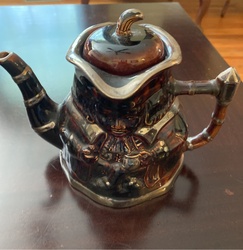
Submitted item photo
Submitted photo · May 27, 2026

User's notes

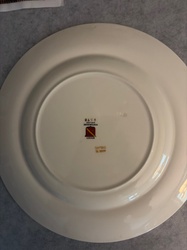
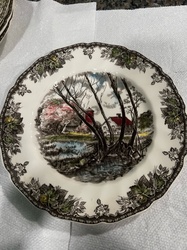
Bishop Stonier semi imperial porcelain made in England

AI analysis below

AI appraisal

AI analysis & estimate

AI-Generated · Verify before acting

Everything below is generated by AI for informational purposes only. AI can make mistakes — the AI may misidentify items or misattribute them (artist, maker, brand, designer, origin, era). This is not an official valuation and should not be used for insurance, sale, tax, estate, legal, or lending purposes — or any decision requiring a certified appraisal. It is not an authoritative claim about any person, brand, or rights holder — do not share or rely on it as a factual statement about a third party. Always consult qualified professionals before making financial decisions.

Note

This analysis also relies on unverified notes provided by the user, which may be incomplete or inaccurate and could affect the result.

Read the full disclaimer

AI Identification

·Not independently authenticated·Verify before acting

Bishop & Stonier Semi-Imperial Porcelain Wash Pitcher and Basin Set

Antique Ceramics / English Pottery

AI Estimated Value

·Not an official valuation·Verify before acting

$100.00 - $150.00

As of May 27, 2026

AI Item Analysis

·AI can make mistakes·Verify before acting
This is a Victorian-style wash pitcher and basin set manufactured by Bishop & Stonier of Hanley, England, known for their 'Semi-Imperial' porcelain. The set features a classic cream-colored ground decorated with a transfer ware floral motif, specifically large yellow poppies or chrysanthemums within a scrolled, sage-green cartouche. The pitcher is characterized by an ornate rococo-revival aesthetic, featuring a heavily scalloped rim, a thumb-rest handle with molded leaf details, and a pedestal base. The basin mirrors this design with a wide, fluted, and scalloped rim. Both pieces are highlighted with selective gilded accents along the edges and molded relief patterns. Based on the manufacturer and style, this set likely dates from the late 19th century to early 20th century (circa 1891-1910). Regarding condition, there is a visible significant crack running vertically through the body of the pitcher near the center floral spray. Substantial wear is also noted on the gilding along the rim of the basin, revealing the white porcelain underneath. There is evidence of crazing and some minor surface staining consistent with age and domestic use. The craftsmanship is high, typical of Staffordshire pottery production of the era, though the structural damage significantly impacts the utility and antique value.
AI Appraisal Report

·AI can make mistakes·Verify before acting
I have virtually examined this Bishop & Stonier 'Semi-Imperial' wash pitcher and basin set from the late Victorian period. The attribution to Hanley, England, is consistent with the 'B&S' and 'Semi-Imperial' marks used between 1891 and 1910. The Rococo-revival molding and floral transfer-ware design represent a fine example of middle-market Staffordshire production from that era. However, the condition of this specific set is the primary driver of value. While the aesthetics remain striking, the visible vertical crack in the pitcher is a major structural defect that severely compromises its integrity and utility. Furthermore, the significant gilding wear on the basin and surface crazing reflect heavy domestic use. In the current market, collectors of English pottery prioritize 'mint' or 'near-mint' condition; damaged pieces typically lose 60-80% of their potential market value. Comparable sets in pristine condition might fetch $400-$600, but given the structural damage, this set serves primarily as a decorative or 'cabinet' piece. Please note that this appraisal is based on image analysis; a physical inspection is necessary to check for hidden professional repairs or hairline fractures not visible in the photographs. To fully authenticate the set, I would recommend a blacklight (UV) test to detect overpainting and a tactile inspection of the glaze's 'ring' to confirm the extent of the internal damage.

Get your items appraised

Instant estimates of your treasures with AI-powered appraisals

Browse More Appraisals