AI Appraisal Estimate

AI-generated estimates · not official valuations

From the user

What was submitted

Photo and notes provided by the user — not generated by AI

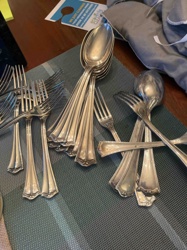
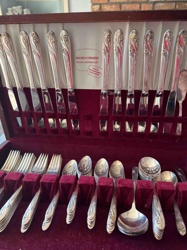
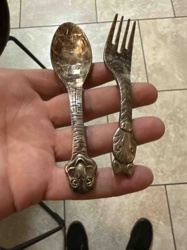
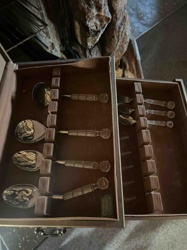
Submitted item photo
Submitted photo · June 8, 2026

User's notes

Gorham 1891 Saxony silverplate

AI analysis below

AI appraisal

AI analysis & estimate

AI-Generated · Verify before acting

Everything below is generated by AI for informational purposes only. AI can make mistakes — the AI may misidentify items or misattribute them (artist, maker, brand, designer, origin, era). This is not an official valuation and should not be used for insurance, sale, tax, estate, legal, or lending purposes — or any decision requiring a certified appraisal. It is not an authoritative claim about any person, brand, or rights holder — do not share or rely on it as a factual statement about a third party. Always consult qualified professionals before making financial decisions.

Note

This analysis also relies on unverified notes provided by the user, which may be incomplete or inaccurate and could affect the result.

Read the full disclaimer

AI Identification

·Not independently authenticated·Verify before acting

Gorham Silverplate Saxony Pattern Spoon (circa 1891)

Antique Flatware / Silverplate

AI Estimated Value

·Not an official valuation·Verify before acting

$10.00-$20.00

As of June 8, 2026

AI Item Analysis

·AI can make mistakes·Verify before acting
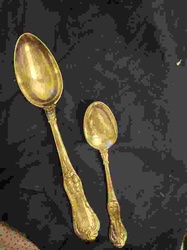
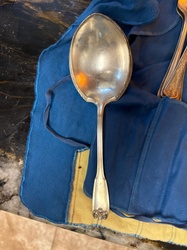
This is a single spoon from the Saxony pattern line produced by Gorham Manufacturing Company, originally introduced in 1891. Based on the bowl shape and scale relative to the background texture, this appears to be a standard teaspoon or oval soup spoon. The item is constructed from silver-plated base metal, showcasing the ornate, late-Victorian aesthetic characteristic of the era. The Saxony pattern is distinguished by its intricate rococo-revival motifs, featuring a decorative handle with scrolled borders, floral accents, and a central cartouche designed for personalization. The stem of the spoon carries the decorative elements down toward the junction and the heel of the bowl. Under close inspection, the item shows moderate signs of age-appropriate wear. There is noticeable tarnishing and surface oxidation throughout, which has darkened the recessed areas of the pattern, highlighting the depth of the casting. Micro-scratching is visible on the inner surface of the bowl, consistent with long-term use and cleaning. While the maker's marks are not visible in this angle, high-quality Gorham silverplate of this period typically bears the company's anchor symbol or name and the pattern date on the reverse of the handle. The craftsmanship reflects the industrial quality of the Gilded Age, emphasizing formal dining elegance.
AI Appraisal Report

·AI can make mistakes·Verify before acting
Upon visual examination of the Gorham Saxony pattern spoon (introduced 1891), I find the item to be consistent with late-Victorian industrial production. The casting demonstrates the deep relief characteristic of Gorham’s high-quality silverplate, specifically their 'Electroplate' line which was designed to mimic the weight and luster of sterling silver during the Gilded Age. The condition is fair to good; while the structural integrity remains intact, the heavy oxidation and micro-scratching indicate a lifetime of utility. I note significant 'bleeding' potential where the silver plating may be thinning on high-contact points, though the current patina obscures a definitive determination of base-metal exposure. The market for individual silverplated flatware remains soft. Unlike sterling silver (0.925 fineness), which retains intrinsic bullion value, silverplate value is driven entirely by secondary market replacement demand or aesthetic appeal. Saxony is a collectible pattern, but it is not among the 'top-tier' rare motifs like Gorham's figurals. Comparables for single teaspoons or soup spoons in this pattern typically realize between $10 and $20 at auction or through replacement services. Limitations: This appraisal is based solely on digital imagery. To provide a definitive authentication, an in-person inspection is required to verify the 'EP' (Electroplate) or 'Anchor' hallmarks on the reverse. I would also need to perform a weight-displacement test or use an XRF scanner to confirm the absence of solid silver content, as some high-end Gorham pieces were produced in both plate and sterling variants. Documentation of provenance or original box sets could marginally improve the valuation within a specialized Victorian collection.

Get your items appraised

Instant estimates of your treasures with AI-powered appraisals

Browse More Appraisals