AI estimate as of August 16, 2025 · verify with a professional before acting
AI-Generated · Verify before acting
Everything on this page is generated by AI for informational purposes only. AI can make mistakes — the AI may misidentify items or misattribute them (artist, maker, brand, designer, origin, era). This is not an official valuation and should not be used for insurance, sale, tax, estate, legal, or lending purposes — or any decision requiring a certified appraisal. It is not an authoritative claim about any person, brand, or rights holder — do not share or rely on it as a factual statement about a third party. Always consult qualified professionals before making financial decisions.
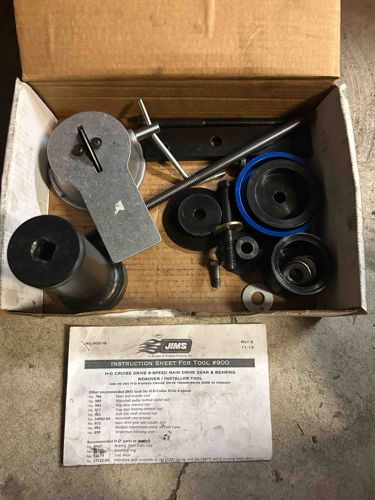
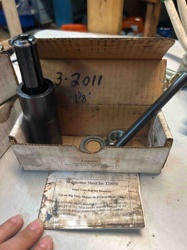
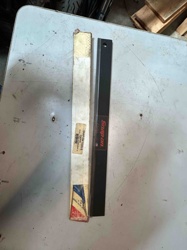
This item is a JIMS Instruction Sheet for Tool #900, described as an 'H-D CRUISE DRIVE 6-SPEED MAIN DRIVE GEAR & BEARING REMOVER / INSTALLER TOOL'. The instruction sheet visually appears to be made of standard paper, likely a semi-gloss or matte finish, showing some wrinkles and a slight yellowing consistent with age or use. The text is printed in black ink, featuring the 'JIMS' logo at the top, a stylized flame design with the company name. The sheet lists recommended tools and parts for the described operation, indicating its function as a guide for specialized motorcycle maintenance. The kit itself, housed in an open cardboard box, consists of various metal components, primarily steel, with some parts appearing to be machined aluminum due to their lighter, matte grey finish. There are several cylindrical and disc-shaped pieces, as well as threaded rods and bolts, all designed for precise fitting and removal/installation tasks. One notable component is a large, flat, irregularly shaped metal piece, possibly a wrench or a specialized pressing plate, with visible bolt holes. Another part is a substantial, dark cylindrical piece, possibly a bearing driver, with a hexagonal recess. A prominent blue ring, likely a plastic or urethane component, suggests specialized applications within the tool's function, possibly for protecting surfaces or providing cushioning. The tools exhibit minor wear and scuffs, consistent with having been used or handled, but no significant damage like heavy rust or warping is immediately apparent. The cardboard box is a simple, utilitarian brown, showing visible dirt and wear on its interior. The tools collectively appear to be well-machined, suggesting professional-grade quality and precision. The overall condition suggests a used but functionally sound set of tools.
AI Appraisal Report
Based on my visual examination of the provided image, I can offer an appraisal of this JIMS H-D Cruise Drive 6-Speed Main Drive Gear & Bearing Remover / Installer Tool Kit (#900). The instruction sheet, while showing age-related wrinkles and yellowing, is consistent with an original document for a specialized tool, lending authenticity to the kit. The tools themselves appear to be well-machined from steel and aluminum, exhibiting minor wear and scuffs, which is expected for used professional-grade automotive tools but suggests good functional condition without significant damage. The prominent JIMS branding, a reputable name in specialty motorcycle tools, further supports its authenticity.
In terms of market conditions, specialty automotive tools, especially those for specific motorcycle models like Harley-Davidson, maintain strong demand among professional mechanics and serious DIY enthusiasts. New JIMS tools are generally expensive due to their precision and specialized application. While this kit is used, its apparent completeness and good condition mean it retains significant utility. Comparables for such specialized JIMS kits, when available used, often fetch prices considerably higher than generic tools.
Rarity is moderate; these are not mass-market tools but are produced for a specific niche. Demand remains consistent as long as the associated motorcycle models are in use. The dirty interior of the cardboard box is merely cosmetic and does not detract from the tool's value.
Limitations: My authentication is based purely on visual cues from the image. For full authentication, I would require a physical inspection to verify material integrity, examine tool markings (e.g., part numbers, manufacturing stamps) for consistency, and potentially test the fit and function of key components. Provenance documentation, such as original purchase receipts, would also solidify its history and authenticity beyond visual assessment alone.