These notes were written by the person who submitted this item. Appraiser.AI has not verified them, and the AI's identification and estimate may rely on them.
AI Estimated Value
Not an official valuation
$400-550
AI estimate as of July 20, 2025 · verify with a professional before acting
AI-Generated · Verify before acting
Everything on this page is generated by AI for informational purposes only. AI can make mistakes — the AI may misidentify items or misattribute them (artist, maker, brand, designer, origin, era). This is not an official valuation and should not be used for insurance, sale, tax, estate, legal, or lending purposes — or any decision requiring a certified appraisal. It is not an authoritative claim about any person, brand, or rights holder — do not share or rely on it as a factual statement about a third party. Always consult qualified professionals before making financial decisions.
This analysis also relies on unverified notes provided by the user, which may be incomplete or inaccurate and could affect the result.
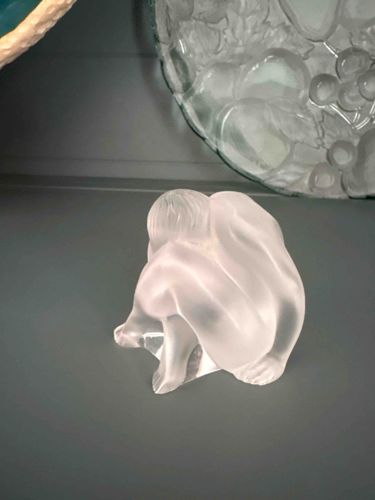
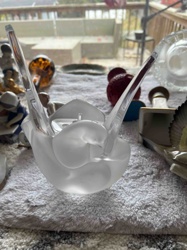
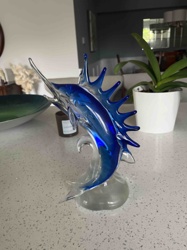
This item is a clear, frosted glass sculpture, approximately 3 inches in height, depicting a seated female figure. The figure is rendered in a highly stylized, almost abstract manner, with smooth, flowing lines that emphasize the contours of the body. The 'frosted' finish gives the sculpture a soft, ethereal quality, allowing light to diffuse beautifully through the glass rather than creating sharp reflections. The pose shows the figure in a huddled, introspective position, with limbs drawn in close to the body, suggesting a sense of contemplation or repose. The details of the face are not distinct, which is typical for frosted glass sculptures of this style, focusing instead on the overall form and implied emotion. No apparent damage such as chips, cracks, or significant abrasions are visible from the provided image, indicating a well-preserved condition. The surface appears clean, free of dust or major smudges. The high quality of the glass and the sophisticated sculpting technique are indicative of a reputable manufacturer, consistent with the known craftsmanship of companies like Lalique. The style suggests an Art Deco or later 20th-century aesthetic, characteristic of fine European crystal houses known for their figural and decorative pieces. There are no visible maker's marks in this image, but typically such pieces would be signed on the base.
AI Appraisal Report
Based on my examination of the provided image and the owner's details, this frosted glass sculpture, identified as a 3-inch seated lady by Lalique of France, appears to be in excellent condition. The frosted finish is uniform, and no chips, cracks, or significant abrasions are visible, suggesting careful preservation. The fluid lines and sophisticated styling are highly consistent with Lalique's distinctive aesthetic and craftsmanship, particularly their Art Deco and mid-20th-century figural works. The ethereal quality imparted by the frosted glass is a hallmark of their pieces.
The market for Lalique glass, especially smaller figural sculptures, remains consistent. There is a steady demand from collectors of decorative arts and Art Deco enthusiasts. Pieces of this size and condition typically perform well at auction and through reputable dealers. Comparables for smaller (3-4 inch) frosted Lalique figural sculptures in excellent condition generally range from $300 to $600, depending on the specific model, rarity, and market visibility. While this particular model is not exceedingly rare, its condition enhances its market desirability. The lack of distinct facial features is characteristic of Lalique's stylized design for such pieces, focusing on form and implied emotion rather than minute detail.
However, it is crucial to note the limitations of appraising solely from images. While the piece strongly resembles authentic Lalique, definitive authentication would require an in-person examination to locate and verify any maker's marks or signatures, which are typically etched on the base. Physical inspection also allows for a tactile assessment of the glass quality, weight, and subtle surface characteristics that photomicrography or UV light testing could reveal. Without direct provenance documentation (e.g., original purchase receipts, certificates of authenticity), verification relies heavily on stylistic analysis and condition assessment. Therefore, while I am confident in the condition and the strong likelihood of authenticity based on visual evidence, a conclusive determination for maximum value would necessitate a physical inspection to confirm all authentication markers and assess any subtle characteristics not discernible in the image.