AI estimate as of October 30, 2025 · verify with a professional before acting
AI-Generated · Verify before acting
Everything on this page is generated by AI for informational purposes only. AI can make mistakes — the AI may misidentify items or misattribute them (artist, maker, brand, designer, origin, era). This is not an official valuation and should not be used for insurance, sale, tax, estate, legal, or lending purposes — or any decision requiring a certified appraisal. It is not an authoritative claim about any person, brand, or rights holder — do not share or rely on it as a factual statement about a third party. Always consult qualified professionals before making financial decisions.
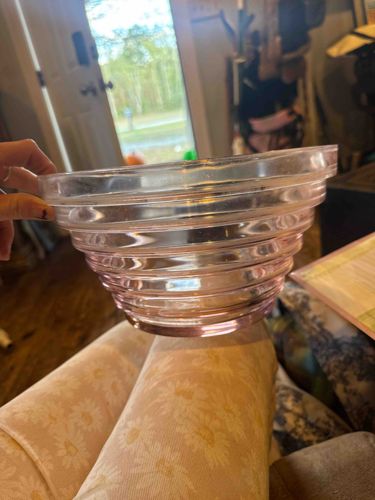
This item is a circular mixing bowl, likely made of Depression-era blush pink glass, characterized by its translucent, slightly rosy hue. The bowl features a distinctive ribbed or concentric ring design that creates a stepped profile from the rim down to the base. The ribs appear to be consistently spaced, adding both a decorative and practical element to the bowl, possibly for improved grip or structural integrity. The rim itself is simple and unadorned, showcasing the clean lines typical of utilitarian and collectible glassware from its presumed period. The texture of the glass appears smooth, with a subtle sheen that reflects light. Without clear scale, the exact dimensions are difficult to ascertain, but it appears to be a medium-sized bowl, suitable for mixing or serving. No prominent chips, cracks, or significant wear are immediately visible from the provided image, suggesting it is in good to very good condition, though a full inspection would be required to confirm. The delicate pink color, coupled with the ribbed design, strongly points to it being a piece of Depression Glass, a popular style of inexpensive glass manufactured during the Great Depression (roughly 1929-1939). There are no visible maker's marks or signatures in the image. Its craftsmanship is indicative of mass-produced glassware from that era, prioritizing affordability and functional aesthetics. The unique historical context and charming color often make such pieces collectible.
AI Appraisal Report
Based on my visual examination of the provided image, this indeed appears to be a Pink Depression Glass Ribbed Mixing Bowl. The translucent, rosy hue and the concentric ribbed design are classic hallmarks of Depression-era glassware, specifically the popular ‘pink’ variant. The craftsmanship aligns with mass-produced utility items from that period, which focused on affordability and functional aesthetics. From the image, the condition appears to be very good to excellent, with no visible chips, cracks, or significant wear, which is a major positive factor for its value.
In terms of market conditions, Depression Glass, while collectible, is generally not rare, and numerous pieces were produced. Mixing bowls like this, particularly in common patterns, are readily available. Comparable sales for similar pink ribbed mixing bowls typically fall into the $25-$45 range, depending on pattern, size, and condition. While demand exists among collectors of Depression Glass, it isn't exceptionally high for common patterns like this one, nor is it considered a rare item.
Factors significantly impacting value include its appealing color and good condition. The absence of a maker's mark, while common for Depression Glass, means we cannot attribute it to a specific manufacturer without further information, which might otherwise slightly increase its value. Its historical context and charming color contribute to its ongoing appeal.
It is crucial to note the limitations of image-based appraisal. While it strongly appears authentic, a definitive authentication would require a hands-on inspection to check for subtle imperfections, manufacturing flaws, or signs of reproduction that are not visible in photographs. I would also need to physically examine for any minute flea bites, scratches, or color inconsistencies that could reduce its value. Without a physical inspection, provenance documentation, or scientific testing, I cannot definitively rule out the possibility of it being a modern reproduction, though the visual evidence strongly suggests authenticity as a vintage piece.