AI Appraisal Estimate

AI-generated estimates · not official valuations

From the user

What was submitted

Photo and notes provided by the user — not generated by AI

Submitted item photo
Submitted photo · June 6, 2026

User's notes

No additional notes provided.

AI analysis below

AI appraisal

AI analysis & estimate

AI-Generated · Verify before acting

Everything below is generated by AI for informational purposes only. AI can make mistakes — the AI may misidentify items or misattribute them (artist, maker, brand, designer, origin, era). This is not an official valuation and should not be used for insurance, sale, tax, estate, legal, or lending purposes — or any decision requiring a certified appraisal. It is not an authoritative claim about any person, brand, or rights holder — do not share or rely on it as a factual statement about a third party. Always consult qualified professionals before making financial decisions.

Read the full disclaimer

AI Identification

·Not independently authenticated·Verify before acting

White Ceramic Handled Saucer

Ceramic Tableware

AI Estimated Value

·Not an official valuation·Verify before acting

$10-25

As of June 6, 2026

AI Item Analysis

·AI can make mistakes·Verify before acting
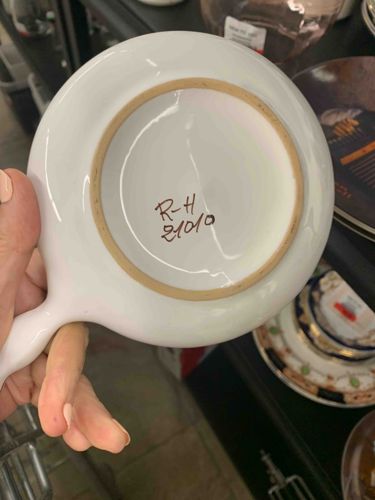
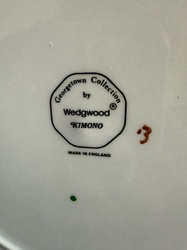
The item is a white ceramic or porcelain saucer, possibly part of a larger tea or coffee set, distinguished by an integrated handle. The top side, not fully visible, appears to be deeply recessed forming a bowl-like shape. The underside, which is clearly depicted, is a glossy white glaze with a visible unglazed footrim, revealing the natural light brown or beige color of the ceramic body beneath. The footrim is circular and slightly raised, typical for ceramic ware to prevent scratching surfaces and provide stability. A notable feature is the handwritten marking in black on the unglazed center of the base, which reads "R-H 21010". This marking could represent a maker's initial (R-H) and a model or production number (21010), suggesting it is either a manufacturer's mark, an artist's signature for a handmade piece, or a production code. The handle extends gracefully from one side of the circular dish, designed to be held by the user. Its construction seems seamless with the main body of the dish, indicating a single-piece mold or carefully joined elements. The overall aesthetic suggests functionality with a clean, minimalist design, characteristic of modern or mid-20th century ceramics. There are no visible chips, cracks, or significant wear on the glazed surface or the footrim, indicating good condition, though the full extent of the item's surface and any potential design elements on the top are not ascertainable from this image alone. The quality appears good, with consistent glazing and a neat finish. The item's primary purpose is likely holding a cup or bowl, given its saucer-like form and handle.
AI Appraisal Report

·AI can make mistakes·Verify before acting
Upon examination of the white ceramic handled saucer, my assessment is based on the visual information provided. The piece presents a minimalist, functional design, possibly dating to the mid-20th century or later. The form, with its integrated handle and deep recess, is unusual and suggests it may have held a specific type of cup or bowl, possibly a demitasse or a bouillon cup. The overall condition appears to be very good, with no visible chips, cracks, or crazing in the glaze from the underside view. The handwritten marking 'R-H 21010' on the unglazed footrim is a key element. While it could be a manufacturer's code or artist's initials, identifying the specific maker 'R-H' is challenging without further reference. If this mark corresponds to a recognized designer or a notable studio like Royal Haeger, the value would increase. However, if it's from an unknown or hobbyist maker, the value is primarily decorative. The market for such individual, unsigned or unidentifiable ceramic pieces is modest. Demand is typically low unless the piece can be attributed to a specific design movement or a known maker. The primary factor influencing its value is the identity of 'R-H'. Full authentication is limited by the inability to physically inspect the saucer. A tactile examination would allow for feeling the weight and quality of the ceramic body, and closer inspection of the mark might reveal identifying details. Verification would require comparing the mark against ceramic databases or consulting maker's mark encyclopedias. Without definitive identification, the piece is valued as a well-made but anonymous piece of 20th-century serviceware.

Get your items appraised

Instant estimates of your treasures with AI-powered appraisals

Browse More Appraisals