AI estimate as of August 28, 2025 · verify with a professional before acting
AI-Generated · Verify before acting
Everything on this page is generated by AI for informational purposes only. AI can make mistakes — the AI may misidentify items or misattribute them (artist, maker, brand, designer, origin, era). This is not an official valuation and should not be used for insurance, sale, tax, estate, legal, or lending purposes — or any decision requiring a certified appraisal. It is not an authoritative claim about any person, brand, or rights holder — do not share or rely on it as a factual statement about a third party. Always consult qualified professionals before making financial decisions.
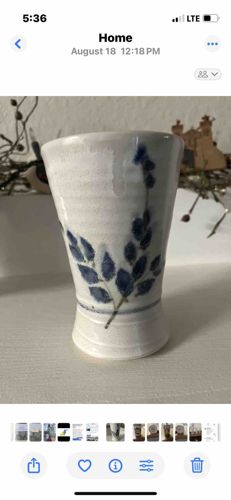
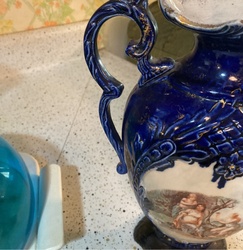
This appears to be a handcrafted ceramic vase or beaker, characterized by its rustic, organic aesthetic. The vessel has a cylindrical shape that tapers slightly inward towards a narrower, flared base, creating a subtle hourglass or trumpet-like silhouette. The primary material is a light-colored, possibly off-white or cream, stoneware or earthenware clay, evident from the visible flecks and natural variations in the body. The exterior features a matte or semi-gloss glaze that appears somewhat unevenly applied, contributing to its handmade appeal. The most prominent decorative element is a hand-painted botanical design in a vibrant, deep cobalt blue. This design depicts leafy branches with multiple leaves, some seemingly arranged in clusters, and possibly small berries or flowers. The blue pigment shows variations in intensity, suggesting a brushwork technique. The base of the vessel is slightly wider than the mid-section, providing stability, and displays concentric rings, indicative of it being thrown on a potter's wheel. No visible maker's marks or signatures are discernable from the provided image. The overall condition appears good with no obvious chips or cracks, and the somewhat textured surface and glaze suggest a naturalistic or wabi-sabi aesthetic, where minor imperfections are considered part of its charm rather than damage. The style suggests it could be a piece of studio pottery, likely from the late 20th century or early 21st century, given its handcrafted look and folk art appeal. The construction quality seems robust, typical of functional pottery.
AI Appraisal Report
Upon visual examination of this Hand-Painted Ceramic Vase with Blue Botanical Design, I assess its condition good, with no apparent chips, cracks, or significant wear. The vibrant blue botanical design remains intact, and the overall rustic aesthetic, including the uneven glaze and textured surface, appears intentional and contributes to its handmade charm rather than indicating damage. Authenticity, based solely on the image, points towards a piece of studio pottery, likely late 20th or early 21st century. The concentric rings at the base suggest it was wheel-thrown, confirming its handcrafted nature.
Market conditions for artisan-made ceramic vases like this are generally stable, with a moderate demand for unique, decorative, and functional pieces. Comparables would include contemporary studio pottery from individual artists focusing on folk art or wabi-sabi aesthetics. While not exceptionally rare, handcrafted pieces with unique designs hold appeal to collectors seeking distinctive home decor. Factors positively impacting value include the appealing hand-painted design and its good condition. The functional size and decorative appeal will also draw potential buyers.
Limitations in authenticity verification from images alone are significant. I cannot definitively ascertain the specific clay body, the exact glaze type, or the precise construction methods (e.g., kiln type and firing temperature) without a physical examination. To fully authenticate and determine the maker (if any marks are obscured or internal), I would need to physically inspect the base for hidden marks, assess the weight and tactile qualities, and potentially conduct provenance research if a known artist is suspected. Scientific testing, such as material analysis, would be required for a definitive age determination or material composition.