Expressionist Mountain Village Landscape by Max Hermann Pechstein
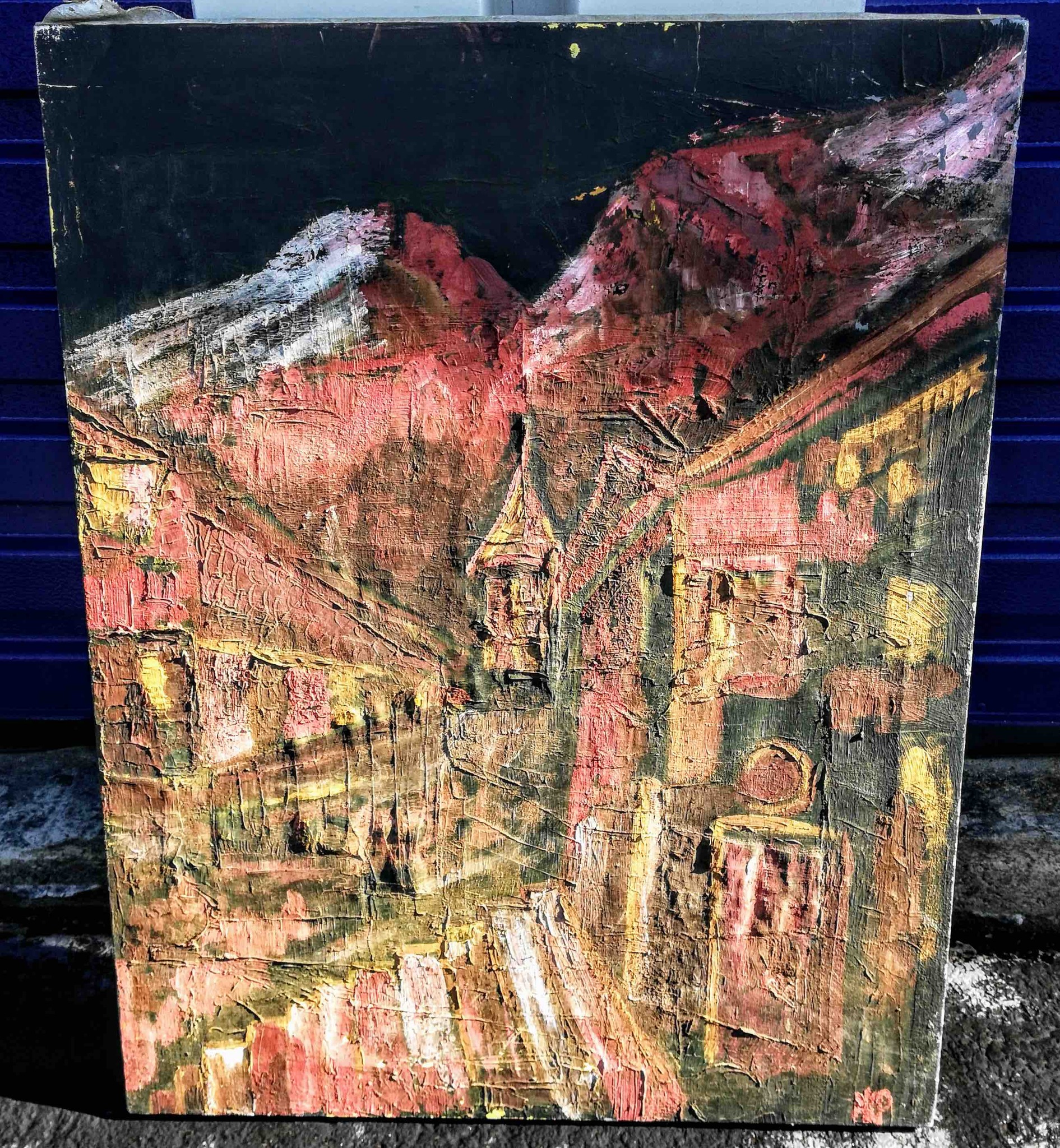
This original oil on canvas, measuring 24 by 36 inches, is a striking example of German Expressionist landscape painting attributed to Max Hermann Pechstein. The composition features a rugged mountain village rendered with heavily impastoed paint, where thick, textured strokes create a sense of physical weight and dynamism. The color palette is dominated by earthen reds, burnt ochres, and muted yellows, sharply contrasted against an abyssal black sky. The structural elements of the village—peaked roofs and architectural silhouettes—are abstracted through energetic brushwork, suggesting a late Die Brücke style (circa 1910s-1920s). The surface reveals a highly tactile topography from the layering of pigments, with visible tool marks likely from a palette knife. There are signs of age-appropriate craquelure and some minor surface abrasions across the high points of the impasto. Faint yellow pigment transfer or paint loss is visible at the very top edge. The work demonstrates the artist's signature use of bold, raw emotion over literal representation, utilizing a flattened perspective and vigorous application to convey the intensity of the landscape.
AI-Generated Appraisal Disclaimer
Estimated Value
$450,000 - $650,000
Basic Information
Category
Fine Art - Painting
Appraised On
April 10, 2026
Estimated Value
$450,000 - $650,000
Additional Details Provided By Owner
User Provided Information
Max Hermann Pechstein. Original oil on canvas. Size: 24” x 36”
Item Description
This original oil on canvas, measuring 24 by 36 inches, is a striking example of German Expressionist landscape painting attributed to Max Hermann Pechstein. The composition features a rugged mountain village rendered with heavily impastoed paint, where thick, textured strokes create a sense of physical weight and dynamism. The color palette is dominated by earthen reds, burnt ochres, and muted yellows, sharply contrasted against an abyssal black sky. The structural elements of the village—peaked roofs and architectural silhouettes—are abstracted through energetic brushwork, suggesting a late Die Brücke style (circa 1910s-1920s). The surface reveals a highly tactile topography from the layering of pigments, with visible tool marks likely from a palette knife. There are signs of age-appropriate craquelure and some minor surface abrasions across the high points of the impasto. Faint yellow pigment transfer or paint loss is visible at the very top edge. The work demonstrates the artist's signature use of bold, raw emotion over literal representation, utilizing a flattened perspective and vigorous application to convey the intensity of the landscape.

Get Your Items Appraised
Instant estimates of your treasures with AI-powered instant appraisals