AI estimate as of August 7, 2025 · verify with a professional before acting
AI-Generated · Verify before acting
Everything on this page is generated by AI for informational purposes only. AI can make mistakes — the AI may misidentify items or misattribute them (artist, maker, brand, designer, origin, era). This is not an official valuation and should not be used for insurance, sale, tax, estate, legal, or lending purposes — or any decision requiring a certified appraisal. It is not an authoritative claim about any person, brand, or rights holder — do not share or rely on it as a factual statement about a third party. Always consult qualified professionals before making financial decisions.
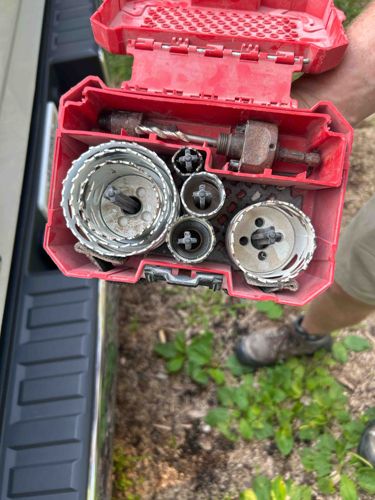
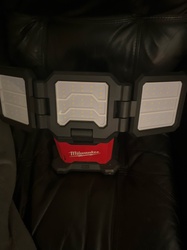
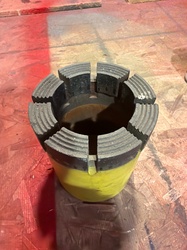
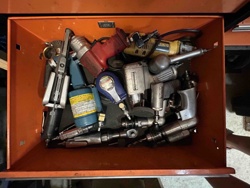
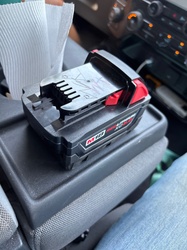
This item is a used hole saw kit, contained within a recognizable red plastic carrying case, characteristic of the Milwaukee Tool brand. The case itself appears to be made of durable, molded plastic with a textured, non-slip pattern on the inside of the lid, indicating a design meant for rugged use. The red color is consistent with Milwaukee's branding. Visible wear on the case includes dirt, scuff marks, and some discoloration inside, suggesting frequent use in a work environment.
The kit comprises multiple hole saws of varying diameters, likely made of high-speed steel (HSS) or bi-metal, given their common application for cutting through various materials like wood, plastic, and metal. The teeth on the hole saws show signs of use, with some exhibiting residue or minor dulling, though no significant breakage is immediately apparent. The surfaces of the hole saws are a dull metallic gray, consistent with used steel, and some show dirt or dust accumulation. Also present is an arbor with a pilot drill bit, which is used to chuck the hole saw into a drill. This arbor is significantly dirtied and shows heavy rust and grime buildup, particularly on the threaded shaft and the hexagonal drive end, indicating a lack of recent cleaning and exposure to moisture. Its pilot drill bit also appears worn. Additionally, there are smaller, individual straight-shank drill bits or adapters possibly for smaller hole saw applications or pilot holes. The overall condition suggests that the kit has been actively used and is in 'fair' to 'good' working condition, despite the cosmetic wear and rust on the arbor. The quality of craftsmanship for these tools is generally high for professional-grade use. There are no clear visible manufacturing marks or dates on the tools themselves in this image, but the case strongly points to Milwaukee as the manufacturer. Based on the visible wear and tool types, the estimated age is likely several years old, as these tools typically last a long time with proper care, which seems somewhat lacking here for the arbor.
AI Appraisal Report
I have examined the provided image of this Milwaukee Hole Saw Kit. The kit is housed in a distinctive red Milwaukee plastic case, confirming its authenticity as a Milwaukee Tool product, though specific tool markings are not visible. Its condition indicates significant use, with the case showing dirt and scuffs, and the hole saws exhibiting typical wear like residue and minor dulling. The most notable condition issue is the arbor, which displays heavy rust and grime, suggesting neglect.
In terms of market conditions, used Milwaukee hole saw kits are commonly available. While this kit is functional ('fair' to 'good' condition), the visible wear, especially on the arbor, diminishes its value compared to a well-maintained or new kit. Demand for these tools is consistent among tradespeople and DIY enthusiasts. However, they are not rare. The rust on the arbor significantly impacts value, as it suggests the need for cleaning or potential replacement, and indicates a lack of proper tool care. Factors benefiting its value include the recognizable Milwaukee branding and the overall completeness of the kit, likely high-quality HSS or bi-metal construction.
Limitations in authenticity verification from images alone exist. While the case strongly points to Milwaukee, specific tool series or material composition cannot be definitively confirmed without physical examination of markings or material testing. In-person inspection would allow for a detailed assessment of tooth sharpness, and the extent of arbor rust, and verify the presence of all components and their functionality. Provenance documentation could provide a full history of ownership and use, further aiding appraisal.