AI estimate as of August 16, 2025 · verify with a professional before acting
AI-Generated · Verify before acting
Everything on this page is generated by AI for informational purposes only. AI can make mistakes — the AI may misidentify items or misattribute them (artist, maker, brand, designer, origin, era). This is not an official valuation and should not be used for insurance, sale, tax, estate, legal, or lending purposes — or any decision requiring a certified appraisal. It is not an authoritative claim about any person, brand, or rights holder — do not share or rely on it as a factual statement about a third party. Always consult qualified professionals before making financial decisions.
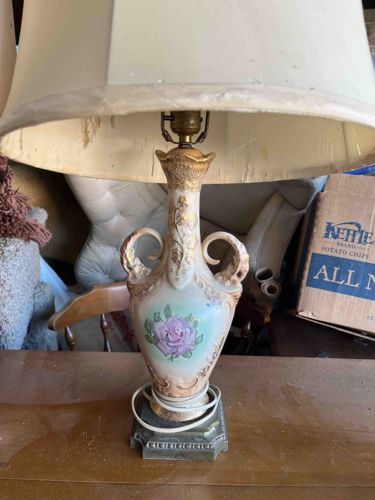
This is an ornate vintage or antique table lamp, likely from the early to mid-20th century, possibly ceramic or porcelain with a decorative metal base. The lamp base is primarily off-white or cream-colored, featuring intricate raised gold detailing, possibly gold gilt or paint, which gives it a rich, textured appearance. The body of the lamp is amphora-shaped, with two large, decorative scroll-like handles in gold, extending from the neck to the mid-section. A prominent feature is the hand-painted purple rose with green leaves on a pale blue or aqua background, centrally located on the front of the lamp body, showcasing a delicate artistic touch. The base of the lamp is a stepped, rectangular metal structure with ornate embossed patterns, appearing to be brass or bronze, adding stability and a classic touch. The lamp is topped with a cream or off-white fabric lampshade, which exhibits visible signs of age and wear, including tears or fraying along the bottom edge, discoloration, and small dark spots. The electrical cord and plug are visible, suggesting it is a functional electric lamp, though the cord appears somewhat aged. There is also a brass-toned light socket visible beneath the lampshade. The overall condition suggests significant patina and wear consistent with age, particularly on the lampshade, while the ceramic body appears to be in relatively good condition, though detailed inspection would be needed to identify any chips or cracks. The craftsmanship suggests a manufactured decorative item, rather than a unique artisan piece. The design aesthetic points towards a Victorian, Edwardian, or Art Nouveau influence, given the floral motif, ornate handles, and metallic accents.
AI Appraisal Report
Upon visual examination of the provided image, this Vintage Ornate Ceramic Table Lamp with Rose Motif presents as a decorative piece likely from the early to mid-20th century, consistent with Victorian, Edwardian, or Art Nouveau influences. The amphora-shaped ceramic body with raised gold detailing and hand-painted purple rose motif suggests a manufactured item rather than a unique artisan piece. The ornate metal base appears to be brass or bronze.
The overall condition of the lamp's ceramic body seems relatively good, with no obvious major chips or cracks discernible from the image. However, the accompanying fabric lampshade is in poor condition, exhibiting significant wear, tears, fraying, and discoloration, which detracts substantially from the lamp's aesthetic appeal and value. I note the visible aged electrical cord and brass-toned socket, indicating it is an electrified lamp, though functionality and safety would need in-person testing.
In terms of market conditions, vintage decorative lamps of this type, especially those with visible condition issues on key components like the lampshade, generally command modest prices. While the ornate design and rose motif might appeal to specific collectors of vintage home decor, the commonality of similar manufactured items limits rarity. Comparable sales typically show prices varying widely based on overall condition, artistic merit, and origin. The damaged lampshade significantly impacts value, almost certainly requiring replacement by a new owner. The lack of provenance documentation also limits its valuation as a historically significant piece.
My assessment of authenticity is limited to visual cues; a physical examination would be crucial to confirm the material composition (ceramic vs. porcelain), verify the age via electrical components and construction techniques, and ascertain the extent of any hidden damage to the ceramic or metal. Without in-person inspection, I cannot definitively rule out repairs or assess the lamp's electrical safety. Therefore, this appraisal is based solely on the visual evidence provided.