AI estimate as of November 13, 2025 · verify with a professional before acting
AI-Generated · Verify before acting
Everything on this page is generated by AI for informational purposes only. AI can make mistakes — the AI may misidentify items or misattribute them (artist, maker, brand, designer, origin, era). This is not an official valuation and should not be used for insurance, sale, tax, estate, legal, or lending purposes — or any decision requiring a certified appraisal. It is not an authoritative claim about any person, brand, or rights holder — do not share or rely on it as a factual statement about a third party. Always consult qualified professionals before making financial decisions.
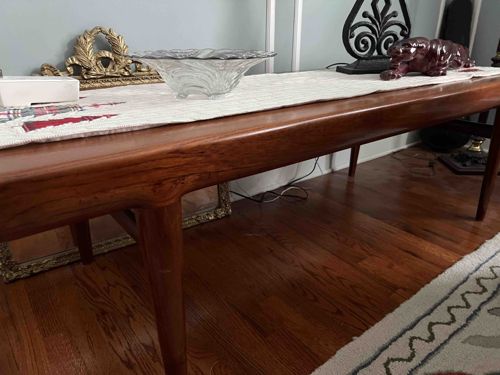
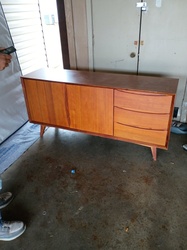
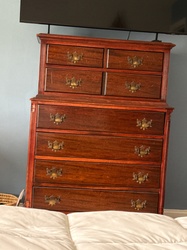
This is a distinctive Mid-Century Modern dining table, likely crafted from a rich, reddish-brown hardwood such as teak or rosewood, known for its durable grain and beautiful finish. The table presents a long, slender rectangular top with subtly rounded edges, indicative of the minimalist design principles of its era. The wood grain is visible throughout, displaying an attractive pattern that adds to its aesthetic appeal. The legs are tapered and appear to be integrated seamlessly into the apron of the table, showcasing a high level of craftsmanship and elegant lines characteristic of Scandinavian or Danish modern design. The construction suggests joinery that emphasizes stability and clean aesthetics, possibly using tenon and mortise or similar techniques with minimal visible hardware. There are no overt maker's marks or signatures visible in the provided image. The overall condition appears to be good, with a well-maintained lustrous finish. There are no obvious signs of significant damage such as deep scratches, gouges, or structural repairs. Minor wear consistent with age and use, such as light surface scratches or a slight patina, would be expected but are not clearly discernible in the image. The table's design, with its clean lines, organic forms, and functional elegance, firmly places it within the Mid-Century Modern style, generally dating it to the period between the 1950s and 1970s. The quality indicators point to a well-constructed piece of furniture, designed for longevity and timeless appeal.
AI Appraisal Report
Based on my visual examination of the provided image, this Mid-Century Modern dining table appears to be in very good condition. The rich, reddish-brown hardwood, likely teak or rosewood, shows a lustrous finish suggesting good care. The design, featuring a slender rectangular top with subtly rounded edges and tapered legs, is quintessential Scandinavian or Danish Modern, placing its origin between the 1950s and 1970s. The craftsmanship, indicated by the seamless integration of legs and clean lines, speaks to high quality. I see no overt signs of significant damage like deep gouges or structural issues, though minor wear consistent with age, such as light surface scratches or patina, would require a physical inspection to confirm or rule out.
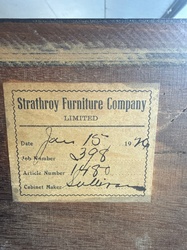
The market for authentic Mid-Century Modern furniture remains strong, particularly for well-preserved dining tables of this style. Comparables for genuine teak or rosewood tables by notable, albeit unspecified, designers often fetch prices in this range. The demand for clean-lined, functional, and aesthetically pleasing pieces like this continues to drive value. While the absence of visible maker's marks limits definitive attribution, the design quality suggests it could be from a reputable manufacturer or designer of the era.
It is crucial to note that assessing authenticity and precise condition from an image alone has limitations. A physical examination would allow me to inspect joinery, wood species definitively, and detect minor imperfections, repairs, or structural integrity issues not discernible in a photograph. Furthermore, provenance documentation or a professional conservator's report could significantly enhance authentication and value. Without these, my appraisal is based solely on visual aesthetics and typical market trends for this style and apparent condition.