AI identification & appraisal estimate

Modern Still Life Diptych with Tropical Fruit

This name is the AI's identification of the item — it may be incorrect.

Submitted photo of Modern Still Life Diptych with Tropical Fruit
Photo submitted by the user — not generated by AI

User's notes

Category: Art Acryl auf Leinwand

These notes were written by the person who submitted this item. Appraiser.AI has not verified them, and the AI's identification and estimate may rely on them.

AI Estimated Value

Not an official valuation

$150 - $250

AI estimate as of April 26, 2026 · verify with a professional before acting

AI-Generated · Verify before acting

Everything on this page is generated by AI for informational purposes only. AI can make mistakes — the AI may misidentify items or misattribute them (artist, maker, brand, designer, origin, era). This is not an official valuation and should not be used for insurance, sale, tax, estate, legal, or lending purposes — or any decision requiring a certified appraisal. It is not an authoritative claim about any person, brand, or rights holder — do not share or rely on it as a factual statement about a third party. Always consult qualified professionals before making financial decisions.

This analysis also relies on unverified notes provided by the user, which may be incomplete or inaccurate and could affect the result.

Read the full disclaimer

AI Item Analysis

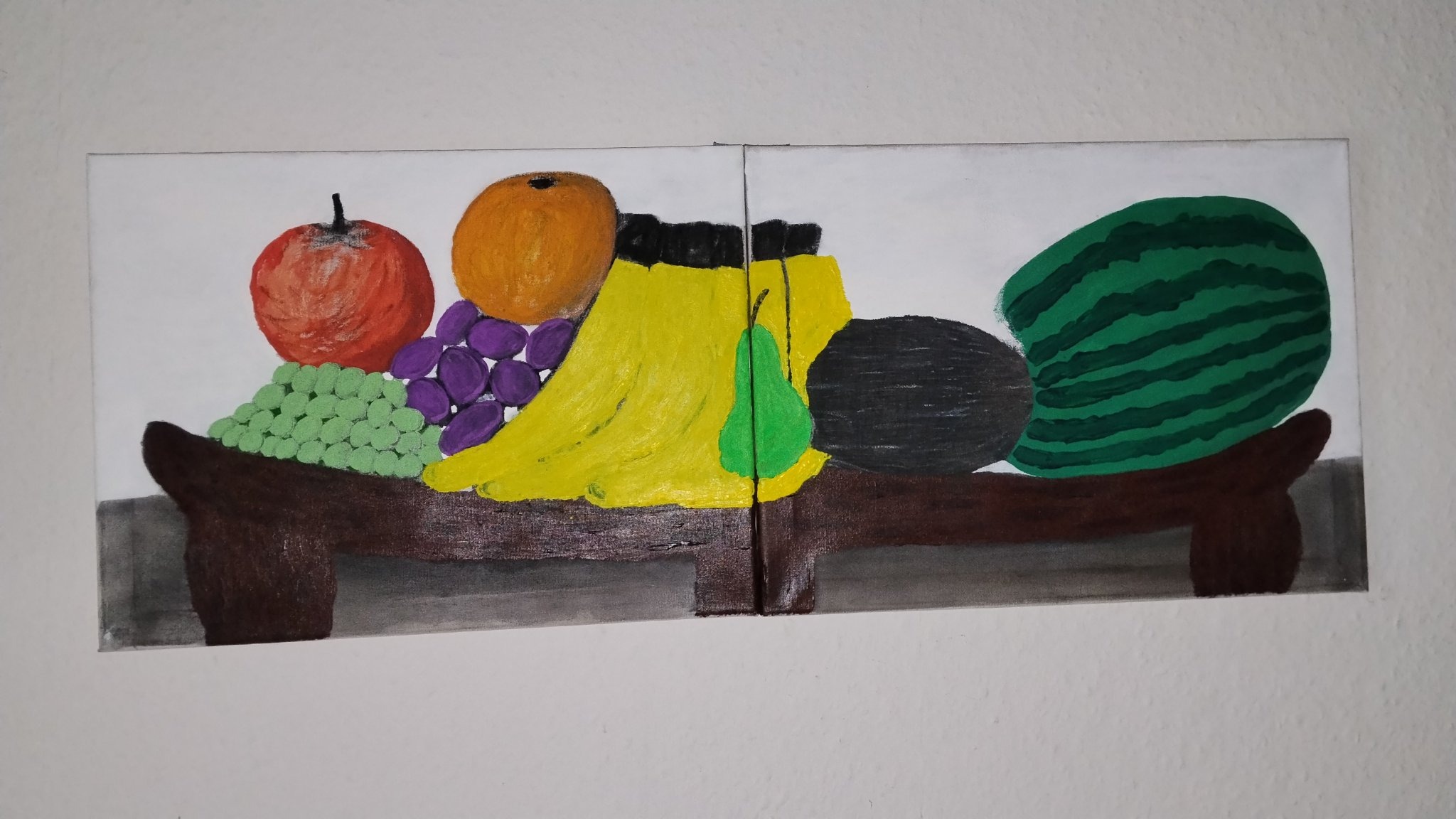
This artwork consists of a two-panel diptych (two canvas panels joined together side-by-side) featuring a colorful still life arrangement. Executed in acrylic on canvas, the piece depicts a variety of fruits including a large red apple, an orange, several bunches of grapes in purple and green hues, a bunch of yellow bananas, a small green pear, a dark plum or eggplant-like shape, and a prominent striped watermelon. The fruit is displayed atop a dark brown, stylized footed tray or low table. The background is a stark, flat white with a gray shaded area at the base to suggest a wall and floor junction. Physically, the canvases appear to be standard gallery-wrapped panels. The painting style is 'naïve' or 'folk art,' characterized by bold outlines, a lack of traditional perspective, and a focus on flat color blocks. There are visible texture marks from the brushwork, particularly in the yellow of the bananas and the green of the watermelon. Notable features include the vertical seam where the two panels meet, which bisects the tray and several fruit items, indicating the work was integrated across the span. The condition appears to be relatively new with no significant cracking, yellowing, or structural damage visible. There are no clear maker’s marks or signatures visible on the front face, suggesting a contemporary amateur or student creation from the late 20th or 21st century.

AI Appraisal Report

I have virtually examined the modern still life diptych, an acrylic on canvas work executed in a naïve/folk art style. The composition’s strength lies in its bold color palette and the unique presentation of fruit across two integrated panels. However, the lack of a visible signature or professional provenance strongly suggests this is the work of an amateur artist or an advanced student from the contemporary period (Late 20th/Early 21st Century). Technically, the application of paint shows visible texture in the bananas and watermelon, adding some visual interest, but the flat perspective and simplified geometry limit its appeal to the decorative market rather than the fine art collector market. The condition appears excellent, with no evidence of canvas sagging, paint loss, or environmental yellowing of the white background. In the current market, works of this nature trade as 'decorative items' or 'home furnishings.' Comparables found in boutique auctions or online resale platforms for unsigned, large-scale acrylic still lifes typically fall within the $100 to $300 range. The diptych format adds a slight premium for its modern aesthetic appeal, but the anonymity of the creator capping the value ceiling. Limitation of Remote Appraisal: This assessment is based solely on digital imagery. A physical inspection is required to verify the structural integrity of the stretcher bars and to search for any faint signatures on the verso (back) or side edges of the canvas. To confirm authenticity if a specific artist is later identified, provenance documentation or a certificate of authenticity from the previous owner would be essential. Scientific testing (e.g., UV/IR imaging) is not recommended as the cost would likely exceed the item's current market value.

Keep exploring

More art appraisals

Get your items appraised

Instant AI-powered appraisal estimates from a photo

Browse More Appraisals