Chert or Flint Nodular Fragment
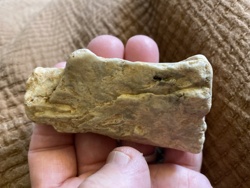
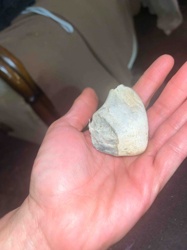
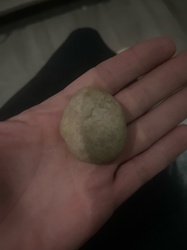
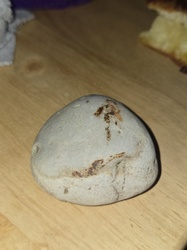
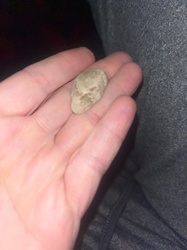
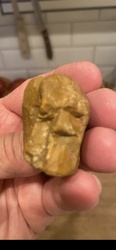
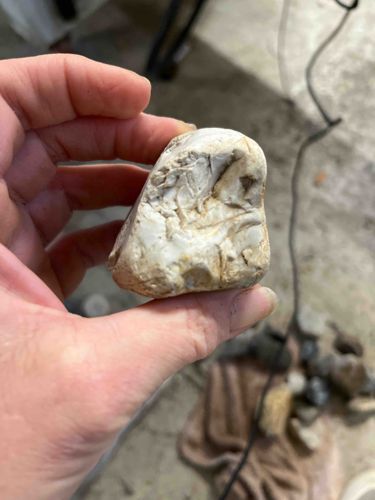
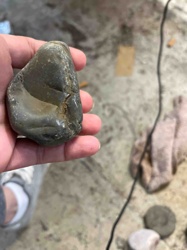
This item is an irregularly shaped geological specimen, specifically a fragment of a chert or flint nodule. Measuring approximately 2 to 3 inches in its largest dimension as held by the hand, the specimen exhibits a predominantly off-white to creamy beige exterior color, likely representing the weathered cortex or outer rind of the parent nodule. The surface texture is characterized by a combination of smooth, water-worn undulations and more jagged, conchoidal fracture points that suggest it was broken from a larger piece. Significant brown and tan iron staining is visible in the recessed areas and crevices, which is a natural result of mineral deposition through groundwater exposure over long periods. There are no signs of anthropogenic modification, such as flaking, knapping, or grinding, which would indicate use as an prehistoric tool like an arrowhead or scraper. Instead, the piece shows natural weathering, including minor pitting and surface abrasions. The density appears typical for silicate-rich sedimentary rocks, and there are no visible maker's marks, signatures, or stamps, confirming its origin as a natural Earth material rather than a manufactured object. Its age is geological, likely spanning millions of years depending on the specific sedimentary formation from which it eroded.
AI-Generated Appraisal Disclaimer
Estimated Value
$5 - $15
Basic Information
Category
Geological Specimens / Natural Stones
Appraised On
April 7, 2026
Estimated Value
$5 - $15
Item Description
This item is an irregularly shaped geological specimen, specifically a fragment of a chert or flint nodule. Measuring approximately 2 to 3 inches in its largest dimension as held by the hand, the specimen exhibits a predominantly off-white to creamy beige exterior color, likely representing the weathered cortex or outer rind of the parent nodule. The surface texture is characterized by a combination of smooth, water-worn undulations and more jagged, conchoidal fracture points that suggest it was broken from a larger piece. Significant brown and tan iron staining is visible in the recessed areas and crevices, which is a natural result of mineral deposition through groundwater exposure over long periods. There are no signs of anthropogenic modification, such as flaking, knapping, or grinding, which would indicate use as an prehistoric tool like an arrowhead or scraper. Instead, the piece shows natural weathering, including minor pitting and surface abrasions. The density appears typical for silicate-rich sedimentary rocks, and there are no visible maker's marks, signatures, or stamps, confirming its origin as a natural Earth material rather than a manufactured object. Its age is geological, likely spanning millions of years depending on the specific sedimentary formation from which it eroded.
Get Your Items Appraised
Instant estimates of your treasures with AI-powered instant appraisals