AI estimate as of October 30, 2025 · verify with a professional before acting
AI-Generated · Verify before acting
Everything on this page is generated by AI for informational purposes only. AI can make mistakes — the AI may misidentify items or misattribute them (artist, maker, brand, designer, origin, era). This is not an official valuation and should not be used for insurance, sale, tax, estate, legal, or lending purposes — or any decision requiring a certified appraisal. It is not an authoritative claim about any person, brand, or rights holder — do not share or rely on it as a factual statement about a third party. Always consult qualified professionals before making financial decisions.
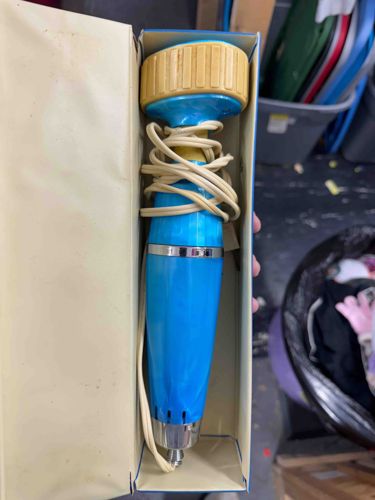
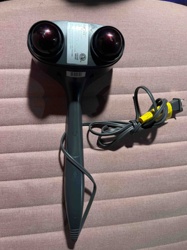
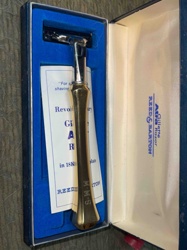
This item is a vintage electric massager, likely dating from the mid-20th century, possibly the 1950s or 1960s, given its aesthetic and construction. The main body of the massager is a vibrant sky blue plastic or bakelite, tapering slightly from its wider top to a narrower base. A distinctive feature is the beige-colored, ribbed 'massage head' at the top, which appears to be made of a hard, possibly rubberized or plastic material designed for tactile stimulation. Immediately beneath this head, the housing narrows and is encircled by a yellow plastic or bakelite ring, followed by another segment of the blue body. Further down, there's a chrome or polished metal band separating the upper and lower sections of the blue body, adding a touch of visual appeal. The bottom section of the massager is also blue, terminating in a chrome-plated base with several visible ventilation slits, suggesting an internal motor. A cream-colored electrical cord, appearing to be original, is neatly wrapped around the upper part of the massager, indicating it's an electric device. The cord itself shows some signs of age, with possible discoloration or minor wear. The massager is presented within its original, albeit somewhat aged, cardboard box. The box is an off-white or light beige color on the inside, with visible marks and possibly some staining from storage or age, particularly on the inner front flap. The exterior of the box, visible along the top edge, has a blue trim. The overall condition of the massager itself appears relatively good, showing no obvious signs of significant damage like cracks or chips, though its operational status cannot be determined from the image. The design embodies a classic mid-century utilitarian aesthetic, combining functional design with a pop of color.
AI Appraisal Report
Based on my visual examination of the provided image, this vintage electric massager, likely from the 1950s or 1960s, appears to be in relatively good cosmetic condition. The sky-blue plastic or bakelite body shows no obvious cracks or significant chips, and the chrome elements retain some luster. The original cream-colored electrical cord, while showing signs of age, is present and neatly wrapped, which is a plus for originality. The presence of its original box, despite its aged and somewhat stained interior, adds to its collector appeal, even if the exterior trim is only partially visible.
Authenticity of the period design is strong, consistent with mid-century utilitarian aesthetics. However, wear and tear on the cord and box are evident. The operational status of the massager cannot be determined from the image alone, which is a significant factor in valuation; a non-working unit severely limits its appeal beyond a decorative collectible.
Currently, there is a niche but fairly consistent market for vintage personal care appliances, particularly those with a distinctive mid-century design and original packaging. Rarity is moderate; while not mass-produced in quantities like some other household items, these massagers are not exceedingly difficult to find. Comparables for similar vintage electric massagers in untested or non-working condition with original boxes generally fall within the $30-$80 range on online auction and vintage marketplaces. Factors impacting value negatively include the unknown working condition and the signs of age on the box and cord.
For a full appraisal and definitive authentication, I would need an in-person examination to test functionality, assess the integrity of the internal components and wiring, and confirm the material composition of the housing (plastic vs. bakelite). Provenance documentation, such as original sales receipts or family history, would also add to its authentication and potentially its value.