AI estimate as of July 18, 2025 · verify with a professional before acting
AI-Generated · Verify before acting
Everything on this page is generated by AI for informational purposes only. AI can make mistakes — the AI may misidentify items or misattribute them (artist, maker, brand, designer, origin, era). This is not an official valuation and should not be used for insurance, sale, tax, estate, legal, or lending purposes — or any decision requiring a certified appraisal. It is not an authoritative claim about any person, brand, or rights holder — do not share or rely on it as a factual statement about a third party. Always consult qualified professionals before making financial decisions.
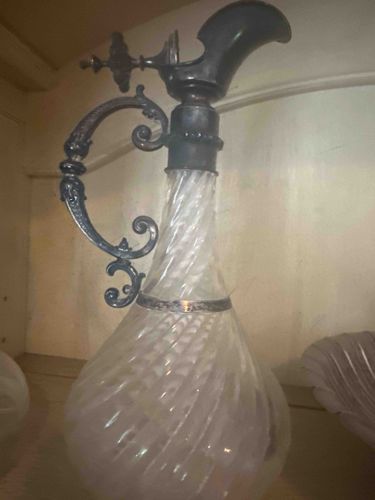
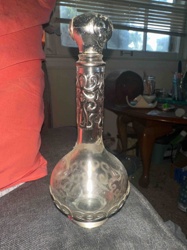
This is a vintage or antique glass decanter, likely intended for wine or other spirits. The body of the decanter is crafted from clear glass, featuring a distinctive optical swirl pattern or ribbing that extends from the base up towards the neck, giving it a dynamic and elegant appearance. The glass appears to be in good condition with no obvious chips or cracks, although closer inspection would be needed to confirm clarity and absence of internal residue. The top portion of the decanter, including the handle, spout, and stopper mechanism, is made of a dark-colored metal, possibly silver-plated brass, pewter, or a similar alloy, which has developed a visible patina consistent with age and exposure. The metal fittings are elaborately decorated with rococo or Victorian-style scrollwork and foliate motifs, particularly on the ornate handle with its intricate C-scrolls and on the decorative element above the spout. The stopper appears to be integrated into the metal mechanism, suggesting a functional design where liquid is dispensed by tilting the decanter and possibly engaging a lever or thumb press (not clearly visible in the image). A decorative metal band encircles the decanter's neck, just below where the glass meets the metal collar, providing a cohesive transition between the two materials. The overall craftsmanship suggests a piece of quality, likely from the late 19th or early 20th century, due to the stylistic elements and combination of materials. No specific maker's marks are discernible from the provided image, but the design is indicative of European decorative arts of that period.
AI Appraisal Report
Upon my virtual examination of this vintage or antique glass decanter, I've noted its clear glass body with a distinctive optical swirl pattern, which is aesthetically pleasing. The ornate metal fittings, displaying rococo or Victorian-style scrollwork and foliate motifs, suggest a late 19th to early 20th-century origin, indicative of European decorative arts. The visible patina on the metal is consistent with age, and the overall craftsmanship appears to be of good quality. The decanter's condition, based solely on the image, appears good, with no obvious chips or cracks in the glass. However, a physical inspection would be crucial to confirm the absence of internal residue, hazing, or hairline cracks in the glass, and to assess the functional integrity of the integrated stopper mechanism and dispense system.
In terms of market conditions, similar highly ornate decanters from this period, particularly those combining glass and detailed metalwork, see moderate demand among collectors of antique barware, Victorian decorative arts, and glass. Rarity is difficult to assess without maker's marks, but the unique optical swirl adds a level of distinction. Comparables from reputable auction houses and antique dealers suggest a value range for well-preserved pieces within this style. Factors significantly impacting value include the precise alloy of the metal (e.g., silver-plating vs. pewter), the condition of both the glass and metal, and the originality and functionality of all components.
Authenticity verification from images alone has limitations; I cannot definitively determine the true age or material composition of the metal, nor can I confirm the absence of repairs or restorations. Full authentication would require an in-person examination to inspect for maker's marks, assess the overall weight and balance, conduct metallurgical testing on the metal (if needed), and thoroughly inspect the glass for flaws under proper lighting. Provenance documentation, if available, would also significantly aid in authenticating its history and origin.