AI Appraisal Estimate

AI-generated estimates · not official valuations

From the user

What was submitted

Photo and notes provided by the user — not generated by AI

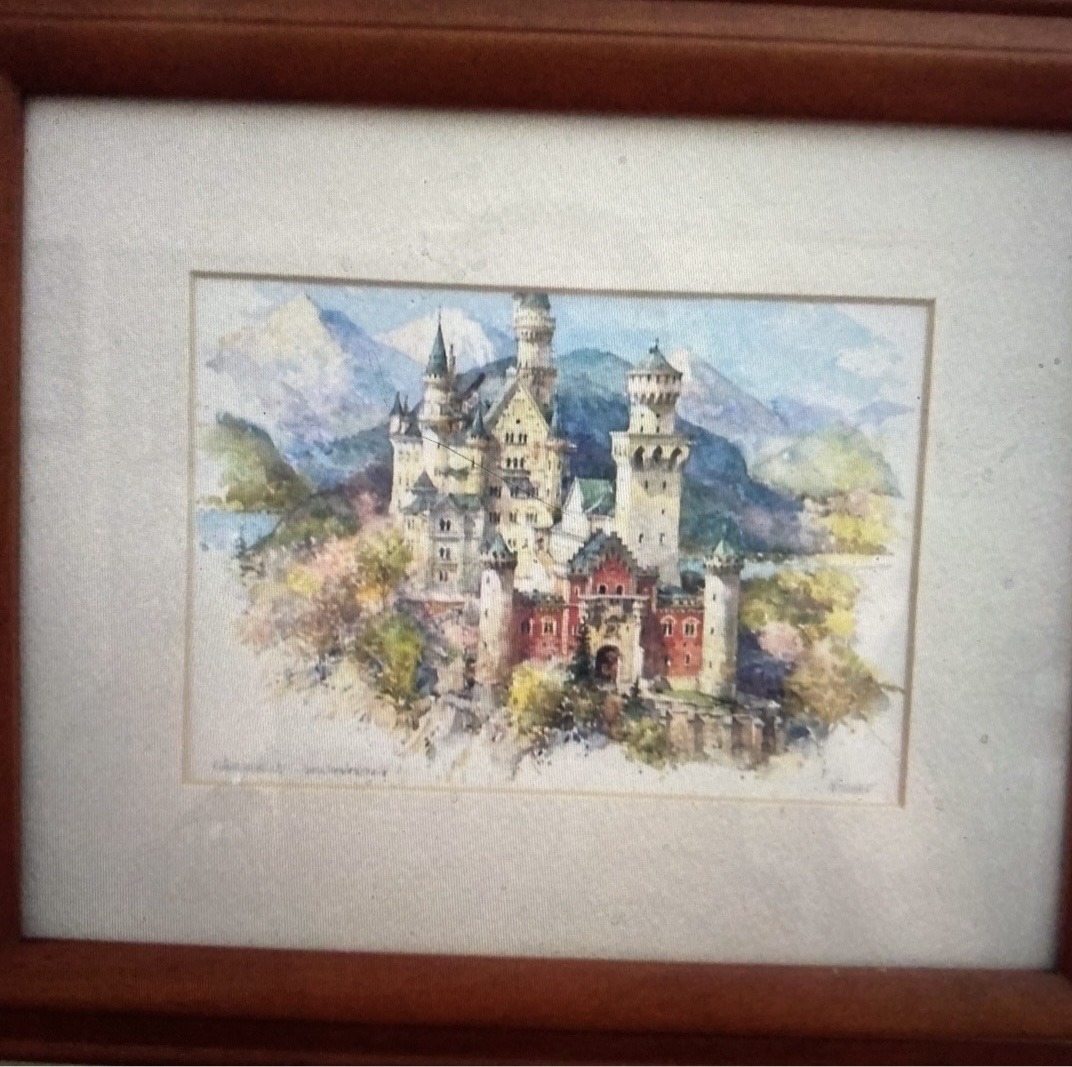
Submitted item photo
Submitted photo · July 12, 2026

User's notes

Chateau de Chambord, signed Legai

AI analysis below

AI appraisal

AI analysis & estimate

AI-Generated · Verify before acting

Everything below is generated by AI for informational purposes only. AI can make mistakes — the AI may misidentify items or misattribute them (artist, maker, brand, designer, origin, era). This is not an official valuation and should not be used for insurance, sale, tax, estate, legal, or lending purposes — or any decision requiring a certified appraisal. It is not an authoritative claim about any person, brand, or rights holder — do not share or rely on it as a factual statement about a third party. Always consult qualified professionals before making financial decisions.

Note

This analysis also relies on unverified notes provided by the user, which may be incomplete or inaccurate and could affect the result.

Read the full disclaimer

AI Identification

·Not independently authenticated·Verify before acting

Framed architectural watercolor featuring Neuschwanstein Castle

Paintings and Works on Paper

AI Estimated Value

·Not an official valuation·Verify before acting

$100 - $300

As of July 12, 2026

AI Item Analysis

·AI can make mistakes·Verify before acting
This framed work appears to be a watercolor painting on paper, set within a white mat and a simple wooden frame. The composition depicts a multi-towered castle complex nestled among mountainous terrain, consistent in architectural detail with Neuschwanstein Castle in Bavaria rather than the user-suggested Chateau de Chambord. The artwork utilizes soft, blended washes of blue, green, and terracotta, with visible pencil underdrawing. A signature or inscription is present in the lower right and left corners, though the resolution prevents clear transcription; however, the lower right marking bears a signature that appears consistent with 'E. Legai', as noted by the owner's unverified claim. The owner's attribution to Legai and the location 'Chateau de Chambord' are noted as unverified hypotheses. The condition appears fair, with visible discoloration or foxing on the surrounding mat board and some surface dust on the frame glass. The execution is stylistically consistent with late 19th or mid-20th-century souvenir architectural studies. Without physical inspection, the medium could be an original watercolor or a high-quality lithographic reproduction.
AI Appraisal Report

·AI can make mistakes·Verify before acting
Based on the provided imagery, I have examined this framed architectural study which depicts a castle complex closely resembling Neuschwanstein Castle, despite the user's submission identifying it as the Chateau de Chambord. The work occupies a space between a souvenir architectural rendering and a fine art watercolor. While the user attributes the piece to 'Legai,' and the work bears a signature in the lower right consistent with 'E. Legai,' I cannot verify the medium or authorship from a photograph alone. The presence of foxing on the mat and potential surface dust suggests the work has aged, though physical inspection would be required to determine if this is an original watercolor on paper or a high-quality lithographic reproduction. If the piece is confirmed as a late 19th or early 20th-century original watercolor by a listed architectural artist like E. Legai, the value rests in the $100-$300 range. However, if this is determined to be a printed reproduction or a later mid-century copy, the value would likely fall below $50, primarily reflecting the decorative utility of the frame. The market for European architectural watercolors remains stable but is highly dependent on the specificity of the site and the skill of the execution. To establish a more precise value, an in-person examination by a specialist is necessary to check for print matrices under magnification and to assess the paper's watermark and acidity. Provenance documentation or exhibition history would also be required to support the attribution to Legai beyond the visible marking, which remains a working hypothesis at this stage. The current estimate assumes the user's attribution is correct while reflecting the observed condition issues and the ubiquity of similar souvenir subjects in the art market.
Get your items appraised

Instant estimates of your treasures with AI-powered appraisals

Browse More Appraisals