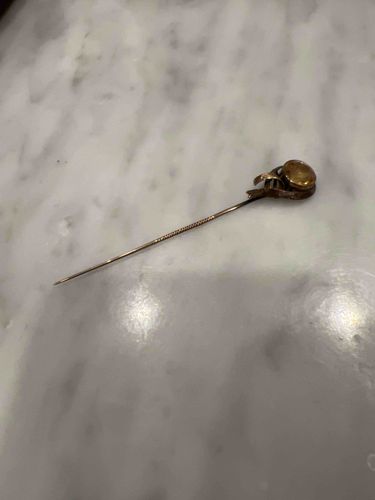
Victorian Era Gold Stick Pin with Tiger's Eye Cabochon
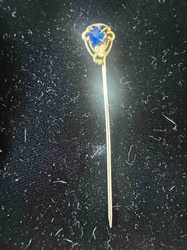
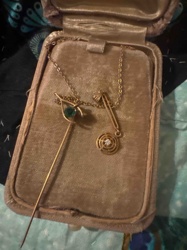
This is a classic Victorian or Edwardian era decorative stick pin, likely used as a cravat or tie pin. The piece consists of a slender, tapered needle-like shaft constructed from yellow gold or gold-filled metal, featuring a spiral-grooved section near the top designed to prevent the pin from slipping out of fabric. The head of the pin features a bezel-set gemstone, which appears to be a round cabochon of Tiger's Eye, displaying characteristic chatoyancy in shades of golden-brown and amber. The setting includes an ornate, claw-like or organic foliate design that wraps partially around the stone, indicative of late 19th to early 20th-century craftsmanship. Regarding condition, the metal displays a significant aged patina and some surface oxidation consistent with its age, particularly near the setting where the metal appears darker. The pin shaft remains straight, though the point shows minor signs of wear from historical use. No visible maker's marks or fineness stamps are immediately identifiable from the image, but the style and construction are emblematic of accessory trends from approximately 1890–1910. The craftsmanship shows a high attention to detail in the delicate metalwork surrounding the stone.
AI-Generated Appraisal Disclaimer
Estimated Value
$45 - $85
Basic Information
Category
Antique Jewelry and Accessories
Appraised On
February 22, 2026
Estimated Value
$45 - $85
Item Description
This is a classic Victorian or Edwardian era decorative stick pin, likely used as a cravat or tie pin. The piece consists of a slender, tapered needle-like shaft constructed from yellow gold or gold-filled metal, featuring a spiral-grooved section near the top designed to prevent the pin from slipping out of fabric. The head of the pin features a bezel-set gemstone, which appears to be a round cabochon of Tiger's Eye, displaying characteristic chatoyancy in shades of golden-brown and amber. The setting includes an ornate, claw-like or organic foliate design that wraps partially around the stone, indicative of late 19th to early 20th-century craftsmanship. Regarding condition, the metal displays a significant aged patina and some surface oxidation consistent with its age, particularly near the setting where the metal appears darker. The pin shaft remains straight, though the point shows minor signs of wear from historical use. No visible maker's marks or fineness stamps are immediately identifiable from the image, but the style and construction are emblematic of accessory trends from approximately 1890–1910. The craftsmanship shows a high attention to detail in the delicate metalwork surrounding the stone.
Related Tags
Explore similar items and categories:
Get Your Items Appraised
Instant estimates of your treasures with AI-powered instant appraisals