AI Appraisal Estimate

AI-generated estimates · not official valuations

From the user

What was submitted

Photo and notes provided by the user — not generated by AI

Submitted item photo
Submitted photo · June 17, 2026

User's notes

No additional notes provided.

AI analysis below

AI appraisal

AI analysis & estimate

AI-Generated · Verify before acting

Everything below is generated by AI for informational purposes only. AI can make mistakes — the AI may misidentify items or misattribute them (artist, maker, brand, designer, origin, era). This is not an official valuation and should not be used for insurance, sale, tax, estate, legal, or lending purposes — or any decision requiring a certified appraisal. It is not an authoritative claim about any person, brand, or rights holder — do not share or rely on it as a factual statement about a third party. Always consult qualified professionals before making financial decisions.

Read the full disclaimer

AI Identification

·Not independently authenticated·Verify before acting

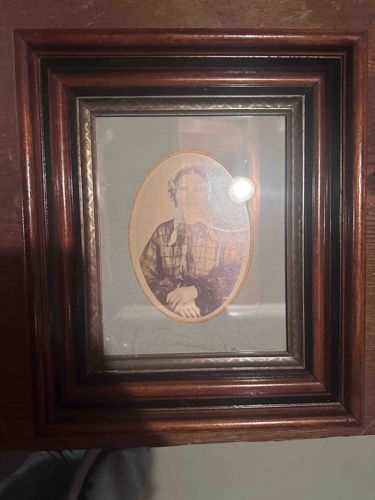
Framed Antique Sepia Portrait in Oval Mat

Antique Photography and Framed Art

AI Estimated Value

·Not an official valuation·Verify before acting

$125.00 - $200.00

As of June 17, 2026

AI Item Analysis

·AI can make mistakes·Verify before acting
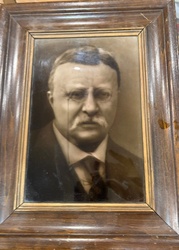
This item is an antique framed photograph, likely a sepia-toned albumen print or early silver gelatin photograph, dating from the mid-to-late 19th century (c. 1860-1890). The image depicts a seated woman in Victorian-era attire, featuring a high-collared, patterned bodice and dark skirt, with hair styled in typical mid-Victorian fashion. The photograph is presented within an oval-cut mat of a light cream or tan color, which is then set against a larger rectangular sage-green mat. The entire composition is housed in a deep, tiered wooden frame with a rich reddish-brown mahogany or walnut finish. An inner silver-toned or pewter-colored metallic fillet with an embossed geometric pattern provides a decorative transition between the mat and the wood frame. The construction shows evidence of traditional joinery. Regarding condition, there is visible fading and yellowing to the photograph consistent with age and UV exposure. The frame shows some light scuffing and dust accumulation in the recessed moldings, particularly along the bottom rail. The glass appears intact but shows significant glare, indicating it is likely original flat glass rather than modern non-reflective glazing. No discernible maker's marks are visible on the front, though identifying information may be present on the reverse or hidden behind the backing material.
AI Appraisal Report

·AI can make mistakes·Verify before acting
Based on my visual examination of this framed sepia portrait, I have identified it as a late 19th-century studio photograph, likely an albumen or silver gelatin print. The sitter's Victorian-era bodice and high-neck fashion suggest a provenance between 1875 and 1890. The frame is a period-appropriate tiered walnut or mahogany design, featuring a decorative metallic fillet that adds significant aesthetic appeal beyond the value of the image itself. Regarding condition, the photograph exhibits characteristic 'foxing' and light-induced fading (solarization) which is typical for its age. While the frame shows minor scuffing, it remains structurally sound with its original glass. Market demand for anonymous 19th-century portraits remains steady but modest, primarily driven by interior designers and collectors of 'antiquarian aesthetic' decor rather than fine art investors. Similar items at estate auctions typically realize between $100 and $250 depending on the quality of the frame. The value is currently constrained by the anonymity of the subject and the lack of a known photographer's mark (e.g., a studio stamp on the verso). Limitations: This appraisal is based solely on high-resolution imagery. I cannot definitively verify the wood species or determine if the backing contains acidic materials that may cause further degradation. A full authentication would require an in-person inspection of the photograph's surface texture under magnification to differentiate between a true albumen print and a later photogravure. Accessing the reverse of the image to check for an imprint or handwritten provenance would be necessary to establish a more precise historical value.

Get your items appraised

Instant estimates of your treasures with AI-powered appraisals

Browse More Appraisals