Sulphide Owl Paperweight
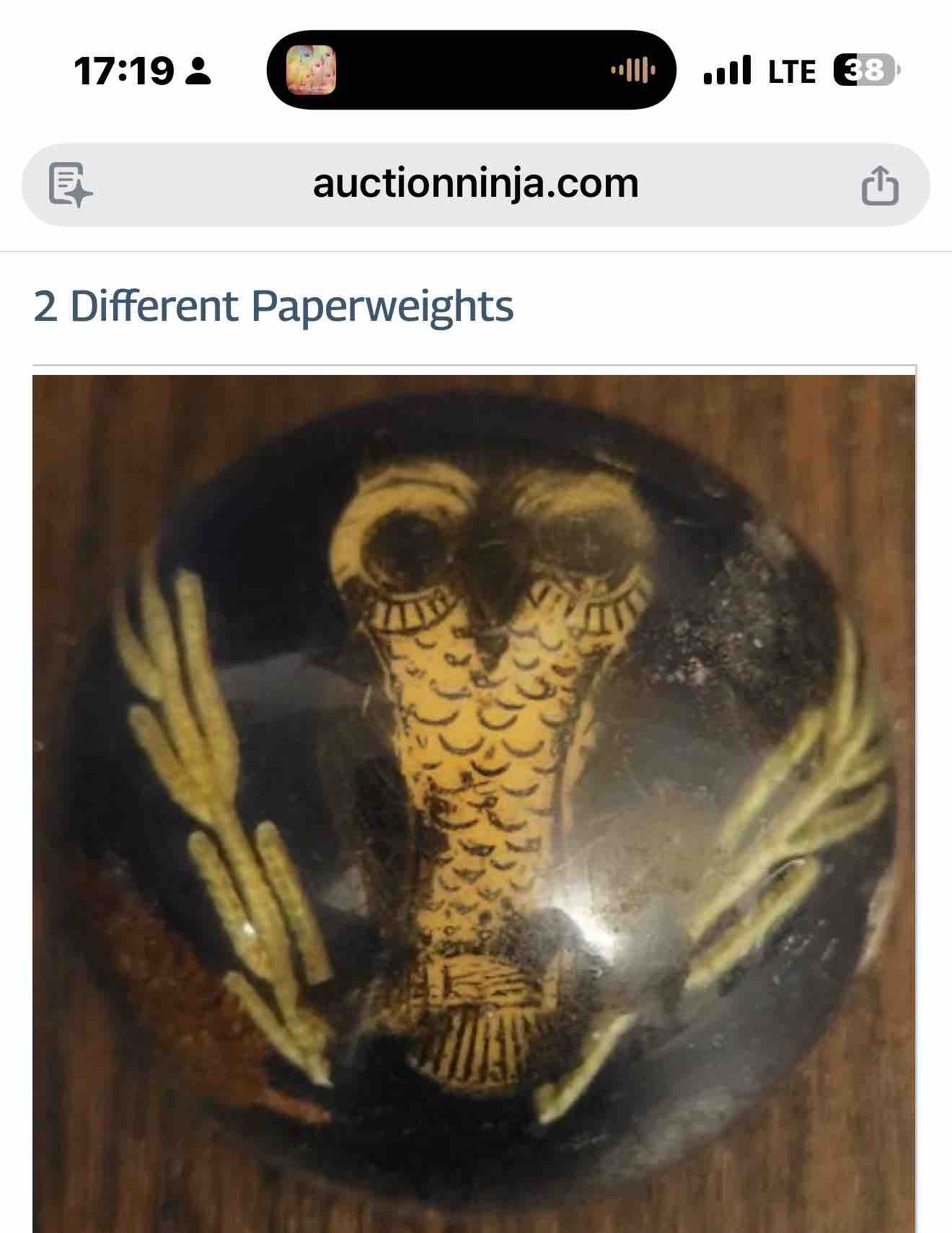
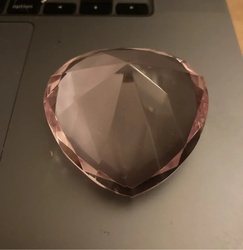
This is a spherical glass paperweight featuring a central sulphide (incrustation) figure of an owl. The item is characterized by a dark, possibly black or deep amethyst glass body that serves as a high-contrast background for the light-colored ceramic or porcelain-like owl figure. The owl is depicted with a stylized, almost heraldic aesthetic, showing detailed scaling for feathers and large, ringed eyes. It is flanked by two stylized floral or wheat-like sprigs, also rendered in the same light-colored material. The construction involves the 'sulphide' technique, popular in the 19th and early 20th centuries, where a pre-molded ceramic medallion is encased within molten glass. Regarding condition, the surface of the glass sphere shows significant signs of age and wear, including numerous small scratches, surface scuffs, and a general dulling of the polish which obscures the internal detail. There is visible particulate or internal clouding around the right side of the owl figure, which could indicate a bruise in the glass or a manufacturing imperfection. Based on the style and craftsmanship, this piece likely dates to the late 19th century or early 20th century, following the tradition of French and Bohemian glasshouses. The craftsmanship is of a mid-to-high level, though its current value is heavily impacted by the surface condition.
AI-Generated Appraisal Disclaimer
Estimated Value
$150 - $250
Basic Information
Category
Antique Glassware / Paperweights
Appraised On
April 11, 2026
Estimated Value
$150 - $250
Item Description
This is a spherical glass paperweight featuring a central sulphide (incrustation) figure of an owl. The item is characterized by a dark, possibly black or deep amethyst glass body that serves as a high-contrast background for the light-colored ceramic or porcelain-like owl figure. The owl is depicted with a stylized, almost heraldic aesthetic, showing detailed scaling for feathers and large, ringed eyes. It is flanked by two stylized floral or wheat-like sprigs, also rendered in the same light-colored material. The construction involves the 'sulphide' technique, popular in the 19th and early 20th centuries, where a pre-molded ceramic medallion is encased within molten glass. Regarding condition, the surface of the glass sphere shows significant signs of age and wear, including numerous small scratches, surface scuffs, and a general dulling of the polish which obscures the internal detail. There is visible particulate or internal clouding around the right side of the owl figure, which could indicate a bruise in the glass or a manufacturing imperfection. Based on the style and craftsmanship, this piece likely dates to the late 19th century or early 20th century, following the tradition of French and Bohemian glasshouses. The craftsmanship is of a mid-to-high level, though its current value is heavily impacted by the surface condition.
Get Your Items Appraised
Instant estimates of your treasures with AI-powered instant appraisals