AI Appraisal Estimate

AI-generated estimates · not official valuations

From the user

What was submitted

Photo and notes provided by the user — not generated by AI

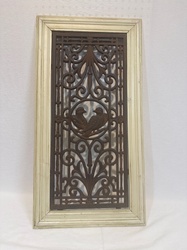
Submitted item photo
Submitted photo · June 1, 2026

User's notes

No additional notes provided.

AI analysis below

AI appraisal

AI analysis & estimate

AI-Generated · Verify before acting

Everything below is generated by AI for informational purposes only. AI can make mistakes — the AI may misidentify items or misattribute them (artist, maker, brand, designer, origin, era). This is not an official valuation and should not be used for insurance, sale, tax, estate, legal, or lending purposes — or any decision requiring a certified appraisal. It is not an authoritative claim about any person, brand, or rights holder — do not share or rely on it as a factual statement about a third party. Always consult qualified professionals before making financial decisions.

Read the full disclaimer

AI Identification

·Not independently authenticated·Verify before acting

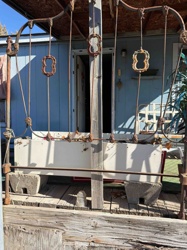
Antique Cast Iron Figural Animal Bench Arm Rest or Structural Fragment

Architectural Salvage / Antique Cast Iron Furniture Components

AI Estimated Value

·Not an official valuation·Verify before acting

$150 - $250

As of June 1, 2026

AI Item Analysis

·AI can make mistakes·Verify before acting
This is a heavy, architectural or furniture fragment crafted from cast iron, featuring stylized zoomorphic terminals that appear to represent fish or otter-like heads at each end. The piece consists of a slightly curved horizontal bar supported by two integrated vertical legs that curve inward. Measuring approximately 12 to 18 inches in length, the object exhibits a dense, monolithic construction typical of mid-to-late 19th-century industrial casting. The primary color is a dark, oxidized iron brown, heavily layered with a variegated patina of rust, lichen growth, and remnants of old paint. Notable markings include simple incised lines used to delineate the gills or facial features of the animal forms, suggesting a simplified folk-art or Victorian industrial aesthetic. The condition is weathered and distressed; it shows significant surface oxidation and crusting, with some chipping at the base of the legs where it would have originally been bolted or keyed into a larger frame. There are no visible maker’s marks, which is common for mass-produced architectural hardware or park furniture components of this era. The quality of the casting is robust, designed for durability in an outdoor or high-traffic environment.
AI Appraisal Report

·AI can make mistakes·Verify before acting
Based on my visual examination of this cast iron fragment, I have identified it as a mid-to-late 19th-century structural component, likely an armrest for a decorative garden bench or public park seating. The stylized zoomorphic terminals exhibit the robust, 'folk-industrial' aesthetic popular in the Victorian era. The heavy oxidation, lichen growth, and layered patina are consistent with prolonged outdoor exposure and suggest authentic age rather than a modern reproduction. While the condition is distressed with visible pitting and base chipping, these 'as-found' characteristics are often preferred by collectors of architectural salvage as they verify the item's history. The market for single fragments is specialized; while a complete, matched pair would command a premium, a single piece is primarily valued as a decorative object or a 'master' for recasting. Comparables for individual Victorian iron bench components typically fall into the $100 to $300 range depending on the complexity of the motif. This specific design is charming but lacks a documented maker’s mark (such as Coalbrookdale or Janes, Kirtland & Co.), which limits its upper-end valuation. Limitations: My assessment is based solely on digital images. A physical inspection is required to confirm the iron's metallurgical composition and to rule out modern cold-casting techniques. I would also need to check for hidden stress fractures or strategic repairs masked by the rust. No provenance was provided; documentation regarding the specific estate or site of salvage would be necessary to establish a more definitive historical pedigree. For full authentication, I recommend a wire-brush cleaning of the base to search for faint foundry stamps and a weight verification to ensure density aligns with period-accurate gray iron.

Get your items appraised

Instant estimates of your treasures with AI-powered appraisals

Browse More Appraisals