AI Appraisal Estimate

AI-generated estimates · not official valuations

From the user

What was submitted

Photo and notes provided by the user — not generated by AI

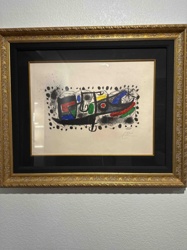
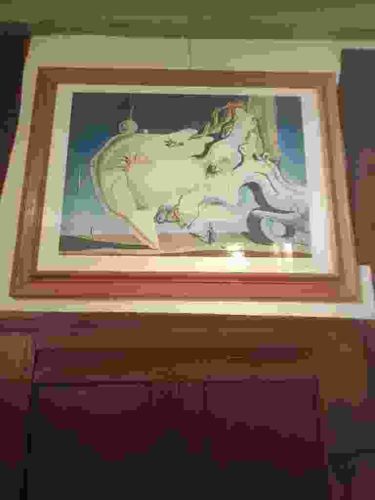
Submitted item photo
Submitted photo · June 25, 2026

User's notes

lithographie de Salvador Dali ali

AI analysis below

AI appraisal

AI analysis & estimate

AI-Generated · Verify before acting

Everything below is generated by AI for informational purposes only. AI can make mistakes — the AI may misidentify items or misattribute them (artist, maker, brand, designer, origin, era). This is not an official valuation and should not be used for insurance, sale, tax, estate, legal, or lending purposes — or any decision requiring a certified appraisal. It is not an authoritative claim about any person, brand, or rights holder — do not share or rely on it as a factual statement about a third party. Always consult qualified professionals before making financial decisions.

Note

This analysis also relies on unverified notes provided by the user, which may be incomplete or inaccurate and could affect the result.

Read the full disclaimer

AI Identification

·Not independently authenticated·Verify before acting

Salvador Dalí Lithograph after 'The Great Masturbator'

Fine Art - Prints & Multiples

AI Estimated Value

·Not an official valuation·Verify before acting

$400 - $800

As of June 25, 2026

AI Item Analysis

·AI can make mistakes·Verify before acting
This item is a framed lithograph after the seminal 1929 Surrealist oil painting 'The Great Masturbator' by Salvador Dalí. The artwork features Dalí's iconic dream-like imagery, centered on a large, distorted profile of a human face in yellowish-green tones, which transitions into a variety of symbolic forms including a grasshopper, ants, and an elegant female figure rising from the head. The print is housed in a substantial, multi-tiered wooden frame with a light honey-toned finish and visible wood grain, complemented by a cream-colored inner mat. While the image is slightly low-resolution, the colors appear relatively vibrant with typical Surrealist blues and earth tones. The lithographic process likely dates from the late 20th century, common for commercial or limited edition reproductions of Dalí's early masterpieces. To determine the full appraisal value, one would need to inspect the margins for a pencil signature, numbering (e.g., EA or a fractional edition number), and any embossed blind stamps from reputable print houses. The overall condition appears stable, though there is some light reflection on the glass indicating it is not museum-grade anti-reflective glazing. The frame shows minor surface handling marks consistent with age but remains structurally sound.
AI Appraisal Report

·AI can make mistakes·Verify before acting
I have examined the digital representation of this framed lithograph after Salvador Dalí’s 'The Great Masturbator.' The piece presents characteristic Surrealist iconography with stable color saturation. Based on the visual evidence, this is a 'lithograph after' the original 1929 painting, likely produced as part of a posthumous or authorized limited edition in the late 20th century. The framing is professional yet standard for the era, utilizing a multi-tiered wooden profile that adds decorative value but does not appear to feature conservation-grade materials. The market for Dalí prints is bifurcated; lifetime signed editions command thousands, while 'after' prints or posthumous editions typically occupy the decorative market. Comparables for similar large-scale reproductions of Dalí’s mainstream works frequently sell within the several-hundred-dollar range at auction, depending on the specific edition's rarity. The primary value driver here is the aesthetic appeal and the fame of the subject matter. Crucially, I cannot confirm the presence of a hand-signature or specific edition numbering from the current images. A physical inspection is mandatory to examine the paper’s watermark (such as Arches or BFK Rives) and to verify if the signature is hand-signed in pencil or a printed facsimile. The lack of a visible blind stamp or certificate of authenticity (COA) from a recognized publisher limits the upper-end valuation. For a definitive authentication, provenance documentation or a catalog raisonné cross-reference (e.g., Michler & Löpsinger) would be required.

Get your items appraised

Instant estimates of your treasures with AI-powered appraisals

Browse More Appraisals