These notes were written by the person who submitted this item. Appraiser.AI has not verified them, and the AI's identification and estimate may rely on them.
AI Estimated Value
Not an official valuation
$0.50 - $2.00
AI estimate as of November 5, 2025 · verify with a professional before acting
AI-Generated · Verify before acting
Everything on this page is generated by AI for informational purposes only. AI can make mistakes — the AI may misidentify items or misattribute them (artist, maker, brand, designer, origin, era). This is not an official valuation and should not be used for insurance, sale, tax, estate, legal, or lending purposes — or any decision requiring a certified appraisal. It is not an authoritative claim about any person, brand, or rights holder — do not share or rely on it as a factual statement about a third party. Always consult qualified professionals before making financial decisions.
This analysis also relies on unverified notes provided by the user, which may be incomplete or inaccurate and could affect the result.
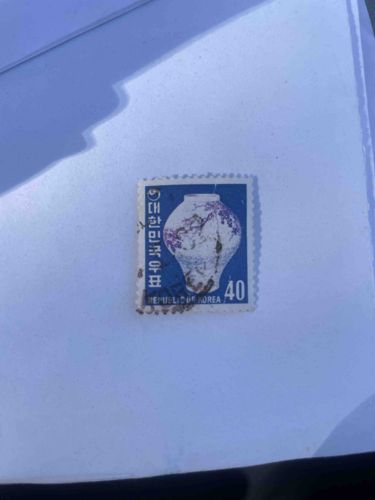
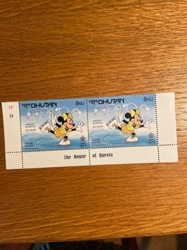
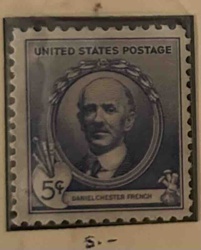
This item is a used postage stamp from the Republic of Korea, featuring an illustration of a traditional Korean celadon vase. The stamp measures approximately 2.5 cm in height and 2 cm in width, though exact measurements are difficult to ascertain from the provided image. It is made from typical postage stamp paper with a serrated, perforated edge, indicating it was separated from a sheet. The primary colors of the stamp are blue and white, with the vase depicted in shades of white or very light grey, adorned with subtle patterns or perhaps cracks that give it character. The background around the vase is a solid blue, and the top-left corner features Korean script which likely reads "대한민국우표" (Daehan Minguk Upyo), meaning "Republic of Korea Post."
Below the vase, the English text "REPUBLIC OF KOREA" is visible. The denomination "40" is printed in the bottom right corner, suggesting a value of 40 units, likely 40 Won. The stamp exhibits visible signs of wear and tear consistent with being used. There are noticeable dark brown or black smudges, particularly on the left and bottom edges, which could be postmark residue, dirt, or adhesive remnants. The paper appears slightly discolored or aged, and there might be minor creasing or fading in areas, although the image quality makes precise assessment challenging. The perforations are mostly intact, but some appear slightly damaged or irregular, especially on the left side. The illustration of the celadon vase suggests a design period that appreciates traditional Korean artistry, likely from the mid-20th century, possibly the 1960s or 1970s, based on the design aesthetic and general condition. The craftsmanship appears to be standard for postal stamps of that era, focused on clear, if not overly detailed, representation.
AI Appraisal Report
I have carefully examined the provided image and description of this Republic of Korea postage stamp featuring a celadon vase. Based on this, I can offer an appraisal. The stamp is clearly used, indicated by the visible smudges which are likely postmark remnants, and general wear. Its condition is fair to good, but the discoloration, potential creasing, and damaged perforations on the left side detract from its value. The design, with the Korean script and 'REPUBLIC OF KOREA' text, aligns with authentic South Korean postal issues. The 40 Won denomination suggests a common postal rate for its era.
From a market perspective, this stamp is not rare. South Korean stamps from the mid-20th century, particularly used common issues, are widely available. Comparable used stamps of similar age and denomination typically trade for very modest amounts, often under a few dollars. Factors negatively impacting value include its used state, the visible damage/smudging, and the lack of exceptionally intricate detail or historical significance that would elevate a common issue. Demand for such items is generally from general collectors, rather than high-end investors.
It is crucial to note that this assessment is based solely on the provided image and description. While the visual evidence strongly suggests authenticity, definitive authentication would require in-person examination to verify paper type, watermark (if present), printing methods, and perforation specifics. Physical inspection could also more accurately assess the extent of discoloration, creasing, and the nature of the smudges. Provenance documentation, such as original purchase records, would also provide stronger support for its history. Without these, I must state that absolute authenticity and a more precise condition grade cannot be fully confirmed.