AI Appraisal Estimate

AI-generated estimates · not official valuations

From the user

What was submitted

Photo and notes provided by the user — not generated by AI

Submitted item photo
Submitted photo · June 3, 2026

User's notes

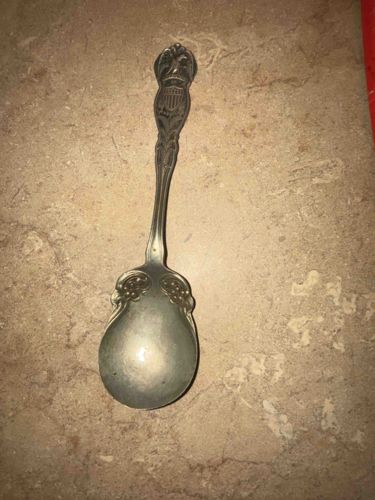
United States of America spoon 1915

AI analysis below

AI appraisal

AI analysis & estimate

AI-Generated · Verify before acting

Everything below is generated by AI for informational purposes only. AI can make mistakes — the AI may misidentify items or misattribute them (artist, maker, brand, designer, origin, era). This is not an official valuation and should not be used for insurance, sale, tax, estate, legal, or lending purposes — or any decision requiring a certified appraisal. It is not an authoritative claim about any person, brand, or rights holder — do not share or rely on it as a factual statement about a third party. Always consult qualified professionals before making financial decisions.

Note

This analysis also relies on unverified notes provided by the user, which may be incomplete or inaccurate and could affect the result.

Read the full disclaimer

AI Identification

·Not independently authenticated·Verify before acting

Antique United States Patriotic Heritage Souvenir Spoon circa 1915

Antique Tableware and Collectibles

AI Estimated Value

·Not an official valuation·Verify before acting

$15.00 - $35.00

As of June 3, 2026

AI Item Analysis

·AI can make mistakes·Verify before acting
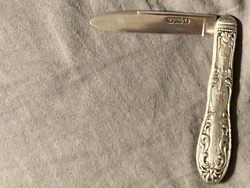
This is a vintage souvenir spoon from approximately 1915, featuring intricate die-stamped patriotic motifs typical of early 20th-century American decorative metalwork. The item is constructed from what appears to be silver-plated brass or nickel silver, exhibiting a deep, dark aged patina with visible tarnish and light surface oxidation throughout. The spoon handle is highly ornamental, crowned with a relief of an American Bald Eagle perched atop a classic heraldic shield featuring vertical stripes. Below the shield, stylized acanthus leaves or floral scrolls transition into a slender, faceted neck. The bowl of the spoon is pear-shaped with decorative scrollwork and floral clusters flanking the junction where the handle meets the bowl. Small dark spots and minor surface pitting are evident in the bowl, indicating age-related wear to the finish. The craftsmanship reflects the mass-production techniques of the World War I era, where souvenir items were popular for commemorative events and regional pride. No specific maker's marks are visible in the forward-facing orientation, but the style is consistent with manufacturers like International Silver Company or Oneida. The condition is fair to good, preserved in an uncleaned state which highlights its historic character.
AI Appraisal Report

·AI can make mistakes·Verify before acting
Based on my visual examination of the digital images and documentation provided, I have assessed this souvenir spoon which reflects the patriotic fervor of the 1910s. The piece exhibits characteristic die-stamped motifs of the era, notably the 'American Eagle' and heraldic shield finial. The material appears to be a base metal alloy (likely nickel silver or silver-plated brass) rather than sterling silver, as evidenced by the specific 'spotty' nature of the oxidation and the absence of a visible '925' or 'Sterling' hallmark. The condition is fair to good; the heavy patina suggests 'as-found' condition, which collectors of unrestored metalwork may prefer, though the pitting in the bowl indicates some loss of the original plate. The market for souvenir spoons peaked in the late 20th century and has since seen a cooling trend due to high volume. This specific design was mass-produced by manufacturers such as International Silver Co. for the general commemorative market rather than a specific regional exposition, which limits its rarity. Comparable examples typically sell in the $15–$35 range at specialized auctions or antique malls. Limitations: This appraisal is based solely on digital imagery. Definitive authentication requires physical inspection to verify metal content via acid testing or XRF analysis and to search for microscopic maker's marks on the reverse of the shank. Documentation of the item's provenance or its original purchase location would also assist in confirming the 1915 date. Without a physical weight check and hallmark verification, I cannot rule out the possibility of a later 20th-century reproduction, though the wear patterns appear consistent with a 100-year-old object.

Get your items appraised

Instant estimates of your treasures with AI-powered appraisals

Browse More Appraisals