United States Washington Quarter
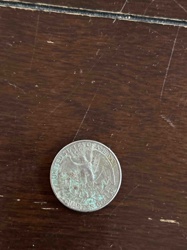
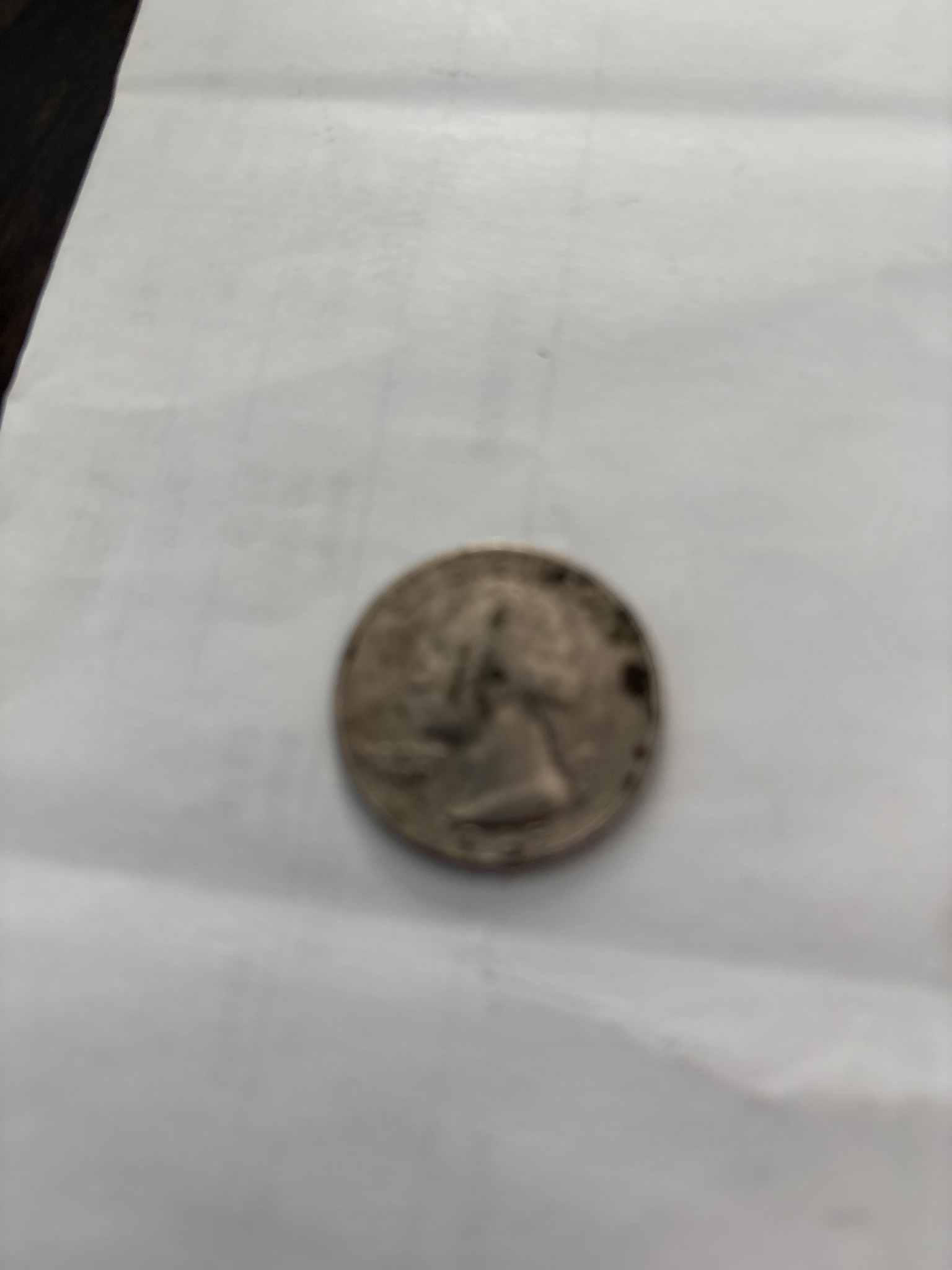
This is a United States 25-cent coin, commonly known as a Washington Quarter. The obverse side shown features the profile of George Washington facing left. Based on the overall appearance, this specimen appears to be the standard cupro-nickel clad variety produced by the United States Mint between 1965 and 1998, though a definitive date is obscured due to the image's low resolution and focus. The coin displays a significant amount of wear and heavy circulation. Notable condition issues include several dark pits or corrosion spots on the right side of the coin's face, near the back of Washington's head and the rim, which may indicate environmental damage or exposure to heat. The surface shows a dull, greyish patina consistent with a high-mileage circulation strike rather than a proof or uncirculated mint state. The relief of the bust appears flattened, further suggesting it has spent a considerable amount of time in active trade. Without a clearer view of the date or a mint mark (typically found behind the hair tie/ribbon or on the reverse, depending on the year), the exact production year cannot be determined, but it fits the post-1964 silver-less composition style.
AI-Generated Appraisal Disclaimer
Estimated Value
$0.25
Basic Information
Category
Numismatics / Currency
Appraised On
April 18, 2026
Estimated Value
$0.25
Item Description
This is a United States 25-cent coin, commonly known as a Washington Quarter. The obverse side shown features the profile of George Washington facing left. Based on the overall appearance, this specimen appears to be the standard cupro-nickel clad variety produced by the United States Mint between 1965 and 1998, though a definitive date is obscured due to the image's low resolution and focus. The coin displays a significant amount of wear and heavy circulation. Notable condition issues include several dark pits or corrosion spots on the right side of the coin's face, near the back of Washington's head and the rim, which may indicate environmental damage or exposure to heat. The surface shows a dull, greyish patina consistent with a high-mileage circulation strike rather than a proof or uncirculated mint state. The relief of the bust appears flattened, further suggesting it has spent a considerable amount of time in active trade. Without a clearer view of the date or a mint mark (typically found behind the hair tie/ribbon or on the reverse, depending on the year), the exact production year cannot be determined, but it fits the post-1964 silver-less composition style.
Related Tags
Get Your Items Appraised
Instant estimates of your treasures with AI-powered instant appraisals