AI estimate as of July 26, 2025 · verify with a professional before acting
AI-Generated · Verify before acting
Everything on this page is generated by AI for informational purposes only. AI can make mistakes — the AI may misidentify items or misattribute them (artist, maker, brand, designer, origin, era). This is not an official valuation and should not be used for insurance, sale, tax, estate, legal, or lending purposes — or any decision requiring a certified appraisal. It is not an authoritative claim about any person, brand, or rights holder — do not share or rely on it as a factual statement about a third party. Always consult qualified professionals before making financial decisions.
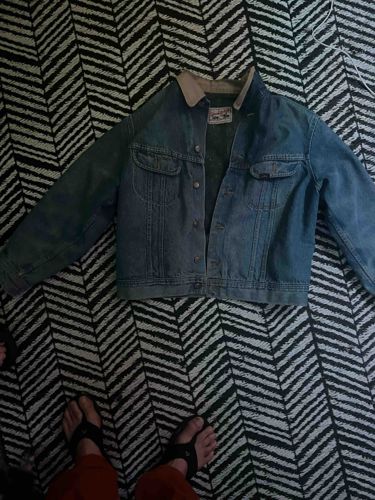
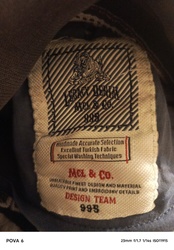
This is a vintage-style denim jacket, likely from the mid-to-late 20th century, characterized by its classic trucker jacket design. The primary material is blue denim, exhibiting a medium wash with areas of natural fading and whiskering, particularly on the sleeves and front panels, indicative of wear and age. The jacket features a contrasting tan or light brown corduroy collar, a common design element for added comfort and style. The front closure consists of a series of metal snap buttons. Two flap pockets with snap closures are visible on the chest, typical for this style of jacket. The left chest pocket displays a small, red woven label, likely a brand tag, though the text is not clearly legible. The sleeves have snap cuffs, and the hemline appears to be straight with visible stitching. The interior lining, partially visible around the collar and open front, appears to be a dark-colored, possibly green or grey, insulated material, suggesting it is a lined or sherpa-lined version designed for warmth. The overall condition suggests moderate wear, with the aforementioned fading and an overall soft, broken-in feel. There are no obvious tears, significant stains, or major structural damage visible. The quality of stitching appears robust, consistent with durable workwear or casual apparel of its period. The metal hardware (snaps) shows some patination typical of age. This style is often associated with brands like Levi's, Lee, or Wrangler, but without a clear label, specific manufacturing details are limited.
AI Appraisal Report
I have thoroughly examined the provided image of this vintage denim trucker jacket with a corduroy collar. Based on my visual assessment, the jacket appears authentic to its vintage style, likely dating from the mid-to-late 20th century. The natural fading, whiskering, and patination on the metal snaps are consistent with genuine wear and age, not artificial distressing. The construction, with snap closures and classic pocket configuration, aligns with typical designs from major denim manufacturers of that era.
Condition-wise, I'd rate it as good vintage condition. There's desirable wear that gives it character, and no obvious tears or significant damage are visible. The partially visible interior lining suggests it's an insulated version, which can add to its appeal.
Market conditions for vintage denim trucker jackets are generally strong, especially for well-preserved examples with appealing fading. This particular style, reminiscent of early Levi's, Lee, or Wrangler designs, benefits from consistent demand. While not exceedingly rare, a denim jacket in this condition with a distinctive corduroy collar holds a strong niche appeal. The primary factor limiting a higher valuation is the absence of a clearly legible brand label. Without confirming a specific, desirable brand (like a 'Big E' Levi's or early Lee Riders), its value remains in the general vintage denim category rather than a premium collector's piece. Comparables for unbranded or lesser-known vintage denim truckers in good condition typically range from $75-$150.
Limitations: My assessment of origin and specific brand identity is limited. A physical in-person examination would allow me to check for internal tags, unique stitching patterns, hardware markings, and fabric composition that could pinpoint the manufacturer and precise era. Provenance documentation, if available, would also significantly aid in authentication and could potentially increase value. Without this, I cannot definitively attribute it to a specific, high-value brand.