AI identification & appraisal estimate

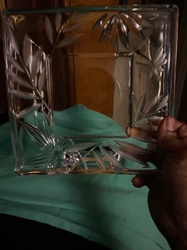
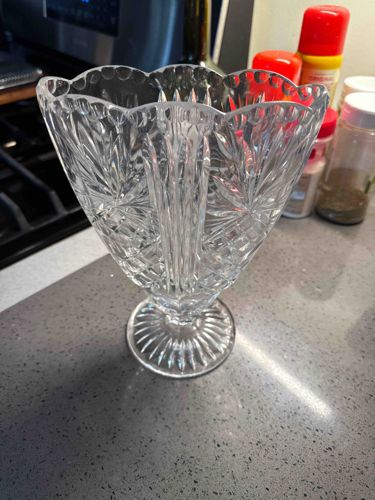
Cut Crystal Pedestal Bowl

Submitted photo of Cut Crystal Pedestal Bowl
Photo submitted by the user — not generated by AI

User's notes

Crystal

These notes were written by the person who submitted this item. Appraiser.AI has not verified them, and the AI's identification and estimate may rely on them.

AI Estimated Value

Not an official valuation

$40-$70

AI estimate as of November 7, 2025 · verify with a professional before acting

AI-Generated · Verify before acting

Everything on this page is generated by AI for informational purposes only. AI can make mistakes — the AI may misidentify items or misattribute them (artist, maker, brand, designer, origin, era). This is not an official valuation and should not be used for insurance, sale, tax, estate, legal, or lending purposes — or any decision requiring a certified appraisal. It is not an authoritative claim about any person, brand, or rights holder — do not share or rely on it as a factual statement about a third party. Always consult qualified professionals before making financial decisions.

This analysis also relies on unverified notes provided by the user, which may be incomplete or inaccurate and could affect the result.

Read the full disclaimer

AI Item Analysis

This item is a clear, highly ornate cut crystal or pressed glass bowl, distinguished by its flared, square-ish rim, and supported by a short pedestal base. The body of the bowl features an intricate starburst or fan pattern, meticulously cut or pressed into the glass, which radiates from the center-lower portion upwards and outwards. Prominent vertical panels or flutes are evident towards the center of each side, creating further light refraction. The rim itself is scalloped with a series of rounded indentations, adding to its decorative appeal and providing a tactile element. The base is also circular and features radial ribbing or fluting, complementing the overall design. Given the clarity and sharp facets, it appears to be of good quality, possibly crystal due to its light-refracting properties, though without further testing, distinguishing between lead crystal and high-quality pressed glass is difficult. No obvious cracks, chips, or significant wear are visible from the provided images, suggesting good condition. There are no discernible maker's marks or signatures. This style is often associated with mid-20th century to contemporary decorative glassware, designed to catch and reflect light, and traditionally used for serving candies, nuts, or as a decorative centerpiece.
AI Appraisal Report

Based on my examination of the provided image and the owner's confirmation of it being crystal, I assess this Cut Crystal Pedestal Bowl. Visually, the condition appears excellent; I observe no obvious chips, cracks, or significant wear. The clarity and sharp facets suggest good quality crystal. Determining if it is lead crystal versus high-quality pressed glass remains challenging without a physical inspection or specific testing for lead content. The intricate starburst/fan pattern and scalloped rim are typical of decorative glassware. Market conditions for cut crystal bowls of this type are generally stable but competitive. Comparables often include pieces from manufacturers like Lenox, Waterford (though this does not bear their characteristic patterns), or various unbranded crystal houses. Demand for such decorative glassware is moderate, often driven by those seeking home decor or functional serving pieces for special occasions. Rarity is low; many similar bowls were produced, especially in the mid-20th century. Factors impacting value include its good condition and the likely crystal composition. However, the lack of a discernible maker's mark significantly lowers its value, as branded pieces typically command higher prices. Without a known manufacturer, it's considered unbranded decorative crystal, which usually falls into a more accessible price range. It is crucial to note that while I believe it to be crystal based on the owner's details, full authenticity verification (such as lead content testing) is impossible from images alone. A physical inspection would also allow for a more thorough search for any faint maker's marks, assessment of the exact weight and 'ring' of the crystal, and tactile examination for the quality of the cuts and any minute imperfections not visible in photographs.

Keep exploring

More decorative glassware appraisals

Get your items appraised

Instant AI-powered appraisal estimates from a photo

Browse More Appraisals