AI estimate as of July 13, 2025 · verify with a professional before acting
AI-Generated · Verify before acting
Everything on this page is generated by AI for informational purposes only. AI can make mistakes — the AI may misidentify items or misattribute them (artist, maker, brand, designer, origin, era). This is not an official valuation and should not be used for insurance, sale, tax, estate, legal, or lending purposes — or any decision requiring a certified appraisal. It is not an authoritative claim about any person, brand, or rights holder — do not share or rely on it as a factual statement about a third party. Always consult qualified professionals before making financial decisions.
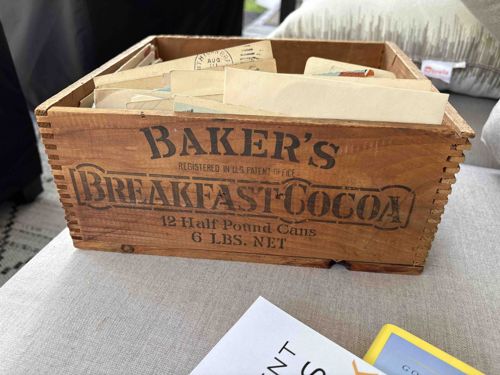
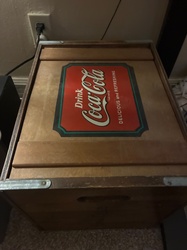
This is a vintage wooden advertising crate for Baker's Breakfast Cocoa. The crate is constructed from light brown wood, likely pine or a similar soft wood, given its common use for such packaging. The construction features visible finger joints (or box joints) at the corners, indicating a sturdy, utilitarian build common for shipping containers of its era. The wood shows a natural patina consistent with age and use, with some variations in tone and possibly superficial scratches or minor abrasions, though no significant damage like cracks or breaks are immediately apparent. The front face of the crate is stenciled with prominent black lettering. The word "BAKER'S" is displayed at the top in a large, elegant serif font, followed by "REGISTERED IN U.S. PATENT OFFICE" in smaller sans-serif text. Below this, "BREAKFAST COCOA" is emblazoned in large, bold, block letters, framed by a decorative rectangular outline. At the bottom, further product details are stenciled: "12 Half Pound Cans" and "6 LBS. NET". The overall impression is one of an authentic, aged piece of industrial advertising, repurposed from its original function as a shipping carton. The inside appears to be filled with various papers or ephemera, suggesting it's currently being used for storage or display. The craftsmanship is functional rather than decorative, designed for durability in transport. Given the style of lettering ("Registered in U.S. Patent Office") and the general appearance, it likely dates from the early to mid-20th century, possibly 1910s-1940s, a period when such wooden crates were commonplace for product distribution. The visible condition suggests good preservation for its age, showcasing its historical context and advertising origin clearly.
AI Appraisal Report
Upon examining the image of this Vintage Baker's Breakfast Cocoa Wooden Crate, I find it to be an authentic piece of early to mid-20th-century advertising ephemera. The light brown wood construction, visible finger joints, and stenciled black lettering consistent with the Baker's brand and era, all support its authenticity as an original shipping crate. The "REGISTERED IN U.S. PATENT OFFICE" text is a strong indicator of its age, likely dating from the 1900s-1940s. The condition, based solely on the image, appears good for its age, showing the expected patina, minor abrasions, but no major structural damage or repairs. This preservation contributes positively to its market appeal.
Market conditions for vintage advertising crates are generally stable, driven by collectors of advertising memorabilia, kitchenalia, and primitive decor. Comparables often include similar crates from well-known brands like Coca-Cola, various food products, or other household goods. While not exceedingly rare, Baker's Cocoa crates are less common than some other brands, adding a slight premium. Demand is consistent, particularly for items in good, original condition. The major factors impacting value are the completeness of the stenciling, the overall condition, and the historical significance of the brand. The presence of internal papers is irrelevant to the crate's value.
Limitations in authenticity verification from images alone are crucial to note. While it appears genuine, a physical examination would be necessary to confirm the wood type, feel for any hidden repairs or reinforcements, and meticulously inspect the paint for modern applications or touch-ups that wouldn't be visible in an image. Blacklight testing could detect modern materials or repairs. Provenance documentation, such as the history of how the crate was acquired, can also enhance authentication and value, though it's often unavailable for such common items.