AI estimate as of November 20, 2025 · verify with a professional before acting
AI-Generated · Verify before acting
Everything on this page is generated by AI for informational purposes only. AI can make mistakes — the AI may misidentify items or misattribute them (artist, maker, brand, designer, origin, era). This is not an official valuation and should not be used for insurance, sale, tax, estate, legal, or lending purposes — or any decision requiring a certified appraisal. It is not an authoritative claim about any person, brand, or rights holder — do not share or rely on it as a factual statement about a third party. Always consult qualified professionals before making financial decisions.
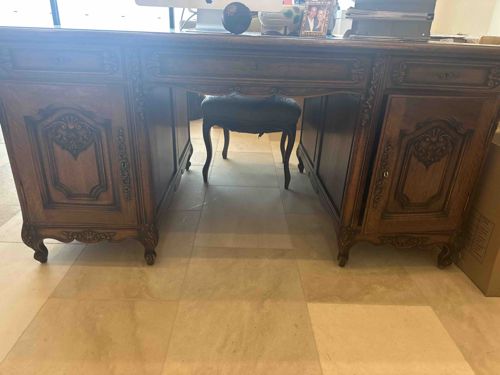
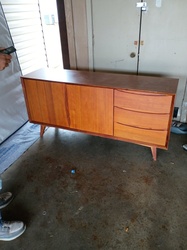
This is a large, ornate executive desk crafted in the French Provincial or Baroque Revival style, likely from the late 19th or early to mid-20th century. The desk is constructed from what appears to be solid oak, exhibiting a rich, dark brown, somewhat reddish-toned finish that suggests age and a well-developed patina. Its substantial size indicates its function as a central piece in an office or study. Physically, the desk features a rectangular top with a slight overhang, supported by two prominent pedestals on either side and a central kneehole section. Each pedestal contains a cabinet door, intricately carved with ornate, curvilinear designs, including rocaille motifs, floral garlands, and possibly acanthus leaves, characteristic of French regional furniture styles. The drawer fronts, including the central drawer above the kneehole and potentially smaller drawers within the pedestals (though not clearly visible), also feature similar decorative carving, suggesting a consistent design aesthetic throughout. The desk stands on short, cabriole legs, terminating in a scroll or pad foot, further emphasizing its traditional European influence. Visible condition issues include expected wear and tear associated with age and use, such as minor scuffs, scratches, and a developing patina on the wood surface, which contributes to its antique character. There are no obvious signs of major damage or recent repairs from the provided image. The craftsmanship appears to be of high quality, with deep, well-executed carvings that add significant visual interest and texture to the piece. The hardware, though not clearly detailed, appears to be original or period-appropriate, likely brass or bronze. The overall impression is one of solid construction and decorative elegance, typical of a handcrafted piece designed for longevity and aesthetic appeal.
AI Appraisal Report
Upon visual examination of the provided image, I assess this French Provincial Carved Oak Executive Desk to be in good, aged condition, consistent with a piece from the late 19th to early mid-20th century. The rich, dark patina and well-detailed rocaille and floral carvings strongly suggest authenticity for its stated style and period. There appears to be expected wear, such as minor scuffs and scratches, which are typical of a well-used antique and contribute to its character rather than detract from its value. No major damage or repairs are evident from the image.
Market conditions for substantial, ornate European-style desks have seen some fluctuation; however, well-preserved and authentically styled pieces like this retain good demand, particularly for those seeking characterful office furniture or decorative accents. Comparables for similar French Provincial or Baroque Revival desks in solid oak and good condition typically range from $1,500 to $3,500, with highly carved examples landing on the higher end. The quality of carving here is a significant value driver. Rarity is moderate; while not unique, desks of this size and intricate carving are less common than simpler forms.
The substantial size, solid oak construction, and intricate, high-quality carving are key factors significantly impacting its value positively.
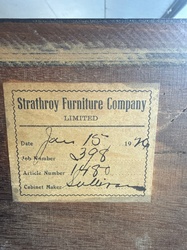
It is crucial to note the limitations of an appraisal based solely on images. While the visual indicators are strong, a full authentication would require an in-person examination to verify wood species (especially for secondary woods), assess joinery, confirm the age and originality of hardware, and detect any subtle repairs or restorations not visible in photographs. Provenance documentation, such as original sales receipts or family history, would also strengthen the authentication and potentially increase value further. Scientific testing, such as dendrochronology, could definitively pinpoint age but is typically reserved for much higher-value or contested pieces.