Smooth Ovoid River Stone
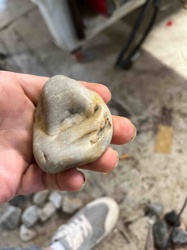
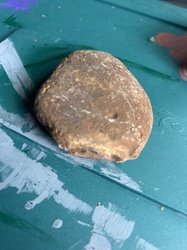
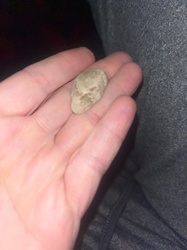
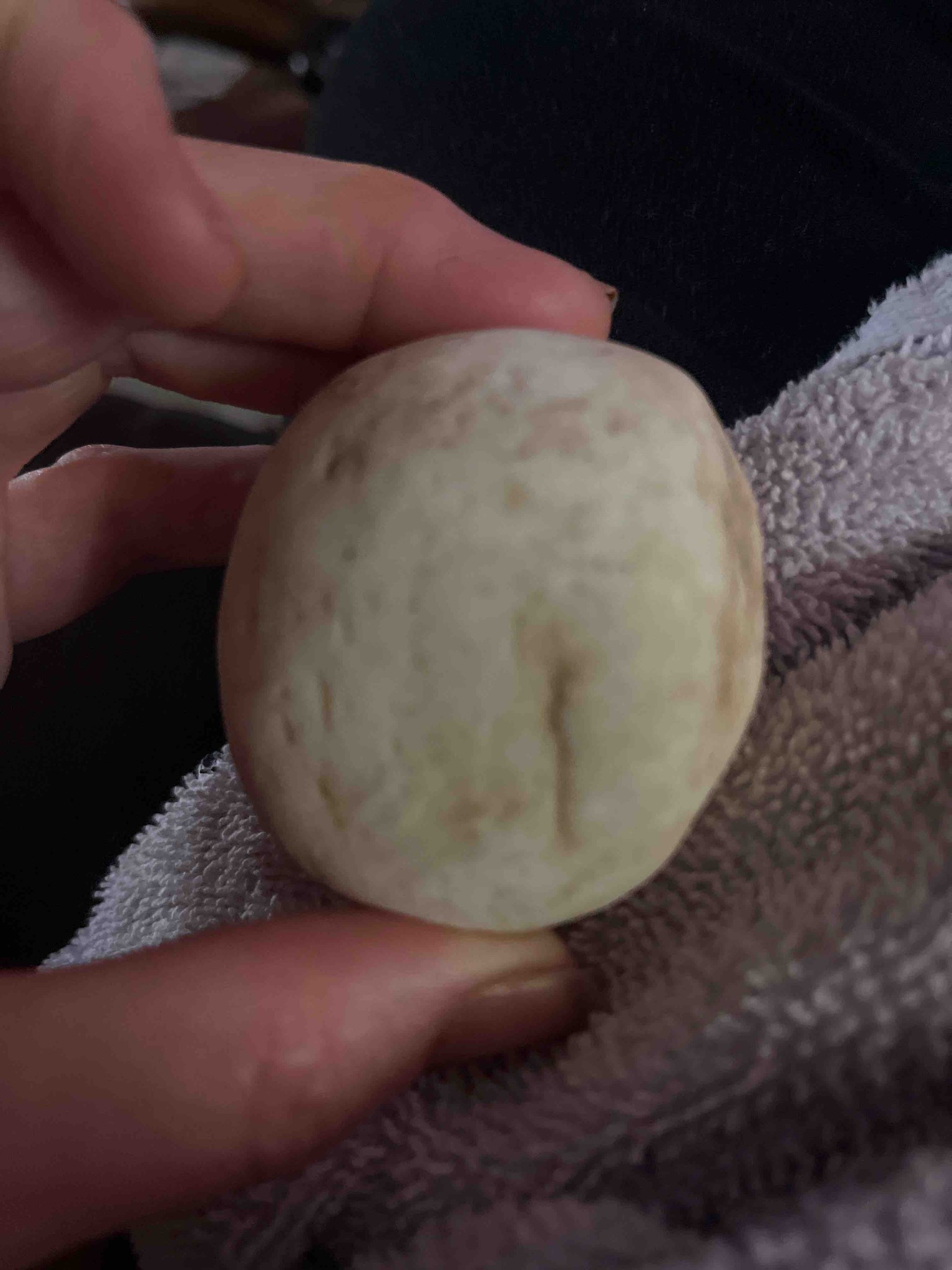
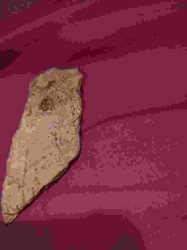
This object is a natural, water-worn stone with a distinct ovoid or egg-like shape, appearing to be approximately two to three inches in length based on proximity to the user's hand. The material is likely a fine-grained sedimentary or metamorphic rock, featuring a predominantly off-white or pale cream coloration. The surface is characterized by a significant amount of natural weathering and smoothing, resulting in a matte to slightly porous texture. Notable features include subtle reddish-brown or tan mottling and irregular vein-like markings spread across the surface, which suggest mineral inclusions like iron oxide or clay. There is a prominent, vertically oriented indentation or shallow groove present on the front face, likely caused by geological pressure or erosion over a long period. In terms of condition, the stone shows no signs of modern human intervention such as polishing, drilling, or carving, maintaining a raw geological state. The edges are rounded and soft, indicative of extensive fluvial transport. It has a heavy, dense appearance with no visible fractures or sharp chips, suggesting a high hardness level on the Mohs scale. This item appears to be an ancient natural artifact, potentially a 'manuport' if found in an archaeological context, or simply a geofact shaped purely by natural forces.
AI-Generated Appraisal Disclaimer
Estimated Value
$10.00 - $25.00
Basic Information
Category
Natural History / Geological Specimens
Appraised On
April 11, 2026
Estimated Value
$10.00 - $25.00
Item Description
This object is a natural, water-worn stone with a distinct ovoid or egg-like shape, appearing to be approximately two to three inches in length based on proximity to the user's hand. The material is likely a fine-grained sedimentary or metamorphic rock, featuring a predominantly off-white or pale cream coloration. The surface is characterized by a significant amount of natural weathering and smoothing, resulting in a matte to slightly porous texture. Notable features include subtle reddish-brown or tan mottling and irregular vein-like markings spread across the surface, which suggest mineral inclusions like iron oxide or clay. There is a prominent, vertically oriented indentation or shallow groove present on the front face, likely caused by geological pressure or erosion over a long period. In terms of condition, the stone shows no signs of modern human intervention such as polishing, drilling, or carving, maintaining a raw geological state. The edges are rounded and soft, indicative of extensive fluvial transport. It has a heavy, dense appearance with no visible fractures or sharp chips, suggesting a high hardness level on the Mohs scale. This item appears to be an ancient natural artifact, potentially a 'manuport' if found in an archaeological context, or simply a geofact shaped purely by natural forces.
Get Your Items Appraised
Instant estimates of your treasures with AI-powered instant appraisals