AI Appraisal Estimate

AI-generated estimates · not official valuations

From the user

What was submitted

Photo and notes provided by the user — not generated by AI

Submitted item photo
Submitted photo · June 6, 2026

User's notes

No additional notes provided.

AI analysis below

AI appraisal

AI analysis & estimate

AI-Generated · Verify before acting

Everything below is generated by AI for informational purposes only. AI can make mistakes — the AI may misidentify items or misattribute them (artist, maker, brand, designer, origin, era). This is not an official valuation and should not be used for insurance, sale, tax, estate, legal, or lending purposes — or any decision requiring a certified appraisal. It is not an authoritative claim about any person, brand, or rights holder — do not share or rely on it as a factual statement about a third party. Always consult qualified professionals before making financial decisions.

Read the full disclaimer

AI Identification

·Not independently authenticated·Verify before acting

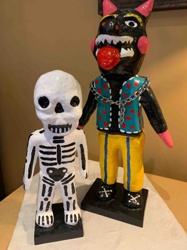
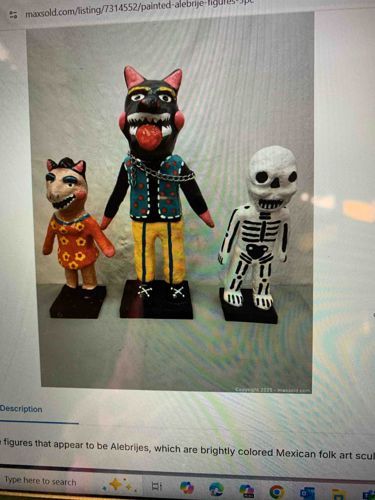
Set of Three Mexican Folk Art Figures (Alebrije-style and Skeleton)

Folk Art Figures

AI Estimated Value

·Not an official valuation·Verify before acting

$100-200

As of June 6, 2026

AI Item Analysis

·AI can make mistakes·Verify before acting
This set includes three distinctly stylized figures, likely crafted from paper mache or a similar lightweight, moldable material, given the textured surfaces and painted details. The primary figure on the left is a cat-like creature with a wide, toothy grin and pronounced pink cheeks, wearing an orange dress adorned with a repeating pattern of white and yellow floral-like shapes. Its base is a simple black rectangular support. The central figure is a more elaborate, menacing-looking black creature, possibly a dog or devil, featuring pointed pink ears, a wide red tongue, and visible white fangs. It wears a teal-colored vest or jacket with white polka dots and a chain necklace, paired with yellow pants and black shoes with white lacing details. This figure also stands on a black rectangular base. The third figure, on the right, is a stylized skeleton, entirely white with black outlines and details to depict bones and facial features, including empty eye sockets. It stands on a smaller black rectangular base. The figures exhibit a vibrant, handcrafted aesthetic typical of Mexican folk art, particularly Alebrijes for the first two, characterized by their fantastical and brightly colored appearance. There are no obvious signs of significant damage like cracks or chips, though minor wear to the paint or material consistent with age and handling may be present, which is common for such items. The craftsmanship appears to be a blend of traditional folk art techniques with hand-painted details contributing to the uniqueness of each piece. Their estimated age would likely fall within the mid-to-late 20th century or early 21st century.
AI Appraisal Report

·AI can make mistakes·Verify before acting
Upon examining the provided images of this set of three Mexican folk art figures, I assess them to be handcrafted pieces in the Alebrije and Calavera traditions. The two animalistic figures exhibit the vibrant colors and fantastical designs characteristic of Alebrijes, while the skeleton figure is a classic representation of the Calavera style often associated with Día de los Muertos. The material appears consistent with paper mache or a similar composite, and the hand-painted details suggest a dedicated, artisanal origin. The overall condition appears good, with no major cracks or chips visible in the images, though minor surface wear is typical for such items. The market for contemporary, unsigned Mexican folk art is active but generally accessible. Comparable sets of similar size, material, and craftsmanship often sell in the low to mid-hundreds. The value is driven by decorative appeal rather than artist recognition or antiquity. While visually authentic to the style, a full authentication based solely on images is not possible. To confirm authenticity and rule out mass-produced imitations, I would need to physically inspect the figures for specific construction techniques, material composition, weight, and any potential signatures or maker's marks not visible in the photos. Provenance documentation tracing the pieces to a known artist or workshop would significantly increase their value. Lacking a verifiable artist attribution, the primary value lies in their quality as decorative folk art examples. The current estimated value reflects this assessment.

Get your items appraised

Instant estimates of your treasures with AI-powered appraisals

Browse More Appraisals