AI estimate as of August 13, 2025 · verify with a professional before acting
AI-Generated · Verify before acting
Everything on this page is generated by AI for informational purposes only. AI can make mistakes — the AI may misidentify items or misattribute them (artist, maker, brand, designer, origin, era). This is not an official valuation and should not be used for insurance, sale, tax, estate, legal, or lending purposes — or any decision requiring a certified appraisal. It is not an authoritative claim about any person, brand, or rights holder — do not share or rely on it as a factual statement about a third party. Always consult qualified professionals before making financial decisions.
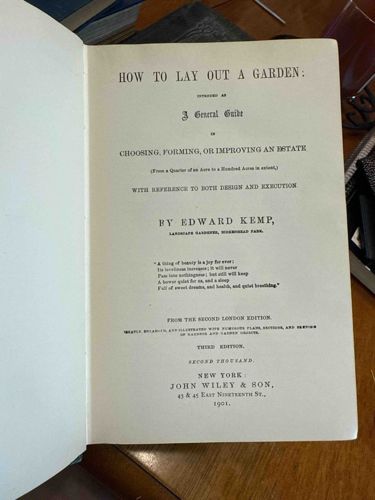
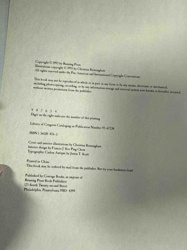
This item is an antique or vintage bound book, specifically the title page of 'How to Lay Out a Garden: A General Guide in Choosing, Forming, or Improving an Estate with reference to both Design and Execution' by Edward Kemp. The physical characteristics visible include off-white, aged paper, suggesting natural oxidation over time. The paper appears relatively thick and sturdy, indicative of quality book production from its era. The text is printed in black ink, featuring various font sizes and styles, including serif fonts for the main title and body text, and a more decorative, possibly calligraphic, font for the sub-heading 'A General Guide'. There are no significant tears, creases, or major stains visible on this page, indicating a relatively well-preserved condition for its age. The edges of the page appear clean, though a slight natural curl or undulation can be seen, consistent with paper in bound books. The binding edge is visible on the left, showing the page is firmly attached within the book's structure. Manufacturing details are clearly printed: it is a 'Third Edition, Second Thousand,' published in 'New York' by 'John Wiley & Son' at '43 & 45 East Nineteenth St.,' and the publication year is '1901'. This places the book firmly within the early 20th-century aesthetic and publishing standards, making it an antique or vintage item. The 'Second London Edition' is also mentioned, indicating it followed an earlier British publication. The visible lack of significant wear or egregious damage suggests it has been handled with care. The quality of typesetting and paper points to a reputable publisher of the time. A poetic quote is included on the page, often found in older publications to set the tone or offer an epigraph.
AI Appraisal Report
Based on my examination of the provided image, this item is the title page of the Third Edition, Second Thousand, of 'How to Lay Out a Garden: A General Guide' by Edward Kemp, published by John Wiley & Son in New York, 1901. The visual evidence, including the aged paper, typography, and publisher's details, appears consistent with a genuine publication from this era. The condition is good for its age, with clean paper, clear printing, and no major tears, stains, or damage visible on the title page. The overall value of this book is moderate. While Edward Kemp was a notable landscape architect, his works are not exceptionally rare. Market comparables for various editions of this title generally place well-preserved copies in a modest price category. The 'Third Edition' status, along with being a New York printing by John Wiley & Son, makes it an interesting historical piece but does not elevate it to a high-demand collector's item compared to a first edition. The primary value driver is its condition and its appeal to collectors of horticultural literature or landscape architecture history. Without physical inspection, I cannot fully assess the integrity of the binding, the condition of the remaining pages, or check for any foxing, water damage, or ex-library markings that would significantly affect its value. Full authentication would require in-person examination of the entire book, including the binding, all pages, and endpapers, to confirm its completeness and overall condition.