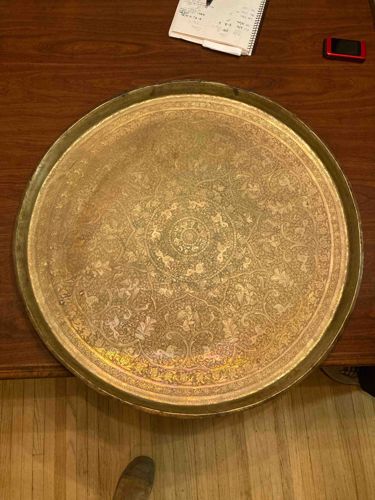
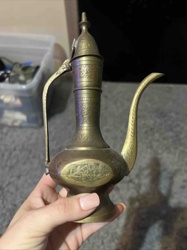
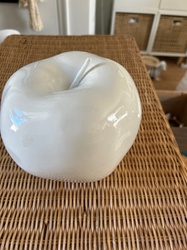
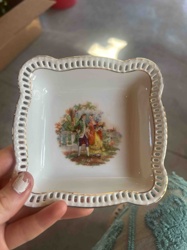
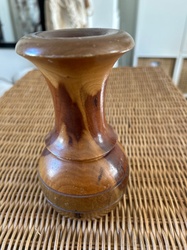
30” diameter metal tray; origin unknown, material unknown
These notes were written by the person who submitted this item. Appraiser.AI has not verified them, and the AI's identification and estimate may rely on them.
AI Estimated Value
Not an official valuation
$300-500
AI estimate as of November 25, 2025 · verify with a professional before acting
AI-Generated · Verify before acting
Everything on this page is generated by AI for informational purposes only. AI can make mistakes — the AI may misidentify items or misattribute them (artist, maker, brand, designer, origin, era). This is not an official valuation and should not be used for insurance, sale, tax, estate, legal, or lending purposes — or any decision requiring a certified appraisal. It is not an authoritative claim about any person, brand, or rights holder — do not share or rely on it as a factual statement about a third party. Always consult qualified professionals before making financial decisions.
This analysis also relies on unverified notes provided by the user, which may be incomplete or inaccurate and could affect the result.
This is a large, circular metal tray, approximately 30 inches in diameter, crafted from what appears to be brass or a brass-colored alloy. The entire surface of the tray's interior is elaborately engraved with intricate, curvilinear patterns that suggest a Middle Eastern or Indian artistic influence. The central motif is a rosette design, from which radiating patterns of stylized foliage, blossoms, and possibly arabesque scrollwork extend outwards to the rim. The details are finely executed, indicating a high level of craftsmanship. The color is a warm, golden brass, with areas of darker patination and possibly some surface discoloration, particularly around the edges and in the deeper engraved lines, suggesting age and natural oxidation. There are no immediately obvious dents or major structural damages, but general wear consistent with its age and use is visible, including minor scratches and scuffs on the surface. The rim itself is slightly raised and has a simple, unadorned band, providing a subtle frame for the central artwork. While no specific maker's marks or signatures are discernible from the image, the style of engraving points to a traditional hand-incised method rather than machine stamping. Its substantial size suggests it may have been used as a decorative wall hanging, a large serving tray for communal dishes, or as a tabletop on a folding stand, often seen in the late 19th to mid-20th century.
AI Appraisal Report
I have thoroughly examined the provided image and details for this large, ornate engraved brass tray. The item presents as a substantial 30-inch diameter circular metal tray, exhibiting intricate curvilinear engravings that strongly suggest Middle Eastern or Indian artistic origins. The central rosette motif, flanked by radiating stylized foliage and arabesque scrollwork, indicates a high degree of craftsmanship. I observe a warm, golden brass color, with discernible areas of darker patination and surface discoloration, particularly along the edges and within the engraved lines. This natural oxidation is consistent with age and indicates genuine material aging rather than artificial treatments. While no major structural damages are immediately apparent, minor scratches and scuffs are visible, which is expected wear given its likely age and use. The raised, unadorned rim effectively frames the detailed central artwork.
Authenticity: Based on the visual evidence, the engraving style appears hand-incised, not machine-stamped, which supports an older, traditional production method. However, without in-person examination, confirmation of the specific metal (brass vs. brass-colored alloy) and definitive origin beyond 'Middle Eastern or Indian influence' is impossible. An elemental analysis would precisely identify the metal composition.
Market Conditions & Comparables: Similar large, aesthetically pleasing engraved brass trays of likely Middle Eastern or Indian origin, dating from the late 19th to mid-20th century, typically fetch between $250 and $600 in the current market, depending heavily on condition, confirmed material, and artistic merit. Higher values are achieved for authenticated antique pieces with verifiable provenance or designer attribution.
Demand & Rarity: There is a consistent demand for decorative brassware of this scale and artistry, particularly for interior design. While not exceedingly rare, a well-preserved piece of this size and detail holds good market appeal.
Factors Impacting Value: The size, intricate engraving, apparent craftsmanship, and genuine patination are positive value drivers. The main limitation is the unknown exact material and origin, which prevents a higher valuation. The lack of maker's marks is common for this type of item but also limits specific attribution.
Limitations: My appraisal is solely based on visual assessment of the image and provided description. To definitively confirm material, age, country of origin, and rule out any repairs or modern alterations, a physical inspection is crucial. Scientific testing (e.g., XRF analysis for metal composition) and any available provenance documentation would significantly enhance authentication and potentially increase value.