AI Appraisal Estimate

AI-generated estimates · not official valuations

From the user

What was submitted

Photo and notes provided by the user — not generated by AI

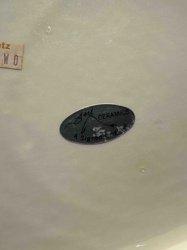
Submitted item photo
Submitted photo · May 30, 2026

User's notes

No additional notes provided.

AI analysis below

AI appraisal

AI analysis & estimate

AI-Generated · Verify before acting

Everything below is generated by AI for informational purposes only. AI can make mistakes — the AI may misidentify items or misattribute them (artist, maker, brand, designer, origin, era). This is not an official valuation and should not be used for insurance, sale, tax, estate, legal, or lending purposes — or any decision requiring a certified appraisal. It is not an authoritative claim about any person, brand, or rights holder — do not share or rely on it as a factual statement about a third party. Always consult qualified professionals before making financial decisions.

Read the full disclaimer

AI Identification

·Not independently authenticated·Verify before acting

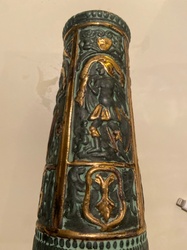
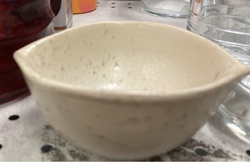
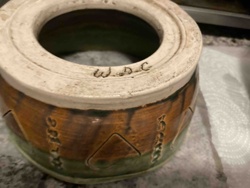
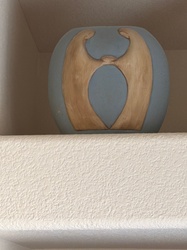
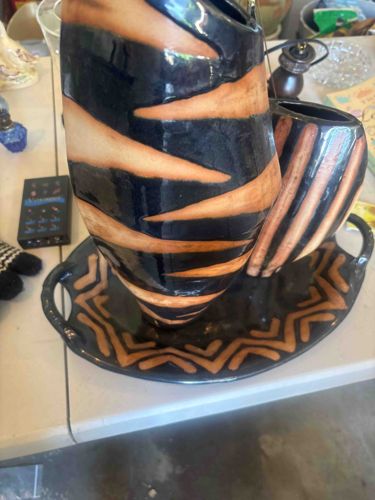
Tiger Stripe Ceramic Pitcher, Cup, and Tray Set

Ceramics/Pottery

AI Estimated Value

·Not an official valuation·Verify before acting

$125-175

As of May 30, 2026

AI Item Analysis

·AI can make mistakes·Verify before acting
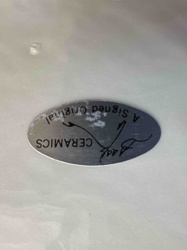
This appears to be a three-piece ceramic or pottery set, likely comprising a large pitcher or vase, a smaller vessel that might be a cup or creamer, and a coordinating serving tray. The dominant colors are a dark, glossy black and a contrasting earthy orange or light brown, which forms the unglazed or differently glazed areas. The large pitcher/vase features a stylized tiger stripe or abstract organic pattern, created by the interplay of the black glaze and the natural or stained light brown clay body. The smaller vessel displays vertical stripes in the same two-color scheme. Both pieces have a somewhat rustic or handmade appearance, indicated by the slight irregularities in their form and the organic flow of the painted patterns. The accompanying tray is oval or oblong with two small handles, one on each end. Its surface is adorned with a repetitive geometric pattern, possibly representing a stylized zigzag or meander, in the same light brown against the black background. The glaze shows a high sheen, suggesting it might be a clear or semi-transparent glaze over painted designs. The overall condition appears good, with no immediately visible chips or cracks, although closer inspection would be needed to confirm this. There's a subtle patina consistent with age and handling. The style suggests a mid-20th century, possibly tribal-inspired or art pottery aesthetic, with influences that could range from African tribal art to Art Deco animal prints or even Southwestern pottery. The craftsmanship seems robust, indicative of functional art pottery rather than fine porcelain. There are no discernible maker's marks or signatures visible in the provided image.
AI Appraisal Report

·AI can make mistakes·Verify before acting
Based on my examination of the provided images, this three-piece ceramic set, comprising a pitcher, cup, and tray, presents a visually striking and cohesive aesthetic. The 'tiger stripe' or abstract patterning, executed in a glossy black glaze over a matte, light brown earthenware body, is characteristic of mid-20th century studio pottery. The style evokes a blend of influences, from Art Deco animal prints to tribal or folk art motifs. The condition appears to be very good from the visuals, with a consistent glaze and no obvious chips, cracks, or repairs. The rustic, handcrafted quality suggests it is a unique, artist-made set rather than a mass-produced item. The primary factor limiting the value is the lack of a discernible maker's mark or signature. Without attribution to a known artist or studio (such as Bitossi, a California potter, or a notable Scandinavian designer), the set is valued as decorative art pottery. The market for unsigned, high-quality mid-century ceramics is steady but a specific artist attribution would elevate its value significantly. Demand is strong for pieces with bold, graphic patterns like this. For full authentication and to potentially identify the maker, a physical examination is crucial. I would need to inspect the base for any faint marks, test the weight and feel of the ceramic body, and examine the glaze application under magnification. Provenance documentation would be invaluable in establishing its origin and history.

Get your items appraised

Instant estimates of your treasures with AI-powered appraisals

Browse More Appraisals