AI identification & appraisal estimate

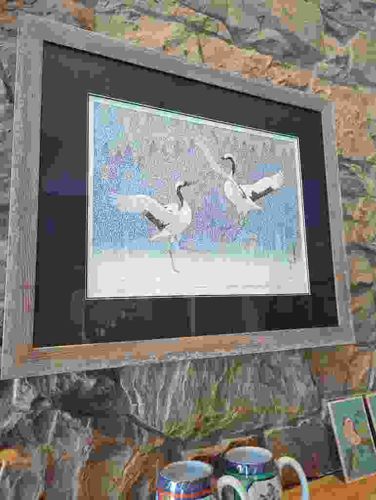
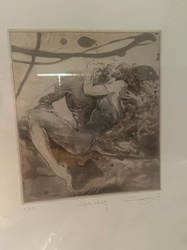
Dance of Eternal Love by Toshi Yoshida

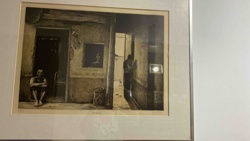
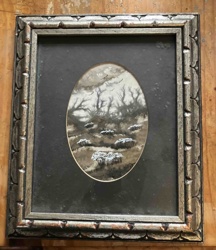
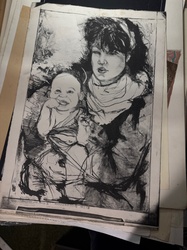
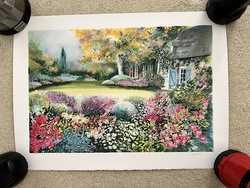
Submitted photo of Dance of Eternal Love by Toshi Yoshida
Photo submitted by the user — not generated by AI

User's notes

dance of eternal love T. Yoshida

These notes were written by the person who submitted this item. Appraiser.AI has not verified them, and the AI's identification and estimate may rely on them.

AI Estimated Value

Not an official valuation

$450 - $650

AI estimate as of February 16, 2026 · verify with a professional before acting

AI-Generated · Verify before acting

Everything on this page is generated by AI for informational purposes only. AI can make mistakes — the AI may misidentify items or misattribute them (artist, maker, brand, designer, origin, era). This is not an official valuation and should not be used for insurance, sale, tax, estate, legal, or lending purposes — or any decision requiring a certified appraisal. It is not an authoritative claim about any person, brand, or rights holder — do not share or rely on it as a factual statement about a third party. Always consult qualified professionals before making financial decisions.

This analysis also relies on unverified notes provided by the user, which may be incomplete or inaccurate and could affect the result.

Read the full disclaimer

AI Item Analysis

This item is a Japanese woodblock print (ukiyo-e style) titled 'Dance of Eternal Love' by the renowned artist Toshi Yoshida (1911–1995), a key figure in the Shin-hanga and Sōsaku-hanga movements. The artwork depicts two red-crested Japanese cranes engaged in a spirited courtship dance against a stylized landscape background of soft blues and purples. The composition showcases the artist's mastery of line and color, with the white plumage of the birds contrasted against a muted, atmospheric setting. The print appears to be housed in a contemporary double-matting—featuring a dark black primary mat and a thin white inner accent—within a light-toned, wood-grain frame. Characteristically, Yoshida's work from this period (likely mid-to-late 20th century) is noted for its high-quality paper and precision in the registration of multiple woodblocks. While the digital image limit restricts a view of the specific margins, prints of this type typically feature the artist's signature in pencil or a stamped red seal, alongside Japanese characters in the margins identifying the title and date. The condition appears stable within the frame; however, common issues for such works include light foxing or paper toning if not protected by UV-filtering glass and acid-free materials. The overall craftsmanship reflects the Yoshida family legacy of excellence in printmaking, combining traditional techniques with modern aesthetic sensibilities.
AI Appraisal Report

I have virtually examined this woodblock print titled 'Dance of Eternal Love' by Toshi Yoshida. Based on the composition and color palette, this work is a classic example of Yoshida’s mid-century aesthetic, blending Shin-hanga precision with modern stylization. The registration appears tight, and the ink saturation in the cranes' crests remains vibrant, suggesting it has been protected from significant UV exposure. The market for Toshi Yoshida remains consistently strong among collectors of Japanese prints. Comparables for this specific subject—cranes being a popular motif symbolizing longevity—typically hammer at auction between $400 and $700 depending on the edition. If this is a lifetime edition signed in pencil, it trends toward the higher end; later posthumous editions printed by the Yoshida Studio typically fall in the $250-$400 range. A significant factor impacting value is the mounting. While the double-matting is aesthetically pleasing, without opening the frame, I cannot verify if the print is hinged with acid-free tape or if there is 'mat burn' on the margins. High-resolution photos of the margins were not provided, which are essential for identifying the specific printer’s seals and dating the edition. Limitations: This appraisal is based on digital images alone, which can mask paper thinning or foxing. Full authentication requires a physical inspection to verify the paper's watermark, feel the 'kento' (registration) notches, and observe the baren marks on the verso. Provenance from a reputable gallery would further solidify the valuation.

Keep exploring

More fine art prints & works on paper appraisals

Get your items appraised

Instant AI-powered appraisal estimates from a photo

Browse More Appraisals