Mid-Century Modern Two-Tier Step End Table
Furniture

Mid-Century Modern Two-Tier Step End Table

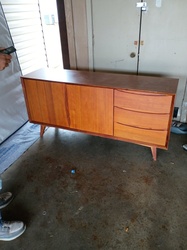
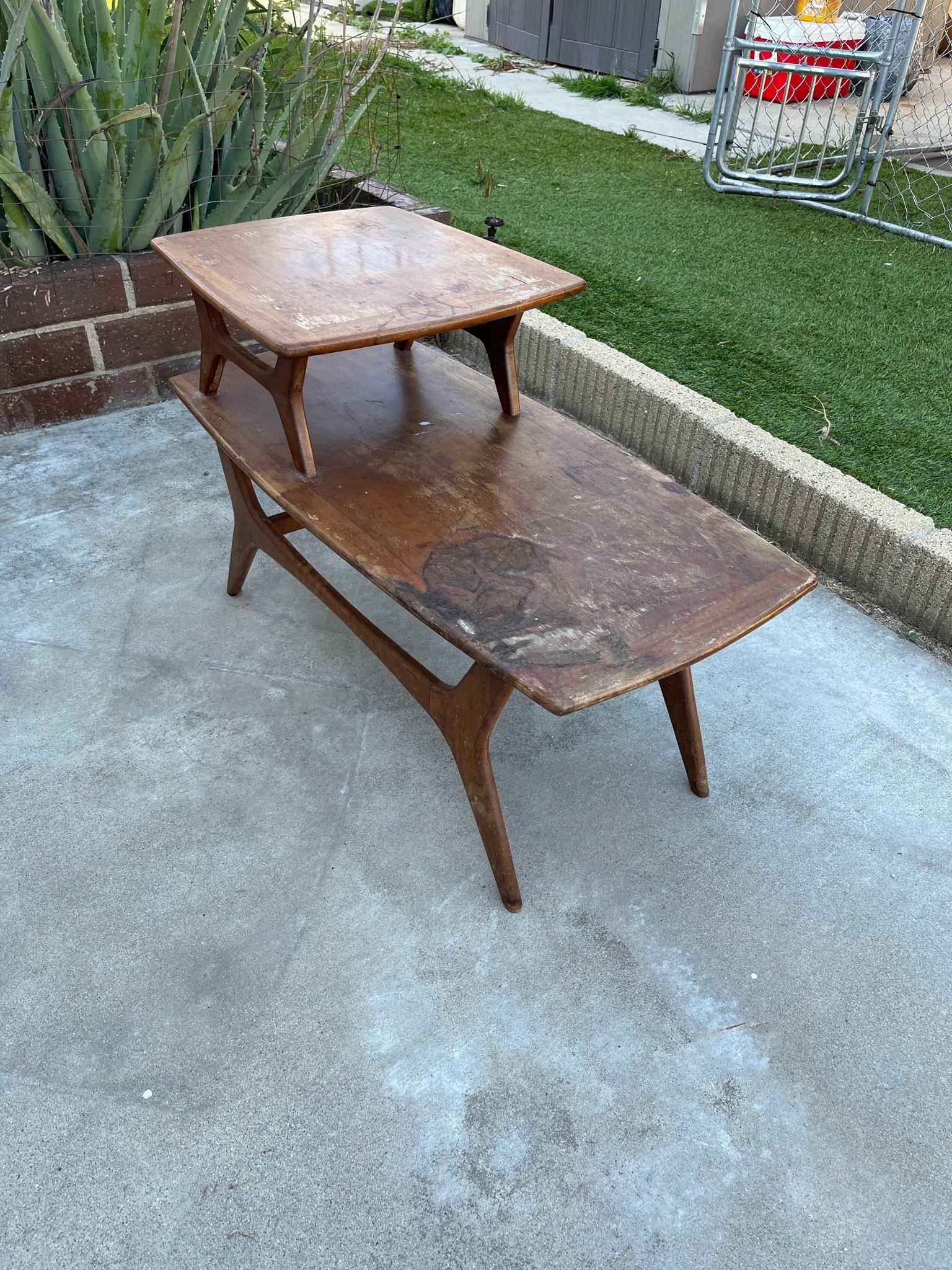
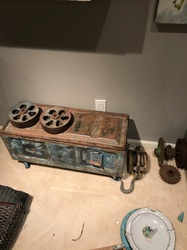
This is a classic mid-century modern 'step' or two-tier end table, likely dating from the late 1950s to mid-1960s. The piece is constructed from wood, likely walnut or mahogany given the grain pattern and original warm reddish-brown stain. It features a larger rectangular lower base with tapered, bow-style legs connected by a horizontal stretcher, supporting a smaller elevated top tier with matching sculptural supports. The design is characteristic of American manufacturers like Lane or Drexel from that era. The condition is poor to fair, showing significant cosmetic wear. There is substantial finish loss, deep water rings, and gray heat clouding on the lower surface, as well as significant scuffing and finish peeling on the upper tier edges. The wood appears to be solid or a high-quality veneer over lumber-core, as evidenced by the rounded edges. Despite the surface damage, the structural integrity appears sound with no visible breaks in the tapered legs, making it a strong candidate for professional refinishing and restoration.
Estimated Value

$100 - $175

Basic Information

Category

Furniture

Appraised On

May 15, 2026

Estimated Value

$100 - $175

Item Description

This is a classic mid-century modern 'step' or two-tier end table, likely dating from the late 1950s to mid-1960s. The piece is constructed from wood, likely walnut or mahogany given the grain pattern and original warm reddish-brown stain. It features a larger rectangular lower base with tapered, bow-style legs connected by a horizontal stretcher, supporting a smaller elevated top tier with matching sculptural supports. The design is characteristic of American manufacturers like Lane or Drexel from that era. The condition is poor to fair, showing significant cosmetic wear. There is substantial finish loss, deep water rings, and gray heat clouding on the lower surface, as well as significant scuffing and finish peeling on the upper tier edges. The wood appears to be solid or a high-quality veneer over lumber-core, as evidenced by the rounded edges. Despite the surface damage, the structural integrity appears sound with no visible breaks in the tapered legs, making it a strong candidate for professional refinishing and restoration.
Get Your Items Appraised

Instant estimates of your treasures with AI-powered instant appraisals

Browse More Appraisals